How can you regulate your nervous system,
Feel less stressed,
And get back into your body?
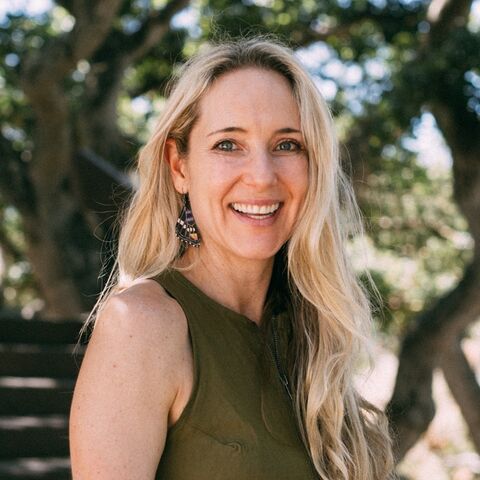
That's what we're going to explore today with Jill Miller on the Wyse Effort Show.
Welcome back.
I'm Dr.
Diana Hill.
I am a clinical psychologist,
And this whole month we're working on Wyse Effort with the body.
I have a chapter about Wyse Effort with the body in the book,
And there's body-based practices woven throughout my book.
Actually it's woven into everything I do,
How I live,
How I lead retreats,
How I lead my workshops.
I will be in a Hyatt hotel room with 400 therapists that I'm training,
And I'll be guiding them through some kind of bodywork exercise because it is so essential for not only your physical well-being,
But your emotional and mental well-being.
We are seeing a skyrocketing interest in somatic therapies.
You know that book,
The Body Keeps the Score,
Has been number one for like years now,
And part of it is that psychology is finally waking up to the fact that emotions,
Stress,
Trauma are not just stored in your thoughts.
They're not just in your head.
They are also in the nervous system and the physical body.
So it is essential to develop body awareness,
To learn how to release tension and energy in your body,
And then also how to take care of our bodies in terms of sleep and eating and movement.
So we're going to be talking about all of that this month on the Wise Effort Show.
Today we have the real honor of speaking with Jill Miller,
Who is the founder of the Two Nut Method.
If you could see me right now,
I'm in my new little office that we built out for podcasting.
I have one foot on a yoga two nut ball,
Stretching my calf,
Kind of rolling it around the ball of my foot and then the center of my foot and the heel of my foot,
And I'll be switching it back and forth as I record this.
Jill Miller is the reason for that.
She is a renowned fascia expert,
A movement educator,
And she's the co-founder of Two Nut Fitness worldwide.
She's the author of two books,
The Role Model,
The Step-by-Step Guide to Erase Pain,
Improve Mobility and Live Better in Your Body,
And Body by Breath,
Which is the science and practice of physical and emotional resilience.
And in this episode,
We are going to walk through some key things that you need to know about your body.
You need to know about your diaphragm,
You need to know about your fascia,
And you need to know how to regulate your nervous system,
How to decrease your stress response from the bottom up.
It's not all about the top down,
Folks.
She's going to give you a few simple things that you can do on the city bus or on an airplane or when you're watching TV with your kids that will support your nervous system because we are stressed out,
Folks.
And sometimes talking about our stress only makes us more stressed.
So we need to figure out how to get back into our bodies,
How to develop interoceptive awareness and how to work with our bodies and get out of that stressed out mind that a lot of us are in.
All right.
I hope that you guys enjoy this conversation with the incredible Jill Miller.
I could turn to any page.
I'm going to do what I do with books here,
Which is when I get a book,
I just go like this,
Right?
And then here I have a picture of the role of recovery,
Regardless whether you're working with asymmetries,
Struggling to come down after a game or trying to cool your nerves before giving a speech.
The body by breath approach gives you the remote control to dial down physiology that is running in the other direction.
At the core of all healing,
Our sustainable parasympathetic stress,
You now have the knowledge to make the shifts as needed and as needed.
So here we go.
Right?
This book is about the role of recovery.
I related so much to your story and I wonder if we can start there of how you found your way to your body as a source of recovery.
When I was a young kid,
I was a really chubby sedentary kid and I just like reading books.
I had big thick glasses and I was a very heavyset little kid.
I was very short.
I grew up in Santa Fe,
New Mexico,
Off the grid in a solar home.
And so we didn't have TV.
We had a satellite dish and then we watched a lot of videos.
And my mother,
Towards the end of the sixth grade,
She wanted to get in shape.
Jane Fonda workout had just been released.
And so she got the Jane Fonda workout and she also got the Raquel Welch yoga video.
And did you have the Jane Fonda one where she was in the striped leotard with the tiny,
Tiny belt?
Because that's the one I had.
That was the original Jane Fonda workout.
Yes.
Yes.
Circle back.
Circle forward.
And then the Change the Lightbulb.
We are living in the same universe.
Change the Lightbulb exercise.
Yeah.
Every single.
.
.
And then she would be like.
.
.
She made these like really sexy faces.
Feel the burn.
Feel the burn.
Yeah.
Exactly.
Okay.
So she brought home these videos and I started doing them with her back to back.
And they were really hard,
Of course.
But I got obsessed with them.
And my mom fell off the wagon within two weeks.
She was not non-compliant.
She was not very disciplined about exercise.
I had no idea that I was.
I became obsessed with them and I would come home from school,
Do them back to back every single day and it became a ritual for me.
And so I spiraled into anorexia,
11,
12,
13.
I had dropped down to 65 pounds by the time I was 13 years old.
And so instead of growing,
I was shrinking.
But then that ended up,
Of course,
Never being dealt with in any mental health capacity.
And I started now to binge and purge.
But the thing that got me into the body work is I couldn't feel my abs.
My abs never got sore in the dance classes or in the Pilates classes.
And I knew I shouldn't be getting sore because everybody else was,
You know,
They would be like,
Oh my God,
That workout yesterday.
But I was never sore.
And I knew it was because I was just bypassing my core,
It was bypassing my center.
And I confessed to a yoga teacher that I was seeing outside of school,
Going to yoga classes outside of school,
That I couldn't feel my abs and that I was bulimic.
And I knew these things were connected.
And she said,
Well,
Why don't you just lay belly down on this thing?
And she handed me this little bean bag that looked like a hamburger bun.
And this was a prop that they used in the yoga studio.
Lay belly down and just breathe.
And so I did exactly she told me,
And I felt absolutely the worst pain imaginable from my center,
Which I now know was those visceral pain.
But the beauty of that was that I started to feel and I could feel what the binging and purging had been doing to my insides.
And suddenly there was a communication from my body to my brain that I could start to have a dialogue with this pain of what I had been stuffing down,
What I had been running from,
How much I disliked the insides of myself.
Because talk therapy wasn't working.
I had tried at school,
I had tried to go see a therapist and nothing was stopping the behavior.
But once I started to physically feel myself,
Something switched and I started to treat myself with a lot more respect and started a process of healing.
I had to go through my body to get that information.
I couldn't go through my head to get it.
I had to go through my body to start that dialogue.
And then we can leapfrog 20,
30 years later.
I've written a book about these processes that don't just help folks with eating disorders,
But they help people with knee pain,
With arthritis,
With people in the NHL,
In the NBA.
So it has- No,
It's just chronic stress.
Yeah.
Yes.
Two things you said there in that story,
And thank you for sharing that story.
Thank you for sharing that story in the book up front,
Like it's like in the first chapter,
Because it roots us in something that's really important to get rooted in,
Which is what happens when we bypass our center?
Why is our center,
Like physiological center,
But soul center,
Right?
They're kind of all mixed up in there.
What happens when we bypass our center?
And then maybe some of the ways in which we're trying to regulate our nervous system that can be regulated in other ways.
I was just driving my kid back from school and I saw there was a teenager in front of the junior high and he was vaping,
Right?
So he was like.
.
.
Yep.
Getting those deep breaths.
He's about to.
.
.
Yeah,
He's about to walk into school.
It's like the second day of school.
He's stressed.
Of course he's vaping,
But you know,
So we're vaping,
We're eating,
We're throwing up,
We're not eating,
We're drinking,
We're overexercising,
We're not moving,
Like all the ways in which we're trying to regulate our nervous system and there's pathways,
There's physiological pathways that we can activate that are not about talking,
But actually physiologically reconnecting the brain and the body and are going from the bottom up instead of the top down.
We want to land on the center because one of the things.
.
.
We'll go back to our 80s and 90s childhoods with Jane Fonda.
So our moms had Jane Fonda videos.
Our moms also had a diaphragm.
Did your mom have a diaphragm?
My mom did.
She did not have the actual.
.
.
That was not her birth control.
But this was a popular form of birth control.
And so when people say,
Can you picture a diaphragm?
I'm always picturing my mom's diaphragm finding it in her bathroom.
But it's a pretty good visual for what our diaphragm looks like.
And the importance of the diaphragm and breath,
It is called body by breath for a reason.
I want to unpack the diaphragm because it's all connected here.
This is connected to the physiology of why when you put that hamburger bun on your belly,
It was so good for you.
Right?
Yes.
And why it was so painful.
And why it was so painful.
Yeah.
Yeah.
I like to joke when I'm teaching,
Oh,
You know,
The diaphragm,
It's really my favorite skeletal muscle.
I love it so much.
I had to write a 480 page book about it.
Are you ready for some facts?
Okay.
Give it to us.
So the respiratory diaphragm is this trampoline shaped muscle that lives inside of your rib cage and it lines the lower six ribs.
It also attaches.
You have this thing called your sternum and at the bottom of your sternum,
There's a little pointy bit called the xiphoid process.
You can even touch that on yourself right now.
And it's attaching there.
You can even take your fingers and swim them underneath the rib edge.
Did you know that you can,
It's legal.
You can finger your way around this border and kind of slump down.
And if you slump down,
Your fingers should be able to like really dive up.
If you go out further to the sides of your rib cage,
It's easier if you're right there under right underneath your midline,
It's harder,
But you have better access.
You can walk your fingers all the way around there.
Your diaphragm is very hidden.
And it also has tendrils that wrap around the back of the rib cage and string down onto your lumbar vertebra.
These are called the crura,
By the way.
And when you and I were doing a little bit of rolling,
I mentioned some of the sensory elements of the diaphragm.
They're located in those crura,
By the way.
So your diaphragm,
We really just don't have a business being able to move the diaphragm.
The diaphragm is moving automatically 20 to 22,
000 times a day without you even having to think about it.
Your breathing is controlled by your brainstem,
By this really intricate chemical process that's sensing the fluctuations of carbon dioxide in your bloodstream.
And so that's running on automatic in the background for you all the time.
But the cool thing about your respiratory diaphragm is that it can also be controlled.
You can decide on the pacing of your own breaths.
You can decide on the volume of your breaths,
How fast or how slow you breathe.
And those different breathing behaviors that you can consciously engage will actually change your state.
They'll change your energy.
They'll change your sense of activation or your sense of placidity.
This muscle is connected to so many different systems of the body.
Yes,
I talked about breathing.
But the diaphragm is also one of your main digestive muscles.
Your diaphragm is also moving blood.
Did you know that your diaphragm is the mattress upon which your heart sits?
Your heart is tethered to the diaphragm through this wonderful connective tissue packet called the pericardium.
So literally your heart sits inside of this little fascial purse that's sitting on top of the diaphragm.
And when you're breathing,
The diaphragm is going down and up,
Your heart is getting tugged a little bit.
Or not the heart,
But the pericardium,
The connective tissue around the heart.
And this changes our heart rate variability.
You might have heard of HRV.
But when we really get into the anatomy of the diaphragm,
We see that the movements of the diaphragm are the fundamental input that changes HRV.
What I want to hear also is,
Okay,
So when the body instructor put the hamburger on your belly and you lay down on your belly and it was painful and you were discovering,
Okay,
This is like an important part of my body,
How does this connect to regulating your nervous system and in finding recovery from something like bulimia or vaping or stress?
How can we become more skillful in the use of our diaphragm?
And all of us know about taking deep breaths,
But what you teach is so much more nuanced than taking a deep breath.
What's going on there?
So dialing back to the 15,
16,
17,
The 17-year-old me,
18-year-old me who laid on that object.
So the diaphragm is also sewn to,
I have to get into a little bit of anatomy to explain the physiology.
So the diaphragm below it is sewn into the same tapestry as a muscle called the transversus abdominis.
Right?
So any of you that like to like look skinny,
When you pull in your belly and you tighten up that abdomen,
You are activating the transversus.
When you cough,
The transversus is active.
The transversus abdominis,
Its stiffness allows or disallows the diaphragm to descend and ascend.
If I have a chronically stiff transversus abdominis because I'm trying to hold it in all the time,
Or I'm bracing for a punch metaphorically,
Or I have scar tissue,
Maybe I had some kind of abdominal surgery or C-section or hernia surgery or whatever.
I have all three.
I have all three.
Check,
Check,
Check.
Holding it in,
Stressed out,
And two C-sections.
Okay.
Right.
And I have chronic tension in this area.
The diaphragm will not be able to move downward well,
And that is going to keep me in a more aroused state.
Let me back up.
Let me back up two steps because I think this will really help.
In the Body by Breath book,
I talk about three zones of breathing.
This is going to make it really easy for your listeners.
There's really three zones that we focus our breathing movements in.
Zone one is the area below the rib cage.
This is what I was just describing with your transversus abdominis.
When we're breathing in a way where our gut expands on inhale and then it settles back in on exhale,
We're in our most calm state.
We're in a parasympathetic style of breathing.
Our rest and digest and recovery.
This is our baby's breath.
If this zone one area with the transversus and these other tissues are not pliable,
They're not allowed to move,
To use Katie Bowman's word,
They're casted,
We're like wearing an ab belt all the time,
Then we're not going to be able to have a calm state breath.
We're going to be deflected into a more rib centric,
A zone two breath.
The zone two breath is when your ribs are pump handling to try to get air in.
And now this is not an illegal way of breathing.
It's how we breathe in athletics.
It's how we're breathing if we're moving on heavy furniture or lifting something heavy off the floor.
You want to actually be braced in your zone one.
You want your TA to be tight and to be able to breathe in your ribs.
But it's more sympathetic breath.
And if that becomes our habit,
We're going to be stuck in arousal.
We're going to be more quick to react,
More freaked out as it were.
And if that really becomes our habit,
We're going to have more shallow breaths.
And then more often than not,
Where's the next place to go?
If I really get freaked out,
I'm going to flip into what's called zone three breaths.
And those are breaths that typically happen through the mouth and our neck and shoulder type of breaths,
Like that type of a breath,
A breath of fright or shock or high stress or even high delight.
But anybody knows if you're always breathing that way,
You are going to end up with so many symptoms,
Stress symptoms related to the eye,
The jaw,
The neck,
Shoulder,
Elbow,
Hand,
Fingers.
Because the nerves that come out of the neck,
If you are always overusing your neck to breathe,
It's going to clamp down on a bunch of nerves called the brachial plexus that are going to limit your body's ease of reaching into the world,
Of grasping,
Of holding,
Of touching.
So we have these three different zones of breath that are related to how we process and integrate stress in our lives.
And the information goes both ways,
Right?
So if we are stressed,
We will move into that kind of tightened shoulder,
Upper chest breathing,
Which will send,
In psychology,
We call it embodied cognition.
If you hold up your shoulders and you breathe in your upper chest,
You will start to feel anxious,
Whether or not you were anxious to begin with.
It can trigger your brain to say,
Oh,
There's something wrong.
Your body can tell your brain there's something wrong,
And then your brain will make up a story about it.
Our brain will notice the posture of our body and make up a story about the posture of our body.
And sometimes that posture of our body,
I'm holding my shoulders up and I'm breathing through my chest,
Is just because I was working on a paper and I was typing or I was crunched over my phone.
And so we can also have embodied cognition in if we practice breathing in this lower zone one area,
And if we can work on loosening up,
Not sucking it in.
And you just did a whole exercise around putting these cautious balls under my lower back and just breathing in my zone one for a bit,
How that can also change my cognition,
Can change the way I feel,
Can change the way I think.
After that exercise of putting these balls under my back and just breathing there for a little bit,
You said your voice has dropped,
And I said,
Yes,
I'm in my sexy voice.
Yes.
Well,
That's.
.
.
Yeah.
Because it opens something up down there.
Most of it can be regulated too.
I mean,
This is.
.
.
When our relaxation responds,
When our parasympathetic nervous system starts to take over,
Then we have all these additional features of our being get to present themselves,
And often they're very,
Very masked.
But along with that parasympathetic dominant state often will come all the feelings that we haven't had time to dignify with their time on stage in our body's life.
So people can feel very vulnerable when they endure a zone one state.
A lot of the book is about building the body's tolerance capacity for enduring a parasympathetic state.
Because I think,
I certainly know for myself,
I can just go,
Go,
Go,
Go,
Go,
Go,
Go.
We are very much a zero to 60 culture and not a 60 to zero culture.
This part of what I love about being friends with Katie is she's so good at,
I'm just going to walk for 40 miles and think,
You're like,
Wow,
How do you find the time?
I got to go running here and there and then here and there,
Huh?
She'll try writing a book with Katie because while she's walking that 40 miles,
You're like,
Katie,
Where are the edits?
Oh,
Sweetheart.
I've been in South America now.
Yeah.
Okay.
It'll get done.
So if you were to give us a practical exercise that we could do to get into zone one and get from 60 to zero,
Because you're right,
We're so used to living in zone three and two.
Physiologically living there,
But also psychologically living there.
Literally,
I'm in zone three of my life.
I'm speeding through my life and I want to change my physiology so I can change my psychology.
That's what this book is also about,
Right?
So what would be a good one?
What would be a good one?
This would be for the kid that's vaping outside of school because he's stressed,
Right?
And the mom that's binging on whatever because she's overwhelmed by too much to do and whatever that we could do that's here and now.
What I have found the most fast acting in the most diverse groups is a very,
Very simple insertion or a very simple protocol,
Which is have somebody either with a pillow.
I mean,
Obviously,
I'm a ball dealer,
So I'm going to tell you,
Get a gorgeous ball.
I'll tell you where I got my gorgeous ball.
I got my first gorgeous ball from Jill Miller because she sent it to me because I was going to interview her.
Then I got my second one at my local yoga studio called Yoga Soup.
Your yoga studio will have these.
My son blew it up in the car for me this morning while we were driving.
We read the little thing and it said on the back,
It mimics the texture and pressure of a human hand.
I was like,
Oh,
I want this on my body.
I need some more human hands on me and I don't have enough.
It's a big ball.
It's like the size of a kid's soccer ball.
Yeah,
Or a little smaller soccer ball.
Yeah.
Like the size of your head.
I don't know.
Like a toddler soccer ball.
Yeah.
It mimics an open hand approach.
If you don't have something like this,
You can do this with a rolled up towel or a couch cushion or a bed pillow.
What you would do is lay on your side on your rib cage.
You would put the object on the side of your body and just lay sideline.
You can get down on the floor or on a couch or on your bed.
Then I put a little something underneath your head also.
You put it on the bulk of your ribs,
Not even on the low ribs,
Like right next to your breasts,
Below your armpit.
And yeah,
And then just lay on your side with your knees bent with a little extra something underneath your head and start to enlarge the way you're breathing.
Slow down the way you're breathing and enlarge the way you're breathing.
And whatever object you have,
Whether it's a couch cushion or not a couch cushion,
You know,
A decorative pillow or your bed pillow or rolled up blanket or towel or yoga mat or the gorgeous ball,
It's going to give your ribs something to push against.
And that input of feeling the tissues that are connected to the rhythm of breathing,
That alone will have a profound effect on the actions of breathing,
Both the inhale and the exhale.
But there is this surprising shift that happens in the spinal muscles as well.
You will feel a tremendous relief in your upright posture,
An ease of posture,
Just like what you felt,
Like you felt like an ease of just resting against the floor.
So you would do this for a few minutes,
Slow breathing.
This is like the simplest thing you can do.
And then if you want to do a bonus,
What I would add on to that is reaching the top arm and shoulder forward and then reaching that top arm and shoulder backwards.
So you would take this into a really simple rotation while you're side lying.
And that will move the object of the gorgeous ball around the C shape of the ribs.
And so we're going to be getting massage into muscles called the intercostals,
As well as the diaphragm in this manner,
And start to integrate a little bit of whole body movement.
Then you would go to the other side and you would do the same thing.
And probably when you go to the other side,
You're going to notice an immediate rib range difference.
Our ribs carry different stresses in them from how we've been holding our spine,
How we hold backpacks,
Whatever arm dominance or even leg dominance we have.
So you'd really be surprised that the ribs,
They don't always row the same boat.
And so using a tool against the ribs can help these oars to synchronize a little bit better.
And so we get just a better overall breath rhythm.
Now,
So we're doing this with the object,
But if I even evaporate all that,
I don't have an object,
I'm listening to this,
I'm on a city bus,
Well,
Maybe you have a purse and you can just lean that purse against the side of the,
If you're lucky enough,
You have a window seat.
I'm just leaning against the window seat here and I'm slowing down my breath.
I'm letting my purse or my backpack or my jacket act as some biofeedback to the action of breathing.
Look,
Just focusing on the actions of breathing is a meditation in and of itself.
And like you were talking about embodied cognition,
When we can start to address what we're attending to,
It really has this incredible effect on our overall cognition and helps us to start to prioritize what feelings are really important,
Which ones we can let drift away.
And it does lead to better decision-making.
And also it gives you this ownership of this fundamental behavior of your body,
Which is breathing.
One of the things when I interviewed Porges,
The first time I interviewed him,
Stephen Porges,
The founder of Polyvagal Theory,
Talked about,
And I know he's a friend of yours and consulted a lot on this book,
But I asked him about bulimia because of my own history of bulimia and my research in that area for so long.
And I said,
You know,
There's got to be a connection here.
I mean,
When you're talking about the diaphragm,
You'll give me the physiology of it because you're going to be like way too smart around this for me,
But the diaphragm is linked to the vagus nerve too,
Right?
Doesn't the vagus nerve go through the diaphragm?
So this breathing is also activating our vagus nerve.
And when folks are attempting to regulate their nervous system through eating or through throwing up,
You know,
It's like almost like this false attempt to like regulate my stress,
Regulate my vagus nerve.
And this type of breathing you're on,
I love the image of you're on the bus on the way home from work and you're doing this type of breathing into the intercostal muscles,
Slowing your breathing down.
You're giving your body what it needs,
Which is that 60 to zero.
And what you'll be able to do then when you do walk in the door is come into your door from a place of zero,
Right?
And we all know that when you are in your most relaxed,
Rest and digest,
Befriend and tend state,
You can be more compassionate towards yourself and towards the people around you.
So it's like this ripple effect.
Put your purse under your armpit,
Breathe a little bit on the bus,
You know,
But whatever it is,
You know,
Zone one breathing,
I'll just put my hands on my belly and remind myself to breathe down here and don't suck it in because that's the other thing that Jane Fonda,
You know,
Jane Fonda is great.
Jane Fonda is like such a feminist and doing such rad things in her later years.
And she was the source of a lot of my exercise compulsion as well.
I learned about bulimia from Jane Fonda.
You know,
I didn't know about bulimia until.
.
.
So Jane Fonda was on the 2020 show.
You remember that show,
2020 with Hugh Downs and Barbara Walters?
And she was talking about this issue that she had,
Bulimia,
Where she would binge and purge and that's where I got the idea.
I know this is like a terrible story,
But.
.
.
No,
It's true.
It's actually.
.
.
There's a contagion effect.
It's in psychology.
We have to be careful about talking about conditions.
Same thing with suicidality,
All these things can become contagious because they get kind of glorified or they give us tricks of the trade.
So we're offering other tricks of the trade here,
Which is the other ways to work with your nervous system through the body.
As a human,
We really appropriated many,
Many,
Many different nerves into this giant stock called the vagus nerves.
And it does many paradoxical things in different regions of the body.
And many of the.
.
.
The hardest chapter to write,
Of course,
Was the vagus nerve chapter and incorporating polyvagal theory into it.
But the vagus nerve,
When it's over activated,
Will cause us to actually pass out and to conserve our metabolic needs.
So in the case of shock or fright or being terrorized,
You'll pass out or you'll disassociate.
So that is an over-simulated vagus.
But typically when we think of the vagus,
We think of it as the nerve of relaxation.
Steven also covers the newer aspects of the vagus nerve that share source nuclei on the brain with a lot of our muscles of expression and ingestion.
And so it's a very complex theory,
But there are different zones where it does different things.
And please read the book so you can really get those details.
Because I want to bump back over to this conversation about bulimia,
Because I really haven't talked out loud with anybody about this.
Many bulimics will report feeling a sense of euphoria after throwing up.
And this is not just,
Thank God I got rid of the food.
This is a physiological relief that is part of the vagus response.
So we get this complete parasympathetic supercharged feeling after going through this really bizarre autonomic reflex that you're inducing upon yourself.
Right.
There's other disorders that are similar,
Right?
So we have cutting.
People experience euphoria from cutting.
People experience euphoria from breath retention,
The sort of Wim Hof breathing,
Right?
There's all these different ways in which we're activating the physiology and maybe we find our way there,
Right?
And what you have is a pathway there that isn't going to harm you.
It's not harming.
And you're not going to get addicted to.
And that maybe you need a way there.
Maybe you don't use any substances and you don't have any disorder and you don't cut yourself,
But you are just like feeling so overwhelmed by your life and you need something physiological to find your center again and to go from that 60 to zero.
So when we're doing that zone one breathing and we've identified that the vagus nerve is the nerve that helps in some ways,
If you don't overstimulate the vagus,
But you stimulate it in the right way,
That it can help regulate and get you from the 60 to the zero.
How does the diaphragm relate to that?
So slow,
Deep breathing is known to stimulate the vagus nerve.
So when you slow down your breathing pace and as well as take longer,
Deeper breaths,
This has been shown in all the breath research to be a way of exciting parasympathetic features.
There's a really great systematic review by a colleague of mine,
Tanya Bentley,
That looked at all breathing research around anxiety,
Any type of breathing patterns that help to reduce anxiety.
And they found that the common denominator of out of hundreds and hundreds of studies,
Only 73 or 78 were included,
But you basically have to breathe slowly for five minutes or more in a disciplined way,
At least five times a week to have a lasting effect.
Fast paced breathing can be included,
But it has to be at least mixed with some slow paced breathing.
So just fast breathing alone for five minutes is not going to help with your anxiety.
It's the slow breathing interception in there that is the ticket.
And so that leads to a vagal dominant state,
Meaning it's slowing down the heart rate and helping to slow down your anxiety processing.
So I will be remiss if we don't talk about fascia.
So we've talked about the diaphragm and I'm going to go back.
I'm going to stay in the 80s.
So we talked about the diaphragm,
Which my mother's thing of choice.
Sorry,
Mom.
And then another thing from the 80s and 90s that I don't know if you did this,
But I did it.
Fishnets,
Fishnet stockings with the short skirt.
And in that,
Whenever I think about fascia,
For whatever reason,
That is the visual.
I imagine like a big fishnet stocking all over my body.
I discovered fascia through Bo Forbes,
Of all people.
So Bo Forbes is a clinical psychologist and yoga teacher.
And she was so revolutionary in my probably like 12 years ago that I went to my first Bo Forbes workshop.
So Bo Forbes taught me a lot about this network that's over and,
You know,
Covers our whole body.
You write in the book,
It's like the most important sensory organ that we have.
And when we're using these little yoga balls or we're getting a massage or if you're Theragunning or whatever it is that you are getting in,
It's not about your muscles,
It's about your fascia.
So tell us about the fascia,
Why it's so important.
And we just did a whole video where you were showing me some of these yoga ball,
Therapy ball moves,
But we were putting them right up underneath our trapezius and rolling around,
Getting into some of those tight spots.
Yes.
It's our fascia.
Yes.
So your fascia is your body wide connective tissue network.
I see it as our body's steam system.
It connects everything from foot to face,
Cell to skin and everything in between.
It surrounds,
It interpenetrates,
It suspends.
One of the easiest ways to visualize fascia is if you've ever butchered meat,
Like even if you've just ever pulled the skin off a chicken breast,
You often will see the sort of white,
Elastic-y,
Almost cellophane-like material between the fat and the muscle.
This is epimysial fascia.
This is a layer of fascial tissue that's between the fat and the muscle itself.
So when we're rolling,
Like with therapy balls or foam rollers or what have you,
We're introducing stretch,
Micro stretch into these different structures and trying to,
You know,
Improve some of its elasticity and glide.
But we have different types of fascia depending on location in the body.
For example,
You have a layer of fascia embedded within the fat all over your skin called the superficial fascia.
And this superficial fascia layer is highly innervated with these nerve endings called Ruffini endings.
And these Ruffini endings are a quick dial right up to the autonomic nervous system.
And so when we do light,
Gentle touch that creates a little bit of shear,
A little bit of stretch,
These Ruffini endings get stimulated and they tell your brain to calm down sympathetic outflow.
They help to tamp down sympathetic outflow and it allows parasympathetic tone to arise.
And at the same time,
It helps the parts of the brain that are about proprioception,
About your body's ability to locate itself.
It excites them.
So when we do rolling,
It improves through the nerves embedded within the fascia.
It improves our body's sense of itself,
But it also changes,
It recalibrates our stress response.
This tissue has not been studied to the extent that it has until the last 30,
35 years.
And so not all tribes of clinical medicine or fitness medicine or wellness medicine are up to date on the science.
But know that whenever you're getting a massage,
Whether it says it's deep tissue or whether it's shallow tissue,
Even a lymphatic massage is a fascial massage because your lymphatics are crossing in and out of this fatty layer where your superficial fascia lives.
So like you've never left your fascia alone.
You just maybe haven't been as aware of its role in pain,
In body sensing,
In movement,
In emotional state and all that stuff.
Yeah.
So back to the fishnet stocking example.
So like a fishnet stocking.
I like the fishnet stocking.
Sometimes it's more like an opaque,
Tight,
You know,
Stocking.
So what you had me do is you had me take two tune-up balls.
People can watch the video of this.
It's on YouTube.
But you had me lie on my back and you could do it.
I do it against the wall sometimes,
But put them right underneath my trapezius at the top of my shoulder and lie there and kind of move around and find it my own way,
Which I actually think is very important.
People talk about self-massage and anytime I suggest self-massage,
I don't know why it's always men,
But oftentimes my male clients will say things like,
I just go get a massage.
I don't want to self-massage.
I hate that self-massage idea.
Here's why you self-massage.
Here's why you do it to yourself.
Because when you do that,
You're developing interoceptive awareness.
You're paying attention.
You're not just tuning out.
You're tuning into your body and you are finding places in your body that are the opaque tights and not the fishnet and that are tight.
And I was pointing out,
Like,
I think that this shoulder,
My right shoulder was so painful and tight because I've been driving with my teenage son and it's holding not just the stress of driving with the teenage son,
But just the tension and loss and letting go.
And I don't want to let go.
My shoulder doesn't want to let go.
Like I psychologically don't want to let go.
My shoulder doesn't want to let go either.
But when I put that ball there and I breathe for a while and a while and a while,
My body will start to let go around it.
And that that opaque tight starts to loosen up more into a fishnet.
And back to Beau Forbes,
Back to Norman Farb,
Who's written a lot on interoceptive awareness.
There's a lot of research in here from the psychological end on the benefits of being aware of what's happening in your body in terms of your own mental health and healing.
We're coming at it from different angles.
Right.
So and that's what I love about body by breath,
Because you're weeding the psychological into the physiology.
And it's like,
Yes,
You have neck pain,
But you also have teenager pain and put a ball under there and lie on it for a while.
And you'll and you'll start to explore some things in that pain.
Absolutely.
And we have these parts of our body that will do all the work for the rest of the body.
It's like,
You know how I don't know how it is in your family,
But like it's like,
Fine,
I'll do it all.
And you have body parts that are also like,
Oh,
I'll do it.
We weaken these other body parts as a result of it.
So it is important to address these areas that are overburdened,
That are taking on more roles than they need to,
Like your trapezius doesn't need to be your jaw.
Right.
We can trace a fascial relationship easily between the jaw and the trapezius.
And this might be interesting to you also regarding the vagus nerve and polyvagal theory.
The trapezius is innervated by the accessory nerve and the accessory nerve.
It shares source nuclei with the vagus.
So when we massage the trapezius,
We actually get a vagal response.
So it really calms us down.
My quadricep muscle is not it's not sharing the same outpost in the brainstem as the vagus.
But your accessory nerve and your trapezius,
They are kissing cousins with the vagus.
And so that's like a double bonus there.
And I think it's also one of the reasons why people instinctively like,
Oh,
I just want a back rub.
I just want this spot rub because it's really going to calm them down and put them into a place of.
Ease.
So there's two places where I want to put those balls,
I think about this,
Like I can't wait to get my balls under my trapezius against a wall.
I just want to do that.
It feels so right.
So that's helping with my vagal response.
But the other place is and with the neck rotation and my neck rotation.
And I think I can and all of the typing and the stress that I carry up there.
But the other place is in my hips.
Whenever I get a massage and then masseuse gets close to my hip,
It feels like that game where you used to play with as kids.
You're like,
You're getting hotter.
You're getting hotter.
No,
You're getting colder,
Getting colder.
And I can't communicate to my masseuse.
I mean,
I just I probably should be more assertive,
But I'm not assertive enough to say that's the spot.
I want pressure there.
As my yoga instructor,
Luca,
Often says,
There's nothing better in the world than a butt massage.
If we all had that massages,
We'd be better people.
So why?
Why is that the spot?
And why does that do everything for my lower back and do every you know,
It's just sort of like I want to put a ball there.
I want to land on how I'm going to use some of Katie's language.
I think it's how we wear our body.
So,
You know,
Some for some people,
It's the calf,
You know,
And for some people it's it's the abdomen.
So I can never really predict where that that desperate need for being met,
For being met with deep contact is going to be on a person.
And that's what's so wonderful and liberating about using,
You know,
Soft,
Pliable tools on yourself is you can really go on that discovery,
That adventure yourself and satisfy those needs.
And I mean it in the KNEADS and the NEEDS way.
You're the one that gets to direct the exploration and to have the fulfillment of knowing that I did that.
I took care of my own pain.
I solved my own problem.
That's incredibly empowering.
And medication is a is a great tool.
It's a great bridge.
But these are rubber drugs that actually can solve chronic pain long term with no nasty side effects and give you that sense of autonomy and give you that sense of dignity back.
And it's not painful in the pocketbook either.
Well,
Just having done 20,
25 minutes with you on the ground,
I mean,
Just that you described it so well,
Just lying on the ground with your knees up and your feet on the floor is an intervention in itself.
So that's one place you could start.
Lie on the ground and breathe from zone one.
You could do that for five minutes between a client,
Five minutes when you get home from work,
Even with the TV on.
Just lie on the ground with your feet on the floor and breathe in zone one.
But then we added a few balls behind my shoulders.
But you could put these in lots of different places if it's your hip or other places to do that self exploration.
And what starts to happen there is is beautiful because you will you will see a pretty quick pre post pain shift or physiological shift or stress shift,
And then it'll carry out to what happens to you in the day.
So you can create.
A novel parasympathetic response for yourself.
In almost any location.
In almost any environment.
You can stimulate this this change for yourself,
The therapy balls,
Obviously,
You might look weird,
But,
You know,
Like squirming around in your seat,
I certainly do on the airplane.
I know you are doing it in the airplane also.
You don't even have to have the skill of knowing anatomy.
You don't have to know what best practices are.
You did that on the floor,
Diana,
With the two gorgeous balls tractioning your back.
There's a different healthy,
Productive way to make change and to make lasting change.
Yeah.
What you're talking about here is transformation.
I just came from a you were at your fascia retreat.
I was at a climate research retreat and our theme was transformation.
And Cassandra Vitan,
Who's at UCSD,
Said transformation is when you move from I should do this to I cannot not do this.
And when you start to discover ways in which you can produce transformation in your psychology,
Transformation in your body,
It's no longer a should.
I should be foam rolling every day.
I should be using.
It's actually I cannot not.
It's why I bring them.
I bring those balls with me to conferences and I'll stand at the back of the room rolling out my feet because Katie taught me how to roll my feet along.
Katie Bowman taught me how to roll my feet a long time ago and I will put them on my butt against the wall.
And I'm like,
And then all of a sudden,
Here's what you notice.
You start doing that.
And then a few other randos kind of pop up and they get back there with you and you're passing it to them.
It's like it's like you're passing a joint at the back of the room.
And they're like,
Can I take a drag?
And you're like,
Yeah,
I got a drag of something and it's good.
So you have to be part of the movement of transformation.
But it becomes I can't not do it.
So I was raising that question of I don't have enough time because I think it's the most ridiculous question that I hear all the time about all the things when I'm giving,
You know.
But once you experience it,
You're like,
I want to.
I can't not.
And it's not I should.
And I will make time or I will integrate it into the time that I have while I'm doing other things so that I can have this transformation because it's necessary,
Especially when everything is overstimulating our threat systems right now,
Especially since.
Well,
Jill Miller,
This is a phenomenal resource.
Body by breath.
This is a heavy lift.
You want a lighter lift.
There's cautious balls.
There's two balls.
The ball is so light compared to the light.
It's so light.
Your dog will grab it and your kids will play with it.
So,
Yes,
You want one for every room.
And then you have so many you just have lots of resources.
I teach coursework to professionals,
Competency courses around body by breath,
Around role model and around my movement paradigm.
So I'm popping over to Poland to teach body by breath over there for a day also.
So there's worldwide footprint of this work.
Fabulous,
Jill Miller.
So it's a it's a trickle effect.
And get yourself some go explore,
Develop your interceptive awareness.
And thank you so much,
Jill,
For spending this time.
It's been so fun to get to know you,
Diana.
Thank you so much for listening to this episode of the Wise Effort podcast.
Wise Effort is about you taking your energy and putting it in the places that matter most to you.
And when you do so,
You'll get to savor the good of your life along the way.
I would like to thank my team,
My partner in all things,
Including the producer of this podcast,
Craig,
Ashley Hyatt,
The podcast manager.
And thank you to Bangold at Bell and Branch for our music.
This podcast is for informational and entertaining purposes only,
And it's not meant to be a substitute for mental health.