The breath can serve as an anchor,
A point of focus we can always return to,
That is always with us,
As a way of coming home to the present moment.
As we come into our meditation,
Taking the time to settle into a posture where we can feel centered,
Grounded,
And at ease,
Allowing the spine to hold you upright and alert,
But not too stiff.
If you are sitting on a chair,
Have both feet connected to the ground without crossing the legs.
This meditation can also be done sitting down on the ground in a kneeling or open hip position using a cushion to elevate the hips.
You can also choose to do this lying down on the floor if sitting upright does not serve you well today.
And now drawing your awareness inward by either closing the eyes or lowering the gaze,
Shifting from an outward focus to an inner focus,
Feeling the length of your spine,
The head and neck balanced on the shoulders,
Allowing the shoulders and arms to be relaxed,
Hands resting comfortably in your lap,
Perhaps folded or with palms down on the thighs,
Dropping your awareness down into the body and feel the body as a whole sitting upright in the chair or on the floor with a sense of dignity and ease.
Notice where the body makes contact with the surfaces of the chair and the floor,
Feeling the sensations that are there as they occur.
And now let's bring our attention to the breath,
Simply noticing that you are breathing,
Bringing awareness to the flow and the rhythm of the breath.
There is no need to change the breath or manipulate the breath,
Simply observing the breath as it is.
Noticing if there is any part of the body in particular where the breath is most noticeable and vivid for you.
Perhaps it is the flow of air over the upper lip as the air passes through the nostrils with every inhalation and exhalation,
Or perhaps it is the rise and fall of the abdomen or the chest as the lungs expand and contract as the air flows through.
Wherever you notice the breath,
Just notice what it is like for you right now at this moment,
Following the natural flow and rhythm of your breath,
Just checking in and observing what the experience is like for you at this moment in time.
Is the breath deep or shallow,
Slow or quick,
Uneven or smooth and fluid?
Experiencing the breath as if for the first time with what we call a beginner's mind.
This breath that is always with us but seldom noticed as we take it for granted that it is with us at all moments from the time we are born.
Seeing if you can be as close and intimate with your experience of the breath as best you can with a sense of inquiry and curiosity,
Observing this very breath as it is,
Knowing this moment fully,
Allowing yourself to experience the body as it is being breathed,
Like riding on the waves of the ocean.
In time you will begin to notice that the mind has wandered from the focus on the breath to distractions like thoughts,
Sounds,
Anything that may be happening around you.
When this happens,
Remind yourself that this is not a problem.
There is no need to get upset or judge ourselves about mind wandering for this is what the mind will do over and over again.
In these moments we can congratulate ourselves for noticing,
Ah there is mind wandering,
And then with a gentle and friendly attitude,
Escort our minds back to the breath.
No matter how many times the mind wanders,
Each time we continue to note that this has happened and return back to the object of our awareness,
The breath.
In this way the breath serves as an anchor,
A point of focus for our attention that we can continue to return to in order to cultivate stability in the mind.
Continue to direct your attention on the breath and the sensations of breath in one part of the body.
Observe how the sensations are in a constant state of flux and change,
Changing moment by moment by moment,
From the very beginning of the inhalation to the very end of the exhalation.
Perhaps even noticing the brief gap between the inhale and the exhale and the exhale and the inhale.
Exploring the breath with curiosity and becoming aware of the very subtle qualities of your breath that tend to get ignored or overlooked.
For the next part of the practice,
Use the period of silence to observe your breath following each breath cycle,
The full duration of the inhale and full duration of the exhale.
Observing the breath in the body and returning to the breath when the mind has wandered.
Noticing where the mind is right now and returning back to the breath.
Just noting that this has happened and without judgment coming back to the physical sensations of breath in the body.
As we come to the end of this meditation,
Take a moment to expand your awareness to the whole body breathing.
Check in with yourself and notice the effect of this meditation on your body and mind.
Remember that the breath is always with us,
An anchor that you can return to as a way of connecting to the present moment and checking in with yourself,
Noticing how you are breathing.
It can also be a helpful way of centering and grounding yourself if you find the mind has become scattered and fragmented from the busyness of your day.
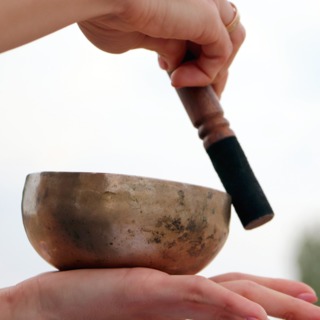
You can continue to sit in silence if you would like to continue your meditation on your own or use the sound of the bell to signal the end of the practice.