Welcome to this evening's teaching and sitting.
Please allow yourself to arrive and settle.
Welcome to this evening's sitting and teaching.
We'll begin in one minute.
Allow yourself to settle.
Welcome.
Welcome to the Institute for Holiness,
Kihilat Musar,
Makhalakadusha Kihilat Musar's weekly awakening,
Hithurah Rut,
Torah Musar Mindfulness.
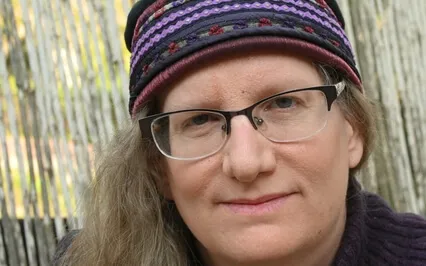
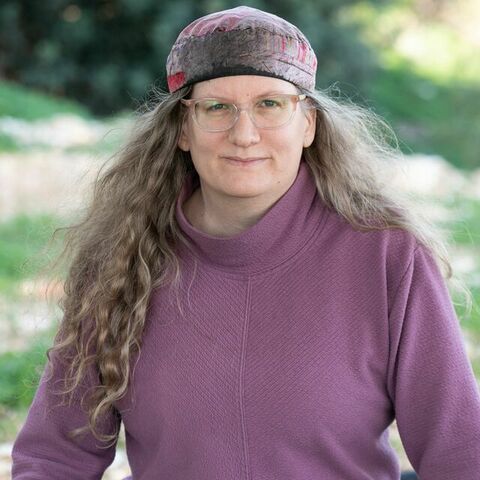
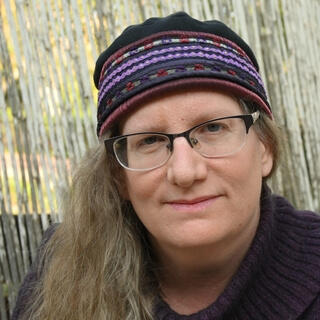
I am Rabbi Hasya Oriel Steinbauer.
I'm delighted to welcome you to today's teaching and sitting on the Parasha Chayyeh Sarah.
Hopefully you had an opportunity to look over this Hebrew Bible Torah portion,
Either last week or on Shabbat itself,
And to listen to either your synagogue or community reader over or for you to study that.
I will provide a summary as we move forward.
We meet weekly on Sundays at 3pm Eastern Standard Time.
And as I said,
I'm delighted to have you and welcome you.
We always begin with our kavanah,
With our intention for today's practice,
Which I will share screen with you.
And for those of you on audio recording,
What you're seeing is just a beautiful kind of morning affirmation card where on it are the following words.
Before doing acts of caring for the self,
Say,
This is something I am doing to strengthen my own soul in order to be of benefit to others in the future.
It is key to our Musar practice that we orient our growth and serviced towards others and towards God.
And this right now in this practice together and being together is an act of self care,
So that you are more present,
More available to care for the other.
And after you have your time of practice.
So welcome.
I'm delighted that you spent this time together and committed to your practice to this kehila,
To this community.
And of course,
To the Torah,
Musar and Dharma of this teaching.
I'm going to jump right in,
Which is,
I said this before,
And all of our previous portion of the previous Torah portions that they're deeply intimate,
Their ancestors are present and their stories,
And all the messiness of human life of looking at balance me dots and in balance me dots the soul traits of human lives are present in these stories,
And here and hi Sarah.
We encounter several ancestors in this text that we can learn from their own me dot which ones are balanced which ones are not.
We begin with our patriarch offer hum,
Who actually displays in this Photoshop balance responsibility,
A balance humility balance the DACA of righteousness and his behavior,
And pure curing a beer,
A burial place for his wife,
Sarah,
Who has passed,
And how he mourns her.
And as also he we see this really balanced behavior and his attempt to cure a future wife for his son yet suck.
And so we are finally our witness to an example where offer hum.
His memory before blessing is balanced and responsibility toward family members.
As you may recall the previous Torah portions.
He was not balanced and his relationship,
And his responsibility to family members he had a much more balanced equal easier time to care for and be responsible toward the stranger.
So here we have an example of his balance towards family members.
At the same time,
It is our practice to be mindful of what comes up for us.
And what is coming up for us is that we feel a pinch of sadness and disappointment.
That is actually in the death of one of those family members Sarah.
She's not alive to be on the receiving end of his responsibility of his humility.
And in the trauma in the inner death of his son yet sock from the accurate accurate yet sock and the binding of your sock and the previous partial via era that while he receives what his father orchestrated meaning his father found him a wife.
He will not receive comfort from his own abba from his own father,
But rather only in his new wife and his new relationship.
The other ancestor that we actually see and we often don't think of the servants of our home as ancestors but they were under his household.
They are among us.
So his servant,
Who was unnamed,
Of course our tradition believes it's in user.
But he is an unnamed servant he's a stellar example of balance responsibility,
Courage,
Humility is a result this enthusiasm.
Notice in his negotiations,
Even with his own master Abraham,
And his negotiations with LaVon and his family.
He is right there in the middle of it,
Taking up the proper amount of space,
Making sure he covers his basis of responsibility anticipating the consequences of not fulfilling the oath of Abraham anticipating the consequences that if he doesn't leave right away and leave with the wife there may be issues.
He's aware of his situation and takes up the right amount of space with deep wonderful responsibility and courage.
And then we notice,
We have to notice something very interesting that happens in this bar shop.
We noticed that Abraham the patriarch withdraws from his family,
And the text.
We get to witness in this withdrawal when he finally stops taking up so much space.
We get to witness other family members new and old,
Breathe,
And come into their proper space and place.
And it's just beautiful to witness.
So,
We encounter in this text more silence than sharing.
And in that silence,
We are left with our own projection.
We have to be aware of this when we encounter our narrative,
Our people's story,
Our master texts,
That with our own ancestors,
Even our own ancestors over time will project their own stories,
Their legends on how to read the behavior or lack of behavior in our second patriarch of the Jewish tradition which is Yitzhak.
He's a child survivor of trauma of a torn family where his biological mother banishes his half brother,
Yishmaya,
And his half brother's mother Hagar from his household,
Where his own father by all intents and purposes kidnaps him at the break of dawn before his mother could know that he was being taken,
And being taken by his zealot father to be offered as a sacrifice to God,
A God who has promised his father very much.
And coming out of that traumatic experience,
Yitzhak slowly finds his way.
He emerges as a soul in need of communion,
In need of silence,
In need of comfort.
And the extraordinary thing about this tender soul is that he knows how and when to accept that comfort,
Which many who have survived trauma do not know how or when to do so.
He welcomes Rivka,
His soon to be bride and future wife,
Into his dead mother's tent.
He welcomes Rivka into his sacred safe space.
He allows the deeds of love to manifest in that tent.
He allows himself to be comforted,
To receive the grace of Rivka and of God.
He is balanced in humility and anava of courage,
In strength and responsibility to himself and his self care.
And now with the honor of this ancestor of Yitzhak,
We can now apply what we have learned from him to our own practice of Musar,
Of Tikkun Hamidod,
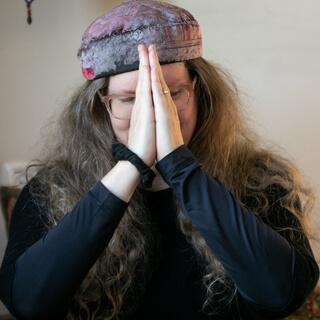
And our practice of mindfulness as we move into a guided sitting meditation together.
So I welcome you now.
If you need to stand,
Please do so.
I have a chair next to you to support you.
I advise keeping your eyes open,
Awake and alert,
But they can be lowered to the ground,
Your eyes.
You may lie down,
Especially if you have chronic pain or any issues.
Keep the eyes open so that you may remain awake and alert,
Please.
Allow yourself to begin to settle.
For the rest of us,
Please come to an upright seated position.
Allow yourself to plant your feet firmly on the ground,
Allowing Mother Earth to cradle you and hold you.
Allow the sit bones to sink.
Strong spine full of dignity,
You are created in the image of God and the likeness.
Sitting with high self-esteem.
Take three deep breaths as you slowly close your eyes or lower your gaze,
Whatever you feel comfortable best.
Perhaps allow the hands to rest in the lab or you may want them on your heart so that you can feel that grace that Yitzhak is given as a gift.
Notice if your breath is strained,
If you're trying to control it.
Notice if the in-breath is the same length as the out-breath.
Allowing yourself to arrive,
To settle.
Any sensations in the body calling for your loving attention,
Honor it.
You can even gently name it.
Tell the space that you will hold it in your heart space and return to it after our session.
If you are lost in planning for the future or in thinking about something that happened in your past,
Gently note that you have gone there and bring your attention back to my voice and back to your breath as your anchor.
Allow your focus now to go on what you experienced when you encountered our ancestors during Chayei Sarah and in the teaching I shared with you.
Notice the felt sense of your body,
Any embodied experience.
Recognize and allow whatever arises.
Tonight we do a practice not only awareness but of chesed,
Of deep loving kindness towards ourselves,
Toward our ancestor Yitzhak,
Toward Rivka and her bravery,
A child essentially married off in child marriage,
One that is attempting to have any agency in her own life.
Chesed towards Yitzhak and Yishmael having the courage to relate after the family trauma and coming together to bury their own father who passed away at the end of this weekly portion.
Chesed and loving kindness with joy and a smile towards Abraham's servant and his courage and his enthusiasm.
May we all fulfill our purpose and our tasks and our mitzvot,
Our commandments,
The way the servant does.
Such beautiful models in this week's portion.
So allow yourself to sit in silence today to allow the same silence that Yitzhak allowed within his own life.
In the silence and the calmness,
One can begin to heal.
For those of you new to meditation,
You can trust that I am aware that we are in silence and that we will move to speech again and that I will ring the bells when we are to come out of the meditation.
Simply notice whatever arises without judgment,
The curiosity of the beginner's mind.
Simply investigate and nurture yourself,
Whatever arises.
We move into silence now together.
We move into silence now.
We move into silence now.
We move into silence now.
We move into silence now.
We move into silence now.
We move into silence now.
We move into silence now.
We move into silence now.
We move into silence now.
The mind will wander from time to time.
That is its job.
There's no need to judge it or become frustrated with it or have it be any other way than what it is.
As my teacher Joseph Goldstein loves to say that the three most important words and mindfulness meditation are simply begin again.
When you wake up to the fact that you have wandered off,
Simply begin again.
Bring your attention to your breath.
As we continue with our silent meditation.
We move into silence now.
We move into silence now.
We move into silence now.
We move into silence now.
We move into silence now.
We move into silence now.
We move into silence now.
We move into silence now.
We move into silence now.
Allow yourself to come to the present moment.
Gently,
Slowly open your eyes,
Join us back in this sacred circle,
Time and space on zoom whether you're joining us live on Facebook,
LinkedIn or on YouTube or here on zoom.
We're delighted to have you all allow yourself to give yourself an inner bow for your practice of self care to be a service of others and God.
Bow to your teachers to God to your community.
All of it as a beautiful triangle.
All of it together,
We would all be weaker without our Torah Dharma mindfulness and Musa with God and community,
Whether it's Sangha or or here together on zoom through our healer community together.
Just delighted.
So I want to begin by a thinking and Dalia Bernstein for sponsoring tonight's teaching and sitting in honor of her mother,
Who has survived.
COVID before Schlemmer full health and healing heart and soul delighted to have such wonderful news especially when we're talking about him about grace,
The falling on our ancestor yet sock,
And now,
Dalia's mother she actually is submitted a wonderful question that will address for question and answer right now briefly,
Which is.
For those of us coming from trauma or traumatic background,
Where we're really deeply in.
I've done a lot of work to be able to be here.
In this present moment,
To be able to help ourselves to increase our toolbox,
And to be able to use what skills are available to us.
Dalia wants to know that what happens in the moment when we are sitting in this silence,
As we've just done.
There isn't any path,
Any opening of acid of loving kindness towards oneself towards others.
When something arises that we don't want that we do want to push away that we want to be in denial of.
She asks,
What do we do then.
I believe Dalia and as I would say this to everyone.
I think you know the answer inside.
We all do as we sit in our practice together that.
First we just need to recognize that we're having that judgmental voice that judgmental impulse,
Someone times they call it that shadow impulse but it doesn't have to be so dark,
It can just be.
An impulse that wants things to be other than what they are.
And to recognize that and to allow to honor that you have that impulse,
And to know that not always is like what's going to happen in our sittings.
Not always is it pleasant sometimes it's boring.
Sometimes it's actually uncomfortable or painful depending on what's going on in the body or on the emotions and the heart,
And that it's just the act of showing up and sitting and bringing that mindfulness to daily life.
Remember,
Off of the sitting cushion.
And that we are able to be aware of our own me though it's our own soul traits.
What's balanced right now,
Are we like it's are we,
In some sense,
Full of courage to be able to wake up and face another day to go out into that silence to go and have the ability to open one's heart.
And to comfort when it comes.
And to make sure to do so when it's healthy and right and when we're ready.
So with that we honor,
And we nurture.
One day at a time so Dahlia so grateful for your sponsorship here at the Institute for holiness Kehila,
And so grateful for your question to learn from you.
Thank you.
Thank you to all of you for your donations.
You're welcome to be in touch with us on sponsorships and memory someone or an honor someone.
And I thank you again for your practice.
I wish you well this week as we move into toilet dot.
God bless.
Thank you again.