Welcome,
Welcome to Awakening Torah,
Mussar,
Mindfulness.
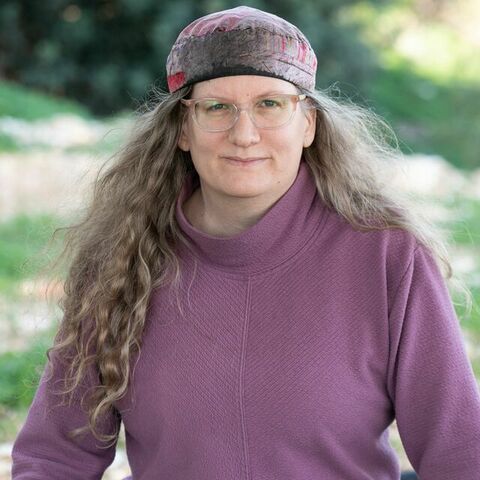
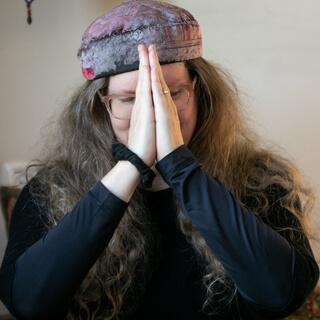
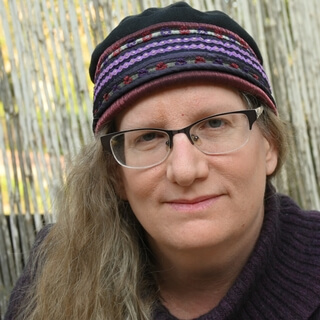
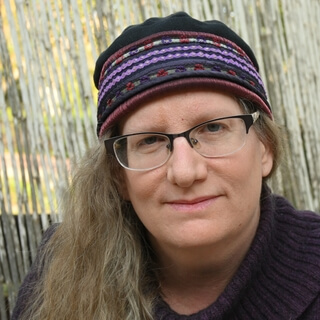
I am Rabbi Chassio Uriel Steinbauer,
The founder and director of the Institute for Holiness,
Makhon L'Kadusha,
Kekhilat Mussar,
The Mussar community,
Where we practice Mussar,
Mussar Mindfulness,
And Mindfulness,
Offering three tracks to all of the practitioners who are beloved members of this community,
Whether they wish to blend these two ancient traditions of Mussar and Judaism,
And Mindfulness and Theravada Buddhism,
To benefit from the insight of both,
Or just to practice Mussar from Judaism,
Or just to belong to a sangha,
Sitting in Mindfulness Meditation together,
And growing in the path of the Dharma.
All are welcome,
I'm delighted that you've joined us for our Sunday weekly session at 1230 Eastern Standard Time,
Here in Israel,
Haaretz,
7.
30 p.
M.
Delighted to have you.
Thank you for arriving,
Allowing yourselves to settle,
And to come to the present moment here.
So before we begin,
We always begin with our Kavanot,
And what we're going to cover this week.
So our practice is to actually look at the weekly Torah portion from yesterday,
From Shabbat,
The Shabbat that came before.
So our tradition normally is to study the weekly Torah portion for the parasha that will come up the following Shabbat.
But in our community here,
We like the benefit of studying the week before,
Being in community and studying Torah,
Listening to the Torah,
Being read,
If we do so in a synagogue or a minyan,
And then coming together to get this beautiful perspective of Mussar Mindfulness together,
Get the lens on the Torah,
What our ancestors are trying to share with us,
And teach what Hashem,
God is.
And this is what we do together.
We come together on Sunday for about up to 45 minutes to gain a little bit of insight into this Torah portion,
To apply it to our daily practice of Mussar Mindfulness,
That we're on this path towards holiness.
So I'm delighted that you've joined us.
So today,
We are looking at what we learned yesterday,
What we engaged in,
Which was Vayigash.
Just going to pull up my notes here.
Obviously,
You are more organized than I am today.
And that's what Hashem,
God willing,
I will get on track with you.
So that took place on Zayin,
The seventh of Tevit,
The Hebrew month.
December 31st,
2022 was yesterday.
So that was the weekly Torah portion,
Vayigash.
So we say Awakening Vayigash Torah Mussar Mindfulness.
We are in the year of 5783,
Tash and Tevet.
And so today is Sunday,
January 1st,
2023.
A happy secular new year to all of you.
And we will be jumping in in one minute.
So our Kavanot,
Our intentions for today's practice,
Are the same as they are every week.
I will be sharing screen for those of you who have vision or are watching on video.
For those of you who will be listening to the podcast or on audio,
You will hear me read what our intentions,
Our Kavanot are for today's practice.
So we see this time together of learning together and then engaging in mindfulness meditation practice together that I will guide you in later,
As an act of radical self-care.
So we say this is something I'm doing to strengthen my own soul in order to be of benefit to others in the future.
Our practice is other-oriented,
Meaning we practice self-care,
Practice being the healthiest,
Wisest,
Strong version of ourselves so that we may serve others and serve God.
So this is what we're also doing,
Is we see this as doing this practice on the behalf of others.
We say I'm doing this to strengthen my relationship to others so I can be a better conduit of God's good to others when they need me.
And the final thing that we're doing is strengthening our relationship with God,
With the divine,
With Hashem,
However we define that relationship or even that entity.
So we say this is something I'm doing to strengthen my relationship with the Creator so I can be a better conduit of God's good to others when they need me.
So as we always say during our sittings,
May we merit this.
May we merit less suffering.
May we bring the good to others and let it be so.
Ki in hiratzon,
Amen.
So we will move into a brief summary of this Torah portion.
So if you've been following long,
Mizrah HaTashem,
You know that we've entered what's called the classic story of Yosef and his brothers.
Young boy at 17 who was envied and then hated by his siblings,
His brothers,
Because the father loved and favored him more,
Yaakov.
He ends up being thrown in a pit and sold into slavery,
Heading down to Egypt from the land of Canaan.
And through his time in Egypt,
Rises in the institution of slavery to someone who is trusted as kind of the head house slave,
Then eventually serves more time in prison there and eventually gets out because with God's help,
He is able to interpret the dreams of the emperor,
Of Paro,
Of the king,
The head of the state down there.
So what happens is if famine comes into Egypt,
As we know,
They have these seven years of good harvest and then seven years of famine.
And this is the second year in,
As we follow from last week,
Where even the brothers,
His brothers from up in the land of Canaan are affected by the famine.
They need to come down to procure food in order to keep the family alive.
So they come down and they don't know it's their brother who is now the visor,
Who is the one responsible for handing out food,
And he recognizes them immediately.
And this is the first time,
As I pointed out last week,
That he actually recognizes them.
He actually sees them fully.
Whereas as a 17 year old,
That wasn't on the radar.
He didn't have those skills yet.
And if he did,
He wasn't practicing them.
So what ends up happening is he puts his brothers through all sorts of trials.
I mean,
That's our interpretation.
What ends up happening is he tests his brothers,
Essentially.
To see if they are the same folks who threw him in a pit and enslaved him and didn't listen to his cries when he was in the bottom of the pit for them to save him.
So through this testing and trial,
He actually threatens to enslave the youngest brother,
His own full brother from his mother,
Rachel,
And his name is Benyamin.
And instead of.
.
.
So what happens?
This is the scene that we're entering.
Yehuda,
Who is the fourth son of Leah,
Steps forward.
And basically it's vayigash.
This is why it's called this vayigash Yehuda.
He approaches Yosef to release Benyamin.
He kind of,
Through a very sophisticated argument,
Language,
Begging,
Entreating,
Trying to pull at the heartstrings,
He wishes to be taken as a slave instead of Benyamin.
And it's authentic.
It's the longest speech that happens here,
Even though maybe it's five minutes long.
So it can be feel painful to read and listen to,
To witness.
And that's part of what we're going to look at is what's going on here.
But first,
Just a summary.
So through this process,
Yosef finally decides,
He reveals himself.
So the brothers are able to recognize him.
So it's reciprocal.
And Yosef instructs them to,
After much crying and hugging and reuniting with the brothers,
He instructs them to return to the land of Canaan to get the rest of the family,
Because he warns them that there's going to be five more years of famine,
That they need to actually come down in order to survive this.
And then his father,
His Abba Yaakov,
Is told by God,
Do not fear.
So that immediately tells us that Yaakov is fearing.
To come down to Egypt.
So he tells him not to fear that he'll make him a great nation.
Again,
The same language of do not fear,
And I'll make you a great nation is told to his ancestors,
To Avraham and Yitzhak,
His grandfather and father.
And he's also told that God says,
I will go with you,
I will go down with you,
And I will return with you.
Now,
Obviously,
If you know,
In next week's Parsha,
In Vayikhti,
He doesn't return with him.
God doesn't return with Yaakov,
He passes away.
So we take this to mean that God was meaning larger,
Like I will return with your people,
Not just you as a person.
So one of the key things we want to notice is all the recognizing that begins to happen,
The seeing of each other,
Right?
So before,
You know,
Yosef recognizes his brothers,
His brothers finally recognize him.
And now Hashem is recognizing,
God is recognizing Yaakov and his fear,
And is naming it and is supporting him and being there.
Okay,
So we're gonna hold on to that.
So Pardo,
The head of state,
Meets the family as they come down,
Gives them permission to settle on the land of Goshen,
Which is Goshen in English.
The famine worsens,
And we get to see this process kind of unfold where the state,
Through Yosef,
Takes over control of all sharing of food in order to cause the population to survive.
So the Egyptians use all their money to procure food,
And then when the money's out,
They use their animals.
Then when there's no more animals,
They use their land,
And when there's no more land,
They essentially use their own bodies,
Perhaps souls as indentured slaves or servants,
However you want to word it,
To the state in order to be kept alive and be given food,
Presumably before labor.
So this is all happening while Yosef's family,
Our ancestors,
Are residing in Goshen,
And not only residing,
But are thriving,
Are prospering.
We'll hold on to that,
Because we can already anticipate longer-term problems.
You can imagine in your own nation state,
Wherever you live in the world,
If there is an immigrant population who has been welcomed into your nation,
And it's in the middle of a famine,
And they are thriving and prospering,
And the rest of the population now has had to put themselves in indentured servitude in order to survive,
What kind of climate that might create.
Okay,
So we'll hold on to that for Vayichi and entering Shemot next week and two weeks onward.
All right?
Okay,
And finally,
I'm going to move into specific things that are,
I think,
Very important here that really start to,
That I want to focus on for us,
Particularly in our practice of Musar mindfulness.
All right?
So the first thing is,
I normally don't address Midrash.
I normally try to,
Midrash is basically kind of Jewish rabbinic exegesis interpretation and stories that,
And these were probably very much oral from thousands of years ago,
That explain and fill in the Torah and the text for us to understand it more.
And so one of them comes down to us in Be'er She'it Rabba,
In order to understand,
When Yosef sends his brothers back to pick up his father,
He sends lots of agolot,
Lots of wagons full of food and other things to get him and bring all the family down.
And of course the rabbis are like,
Why are we given this detail?
Do we need to know that wagons came to pick up the father?
And so it brings this beautiful story about the last time that Yosef had learned with his father,
They had learned this Midrash on the egg la'arufa,
The heifer,
The small animal that essentially is killed,
Slaughtered in a ritual,
Where if the Jews find,
The Hebrews and the Jews find a dead body,
Person who's been murdered,
And it's out in the middle of nowhere and nobody knows who did it,
Then the elders of the community come and they lay hands on this animal and they say out loud to recognize,
We didn't cause this,
Nobody here caused this murder,
We're not responsible for this,
But at the same time through the ritual taking responsibility for this and that in a way,
It's a performative act to say that,
Like no one's going to be ignored,
Not even this dead body,
Right?
And the Midrash is brought in our Torah portion because Yaakov's spirit is revived when he sees Yosef's wagons.
So they want to come up with a reason why,
And so they tie it to this idea that they had learned about this and the two words are similar,
Of Eglah and also Agalot.
But what struck me this time was,
It was Yosef who was presumed to be killed,
Murdered,
Possibly by a toref,
By a predator in the middle of nowhere.
And if anything,
There was no body found ever,
And that's very painful for a family.
And if anything,
The elders,
Including Yaakov and family should have done such a similar ritual of recognizing that we're not responsible for this and that we're taking responsibility and the boy is nowhere to be found,
There's no body.
And so I think there's something stronger going on here that he sees these Agalot and he's revived because obviously these Agalot represent someone of great wealth that would send all this back from Egypt.
So they represent his son in the physical form.
He's no longer this dead,
Murdered being in the middle of nowhere that the fathers had to learn to live without a body.
And there's something just really beautiful and profound about that,
That it revives him.
So I want to bring that in.
There's something also really ironic that part of our Muslim mindfulness practice is being able to look at the tradition and see where it's also lacking that obviously didn't hold the same values that we might hold today.
And one of the key areas is that we're able to hold this and this and not have to reject either one.
So where am I going with this?
Our tradition says that we slaughtered this animal in this sacrifice basically to God to take responsibility.
And that so no one would be left unprotected.
This is understood to be the purpose.
But here,
Isn't it so ironic that we're taking an animal and that animal's not protected and we're not taking responsibility for the life of that animal.
So today we know in our values of Muslim mindfulness and particularly in the Dharma,
Right?
Of causing no harm or suffering that we don't want to cause harm to an animal and we don't feel that we have to in order to address that we're going to take responsibility for a body missing or a murdered human being that is in the middle of nowhere and we don't know who did it.
And so we're going to hold onto that first that part of our practice is growing and greater wisdom and insight and awareness into the pain and harm and suffering of all beings not just human beings.
Obviously moving away from traditions that cause us to slaughter animals as a way of taking responsibility and accounting for those who are not protected.
We're going to hold onto that and move into a little bit more teachings where we're headed with this.
Okay,
So let me pull up first what I want to share with you and thank you for your patience.
Okay,
So the key thing there,
There's like a couple of key things I want us to walk away with today.
The first is Yosef really accepts his brothers.
He accepts after the trials and what he went through with them is pretending to be this Egyptian leader and not be Yosef.
And in order to kind of test and see if they are the same way and would act in the same way towards Benjamin as they did to him.
He really is a demonstrating to us that he is moved and practice and become in some ways a Baal,
A master of being in the present moment.
And he's actually being able to see his brothers with a beginner's mind.
And what do I mean by that?
Is so much of relationships are that we've never see the person as a new with new lenses each day and a new way,
A new clean slate.
Let's try this again.
It's always based on how they behave the day before or the week before or the years before.
It's almost like a keeping score.
We do this subconsciously,
Particularly with family.
So when we're trying to practice mindfulness and really accept someone in the present moment with this beginner's mind,
That requires that we don't see them based on their past behavior.
Unless of course,
It's not wise if they were dangerous or unhealthy.
I'm not talking about those situations.
I'm talking about our basic family of like the struggles and everything we go through with family.
Right?
So Yosef is fully aware.
He holds this and this.
Okay,
Ready?
So he,
When he's reunited with his brothers and finally admits who he is to them,
He says something very profound.
He says to them,
So we're in chapter 45.
We're starting with Pesach verse three.
He says to his brothers,
I am Yosef.
Then he asked immediately,
Is my father still well?
Interestingly,
My father,
Still not our father.
And of course the brothers can't answer him.
And he immediately goes into,
And this is very interesting,
Pesach four,
Verse four.
He says to them,
I am your brother,
Yosef,
He whom you sold into Egypt.
Okay.
He says,
Now do not be distressed or reproach yourselves because you sold me.
It was to save life that God sent me ahead of you.
We're going to interpret what that might mean in a second,
But basically taking this at its basic,
Basic meaning,
He is saying,
I am able to see you and recognize what you had done 22 years ago.
You sold me into slavery.
And there's,
This is an and,
This is not or.
And I'm able to see you with fresh eyes.
And as a beginner's mind,
I see that you are different,
That you've changed.
You've demonstrated that to me.
You're willing to enslave yourself instead of your younger brother.
You're concerned about your father and how he would survive this.
These are all clear signs that this is not the same Yehudah,
The same brothers.
So he,
Yosef basically is not prison to what happened to him 22 years ago.
He's not a prisoner,
His own prisoner from the storytelling and what happens.
He's not a prisoner to the trauma that happened 22 years ago.
And more even than that,
He's done something beyond just learning how to live as a victim survivor with resilience and resilience.
And I'm not saying that he's a survivor with resilience from trauma,
Correct?
He has totally reworked the story that comes with what happened to him.
And the story is God sent me down here in order to save lives.
So he's holding both.
He's not saying what happened never happened.
God sent me to save people.
You didn't really enslave me.
He's saying you did do that.
And this is also true.
And I am free.
And now I want you to be free.
I don't want you to be distressed.
I don't want you to be locked in what happened with guilt for what happened 22 years ago.
It is time that we be here together to save lives,
To save your lives and all of our family and to be together in the present moment.
It's very profound.
Yosef is a model for us in our practice,
Our daily practice of Musa mindfulness.
Okay.
So what else do I want to share with you?
What's our key?
Okay.
That's our first,
First key thing that I want to point out here.
And bear with me.
I have to have a sense of humor sometimes when I'm a little all over the place.
And so the other key thing that,
Oh,
Yes.
The other key thing that's very important in our practice and interpreting these beloved texts and tradition from our ancestors is essentially we have to be careful the stories we tell ourselves and those we accept from our ancestors and rabbinic exegesis.
We have to be mindful for what gets handed down to us and why we might say such things.
Correct?
So give me one second.
I want to make sure that I cover everything that I,
What did I want to share for me here?
312.
Okay.
Then Yaakov's fears.
All right.
So one of our key,
One of our key parashanim commentators from our tradition.
I brought her before because she's beloved to me is a Nechama Lebowitz in new studies in Bereshit.
It's both in English and Hebrew,
Originally in the Hebrew.
And I bring her because sometimes she so embodies how a rabbinic tradition approaches our ancestors.
And one of the ways I would say,
One of the key ways they often approach our ancestors is that they are pure,
That they didn't really do the acts that we see as sullying,
Acts that are unwise,
That it was for a reason,
Or it was ordained by God because God had selected them,
All sorts of readings in order to either accept the ancestor more,
Or a way to deal with the discomfort that our ancestors who are treasured to us and have in some ways considered holy,
In order to deal with that discomfort that they are highly human and sinned and made mistakes,
Just like all of us.
And it's unfortunate that over the two years,
Sometimes over a rabbinic exegesis,
Gets kind of rose-tinted glasses sometimes of how we view our ancestors,
Seeing them in a light that's not recognized in the actual Torah,
If you read the text closely.
So let me just quickly share with you why we wanna be careful about this,
Because we're all prone to do this,
Okay?
We all want to make things sometimes better than what they are in order to not have to faith,
It's a form of aversion,
Not face the discomfort of facing someone as they are,
Right?
So it comes up when Yehuda,
Yosef,
Yosef's brother is giving his famous long speech in order to cause Yosef to not enslave Benjamin,
But rather to take Yehuda.
And in that speech,
He shares,
This is in chapter 44,
Verses 19 through 21.
He says,
He shares what his father said to him,
Okay?
So he said,
Let's see here,
I wanna make sure this is the part I wanna give you.
No,
And okay,
It's chapter 44,
Verses 25 through 29.
Thank you for your patience.
He goes on to say,
And our father said,
Go back and buy us a little food.
So he's recalling to Yosef why they came back down again in order to procure some food in the famine.
And he said,
We can't go down if our youngest brother,
Benjamin is not with us,
Then we go down,
We may not,
We were told by Yosef,
Whom they didn't supposedly know was Yosef,
That the man said that if he sees them and the brother is not with them,
Then they essentially will not return,
Right?
They will be enslaved or put in prison.
And then he goes on to share this.
He says,
The servant,
My father said unto us,
You know that my wife,
Now this is a man that has four wives,
But he says,
My wife,
My wife bore me two sons.
His four wives bore him 12 sons,
Okay?
But here he says,
You know that my wife bore me two sons and the one went out from me.
Surely he is torn to pieces and I have not seen him since.
And if you should take this one too,
Meaning Benjamin,
The one torn to pieces was his assumption about Yosef,
Then mischief will befall him and it'll bring my gray hairs to sorrow to the grave.
So reading this from my perspective,
As you,
If you learned with me in the past year of our awakening with our mindfulness,
You would see this as in total alignment with who Yaakov is.
Yaakov,
Yisrael,
Is someone who's always favored Rachel from the very beginning and did not hide that,
Favored his son,
His first son from her,
Yosef,
To the point of buying him a special jacket or making him one,
To the point of favoring him above all the other brothers,
So much so that it developed jealousy and hatred in the other brothers who end up hurting him and causing harm and suffering,
Putting him in slavery.
This is the Yaakov who now favors Benjamin.
This is in total alignment with who we know Yaakov,
Yisrael to be.
And as painful and as uncomfortable that is to us,
We can accept this as part of,
We can believe that he would say something like this.
But this is what my beloved commentator,
Nahama Lebowitz does.
Okay,
She says,
She says that,
It is inconceivable that Yaakov should have uttered in the presence of his 10 sons,
The children,
Leah,
Zilpah,
Bilhah,
Such as these words,
You know that my wife bore me two sons.
How could Yaakov have described Rachel to the children of his other wives as his wife?
Okay,
It's inconceivable to her,
Right?
She doesn't believe it.
She said,
Goes on to say that Yehuda,
Judah here,
Must have added them for effect in order to arouse the compassion of the Egyptian governor,
Which is Yosef,
Encloseted Yosef,
Essentially,
Yes?
So,
I'm having great compassion for Nahama and other commentators who feel that they can't imagine their beloved ancestor Yaakov to do this behavior.
But this is totally in par with who we know him to be.
Think about the performative acts that he did back at the camp when he was going to be reunited with Esau.
What does he do?
He puts Bilhah and Zilpah first with their children,
The concubines who became wives.
He then puts Leah and her children,
And then Rachel and Yosef,
Because Benjamin wasn't born yet.
And that's the order he puts them,
Because he assumes that if Esau is coming with 400 men and might cause harm and suffering,
Might murder them,
That it should be the concubines and those children who get murdered first and Rachel and Yosef last.
So,
Why is it inconceivable that he would then say something like this in front of the whole family when they already had to physically get in line and march in front of the uncle,
Esau?
So,
Why they bring this is not to knock down Nahama,
Because she's actually totally in alignment with where a lot of our rabbis from our tradition of the 2000 years would be with Yaakov and our other ancestors.
It's more for us to recognize,
When do we,
When is it too much?
When is it,
What we experience in learning these texts together,
When is it too much that we just can't believe it?
So,
We practice aversion.
We say,
This is inconceivable.
Our ancestors are holy,
Or these are,
You know,
These are stories,
This is,
This is,
They would never do that or such,
Okay?
That's one practice,
One that's not wise and causes us harm and suffering long-term,
Right?
So,
We have to recognize that in ourselves.
When do we,
When do we create stories in order not to face things just as they are?
No need to embellish,
No need to push away,
No need to over-identify,
Right?
At the same time,
There's those in our tradition who might practice this type of aversion and say,
Like Nachama Lebowitz,
That our beloved teacher,
That,
You know,
It's inconceivable that Yaakov would behave this way,
To those who are so disturbed by the text on the surface level,
Meaning they haven't studied it closely enough to see the full range and diversity of the voices and the practices and the behaviors,
That they immediately,
It's another form of aversion,
It's a dis-identification,
That they will kind of shut the door on the text and not want to learn it or identify with it.
They'll see it as that,
That's not me,
That was from a long time ago if it happened at all,
And that's not who I am.
So what is so healthy and wise about Musar mindfulness and our practice is to be able to recognize the unwise,
Unhealthy behavior of our ancestors and see where we also do it and practice it,
And the big ands,
Hold both,
And live with where are the lessons?
What can we do with this?
What else exists?
Where is the reconciliation?
Who are our models?
How do they shift and change?
So we do have this in the stories.
If you look,
Remember how there was the reconciliation between Yaakov and Esav,
That basically they were able to come together,
They were able to cry,
Be on each other's neck,
They were able to,
Yaakov was able to give reparations for stealing the birthright and blessing,
And they were able to walk away,
But still relate,
Still be in relationship,
So much so that they were able to come together for the funeral of their father,
And that's very profound because I think what the Torah has been building for us,
Or at least what we can learn from these beautiful families and examples,
Is that we are here with family,
As uncomfortable,
As unhealthy,
As difficult as it can be,
That we don't practice aversion and disidentification,
That we don't push away,
That we don't say,
This is no longer my family,
Or we don't over-identify either and make them into holy beings as if they didn't do this behavior and make up other storytelling.
We don't go to these extremes and do the either or.
Instead,
We come to this golden middle path,
Right,
Where we attempt to hold on to the past and we attempt to hold both as part of our daily practice and what we can learn from these texts.
So with this now,
I'm going to invite us into our guided Musar mindfulness meditation practice.
I just want to make sure there was nothing else that I wanted to share with you.
Not right now.
There's always so much more to say and we never get to.
That's the beauty of Torah,
The gifts from Hashem and our ancestors,
Is there's always something more to learn and get out of it.
So with that,
I invite you to assume one of the four postures of mindfulness meditation.
You may sit in a chair or on the zafu or on the ground,
Making sure that you really feel your sit bones in the upright position,
Created with dignity in the image and likeness of the divine.
You can also stand,
You can also walk,
And you can lie down.
Whatever works for you.
If you have any chronic pain and need to move or not sit,
Please take care of yourself.
Practice self-care.
For those of us who are going to sit,
Please plant your feet,
That you are grounded,
You feel held by mother earth,
You are between heaven and earth,
Coming into this presence.
You want to invite awareness now.
You want to invite presence.
You can even do that quietly with yourself.
I'm inviting awareness,
I'm inviting presence.
I invite you to close your eyes if you have vision.
We begin with our three deep cleansing breaths.
Inhalation,
Inviting ease,
And exhalation,
Beginning to arrive.
Inhalation,
Inviting gentle kindness,
And exhalation,
Letting go of any tension,
Bringing a smile to your face.
And inhalation,
The gift of oxygen from God,
And exhalation,
Coming to stillness.
You are arriving,
You are here,
Noticing what is real for you,
Simply recognizing what is here in this moment.
What are your thoughts,
If any?
Are you able to be here with my voice in the present moment?
Recognizing any strong sensations in the body,
Calling for your loving attention,
Perhaps calling for your distraction,
Knowing that you can bring yourself back to my voice,
Back to the present moment.
Our teacher,
Joseph Goldstein,
Teaches simply begin again and again,
And again with this breath,
And again with this breath.
Recognizing any emotions,
Pleasant,
Unpleasant,
Neutral.
Where are you right here and right now in this moment?
Today,
We will engage in mindfulness of thoughts meditation.
And the reason why we are moving through a mindfulness of thoughts meditation is in honor of Joseph in their Torah portion,
Who worked through so many of his storytelling and thoughts in order to be able to break free from the unhealthy pattern of vengeance,
Revenge,
Reactionary behavior,
To be able to come out,
To be recognized,
To be seen,
To be able to say,
I see you for who you were,
How you behaved,
And I see who you are now.
I hold both.
I'm here with the beginner's mind.
I am open to experiencing you anew.
L'Shem Sh'mayim,
For the sake of heaven,
To save lives,
To bring God's good.
So we too,
Like Joseph,
Have our own thoughts and patterns of thoughts,
And habituated thoughts,
And storytelling,
Some that might arise during this meditation.
And our practice is simply to observe them.
There will always be a stream of thoughts in the background,
And our practice is to let them be,
Let them rise and fall like waves of the ocean around the breath.
Our practice is not to react,
Simply accept the thoughts as they are,
As they arise,
As they pass,
Knowing that we are not our thoughts.
Periodically,
A strong thought will arise and carry our attention away.
That is what thoughts do.
And soon as you begin to notice this thought that you're being carried away,
You simply name it according to its predominant quality.
We can use simple mental noting like planning,
Remembering,
Judging,
Worrying,
Imagining,
Fearful thought,
Happy thought,
Interesting thought,
Creative thought,
Painful thought,
And so forth.
The practice of naming,
Acknowledging the thoughts is supportive of our witnessing quality of mindful,
Loving awareness.
It is true for Yosef too,
That he finally noticed that he was caught in thoughts and the web,
That he was reacting,
That he was in storytelling.
He went out to cry,
To gain composure,
And came back and revealed himself.
He was able to allow that storytelling and thoughts to dissolve like a cloud under sunlight.
Thoughts are ephemeral.
They have no substance except what we invest in them.
So all along,
When Yosef was caught in his own reactivity,
He was telling himself,
These are the brothers from 22 years ago who threw me in the pit.
That's all he could see.
He wasn't even able to recognize the felt sense of that.
So caught up in reactivity,
Crying,
Leaving the room,
Acting out.
And finally,
He was able to practice mindfulness.
He was able to return to the mindfulness of his breath and body to move through the strong experience that pulled his awareness away.
And the same with us.
We step out of our stories.
We can see habituated common patterns of thought without being caught up in them.
The practice over time,
We begin to rest in mindful,
Loving awareness,
Simply being a witness instead of being carried away by thought.
And so he gets to witness this week how Yosef moved to nurturing and this non-identification to be able to say,
I see what you did 22 years ago,
And I want you to be in the present moment.
I want you to let go of the fear and the guilt to see me in the present moment.
I am your brother.
I am here.
And God sent me here to save you.
Notice how it feels the very moment that we shift from being absorbed or lost in thought to simply name it without being swept in it.
What habitual story or thought arises in you?
It's maybe even here today.
Can you invite acceptance?
Can you investigate the felt sense of that thought in the body?
Thoughts have a real effect on the body.
They trigger.
That is why in our story,
So many times Yosef cried and had to leave the room.
His thoughts and his storytelling,
It was affecting his body.
Some thoughts bring strong emotions and some emotions bring certain thoughts.
That is our practice to observe them all without reacting.
And even in those moments where we react,
To be able to face ourselves with kindness,
With self-compassion,
To be able to say,
I'm reacting.
I can imagine our dear,
Beloved ancestor Yosef in his final moment alone,
Where he went off crying,
Where he paused and said,
Yosef,
You're reacting.
You're caught up in it.
Can I love myself enough to see the shared humanity that I have with my brothers who are also suffering?
Can I practice enough self-compassion to love myself,
To know that I am more than the boy thrown in the boar in the pit 22 years ago?
Do I love myself enough to practice,
To know that God has sent me into this moment to bring God's good to others?
He is a model for our practice today and all days.
Where can we tap into this practice of self-compassion to know where our shared humanity is with others,
Where we can practice the mindfulness of what is going on for us and to bring that kindness.
We're not alone.
And in our closing minutes of silence,
Imagine you are an open sky.
Thoughts float through like clouds move from thinking to actually lovingly noticing the clouds.
I will let you know when it's time to come out of the meditation.
Gently and slowly open your eyes.
If they are closed,
Join us back into this sacred Zoom space or live streaming on our YouTube channel or on Facebook.
Thank you for your practice.
Thank you for entrusting me to guide you and lead you on how to practice Musar mindfulness together in relation to the Torah,
The Hebrew Bible.
I'm grateful for your practice,
Supporting the Institute for Holiness,
Kihilat Musar.
So we may continue to offer these weekly offerings to you on Sundays at 1230 Eastern Standard Time.
Please do join our newsletter,
Subscribe,
Visit us and be in touch with who you are,
How you want to take refuge in this community,
How you want to learn Musar mindfulness.
We thank you for your sponsorships and donations and we wish you well this week.
Looking forward to next Sunday,
B'srat Hashem,
Where we will jump into the last Torah portion in the book of Bereshit of Genesis.
God bless you all and thank you for today.