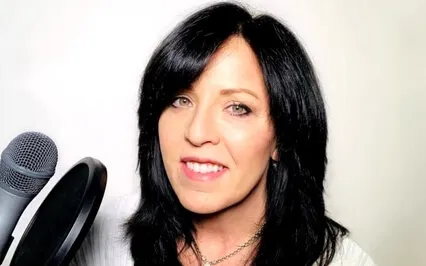
Welcome to the Breakdown to Breakthrough Podcast.
My name is Lisa A.
Romano.
I am a life coach,
Bestselling author,
YouTube vlogger,
Meditation teacher,
And expert in the field of codependency and narcissistic abuse.
I am a believer in the power of an organized mind.
My aim is to help people learn what it means to live above the veil of consciousness rather than living a reactive life.
May your heart feel blessed,
Your mind feel expanded,
And your spirit find hope as you spend time with me here at the Breakdown to Breakthrough Podcast.
Today we're going to be talking about the six signs that you're living your life for others and not for yourself.
So today we're going to be talking about the warning signs that we are someone who is losing ourselves to other people and to relationships.
And I think it's important to start from the position that it is normal to want to feel connected to other people.
It is normal to want to gain a sense of validation or affirmation from other people,
But not at the expense of the self.
When we are codependent,
We are seeking a sense of enoughness from someone or something or some experience outside of ourselves.
So think about this idea of co.
I'm codependent upon my children.
I'm codependent upon my husband's affirmation of me or his affirming of me as a person and as a good person.
I am codependent upon what my family thinks about me.
And if my family and my friends think I'm good,
Then I have a pretty positive self image.
The problem is it's not our self image.
The problem is that we have given over our right to feel good about the self over to the hands of people who are just as wounded and just as imperfect as we are.
And that's where we get into trouble.
And this all happens below the veil of consciousness outside of our conscious awareness of it,
Which is why I like to talk so much about living above the veil of consciousness.
If you are someone who has been living their life for other people,
You might not even know it consciously.
And if you're like a lot of people,
You might not even be taking an emotional inventory of how you feel.
Living goes back to the way that you feel,
Because the way that you feel affects the words that come out of your mouth and it affects your behavior and therefore it affects your outcome.
Here's the issue that many of us will find.
If you grew up in a home that taught you that what you felt was invalid,
Then you have a program running that may cause you to disown what you feel because of a particular fear.
You might fear losing connections to other people.
You might fear criticism.
You might fear rejection.
You might fear abandonment.
You might fear humiliation.
And that fear prevents a lot of us from living out loud.
I know it prevented me from living out loud.
I know that that fear of what other people were going to say about me publishing my first book and this terrible,
Terrible feeling of like,
Who do you think you are,
Is if I didn't have a right to write a book,
Of course I did.
So do you.
But other people who have very strong opinions about you,
Who have been conditioned to think poorly of you,
Maybe because of what happened in your family,
Maybe your mother scapegoated you,
So siblings are now having a,
Have a poor opinion of you or you're in a narcissistic relationship and the person that you're married to is actually threatened by your individuality and you putting yourself out there.
And so they have a poor opinion of you.
And then this grows like the blob.
They go into triangulation,
They go into smear campaigning,
And now you've got people from many different sides and many different areas of your life,
The pooing,
This idea that you are writing a book or you're starting a new business or you're doing something different.
It's like the negative people around us or people who are intimidated by something that you might want to do,
Want to suppress your right to do it and your power and your confidence to do it.
And yet we know that anyone that's ever achieved any amount of success has failed so many more times before they found the secret sauce.
And so I wanted to talk about signs that,
Warning signs that you and I are living our life for other people rather than for the self because it is our responsibility to the self to come into alignment with what feels right for us and to live that out loud and to empower other people along the way.
And the more we learn about the self and the more we honor our innate gifts and what's right for us,
The entire universe benefits.
So if you love baking and you're out there and you're putting love into your baked goods,
You make other people happy.
People come to your bake shop and they're overjoyed that you're open and that your cupcakes are so good and they're so fanciful and they're so exciting and your niece is going to be so excited that you brought these cupcakes to her birthday party.
That's you honoring your gift.
If you're a writer and you love to write poetry and you write something so beautiful that it touches someone's heart and whatever you've written has opened up their heart,
That's a beautiful thing.
So you honoring you has allowed you to unfold in this amazing way and now it's bless someone else.
So you honoring you and going through all of the things that you had to do to honor what you felt is now benefiting the planet.
You honoring that gift is an amazing thing.
And so we all have innate gifts and it's just a matter of figuring out what those gifts are and allowing them to unfold and trusting them and getting in the vicinity of what it means to honor that gift.
Les Brown tells a wonderful story about him wanting to be a DJ.
And what he did was he ended up,
He got in the vicinity of what it meant to be a DJ.
So he started sweeping the floor of a local radio station and one day the DJ on duty got very inebriated and Les Brown ran into the recording studio and he took over because it happened to be a live broadcast.
I just love that story.
Les Brown got in the vicinity of his dream,
His desire.
So this is what all of us can do.
But when we are codependent and when we are suffering from childhood trauma,
We have all of these subconscious background noises playing that we're not even consciously aware of.
So I'm just hoping that this session raises your awareness around some of that background noise.
Why?
So you can see the hole in the wall and fix it.
That's the whole purpose.
So the first sign is that you are really good at lifting other people up and not so good at being there for yourself.
Does this sound familiar?
So you're the perfect cheerleader and champion for others,
But you wobble knowing what it is you want and what it is that you need.
So identifying your values is difficult for you and so you find it easier to focus on inspiring others,
But fail to know what it is that will make you happy.
Now this goes back to not having a healthy sense of self.
This goes back to not knowing who we really are.
This can trace back to trauma where we were taught that it was our job to rescue mommy and rescue daddy,
Take care of everybody else's feelings.
You could be a child in a family who had to pick up the slack of the parents or this other siblings.
And so you've been conditioned either through familial experiences or even by nature.
If it's familial,
Then you have been conditioned to worry more about others than to worry about yourself.
It could be cultural too.
Lots of cultures still encourage this idea that women and girls are responsible for the men and this will make it difficult for a woman in that type of a culture to really step out and say,
Well,
What about men?
And if it's the way that we're born,
Which is very possible,
You could be someone who is highly sensitive.
You could be somebody who is highly empathic.
And so it is natural for you to pick up on the energies of someone who might be down and you might see yourself as someone who is better at supporting someone else and you could lose yourself in doing it.
There's nothing wrong with being someone who wants to support other people and that feels right for them if that is truly your calling.
Think about someone,
An employee who supports the CEO of a company and feels like,
You know what,
I don't want to take charge of this company.
I don't want all the responsibilities of this CEO or this owner or the president of this company.
But I really feel at home in my skin supporting the person creating this documentary.
I really feel good in the space of supporting this person that's doing this thing out in the world.
That's fine because that's true for you.
But I'm talking about those of us who don't know who we are.
We are very wobbly about what feels right for us.
And what then happens is we are on the sidelines of life supporting people rather than stepping out into life knowing what it is that makes us happy.
So be aware of that.
That's a hole in the wall.
Number two is you feel more at home taking direction from others than leading your own ship.
So this is more about being directed,
Literally directed.
So this means that there is an absence of knowing what you want,
Which is different than knowing what you value.
A value refers to your individual beliefs about life and about yourself.
The absence of a goal implies that you are passively waiting for life to unfold or you are waiting for someone to come into your life to offer you direction.
I really believe that I was guilty of this,
Especially when I was younger.
I was just waiting for someone to tell me,
Lisa,
This is what you do.
This is the class you take in college.
This is why you become a nurse.
This is why you do this.
This is why you do that.
I really think that I was passively waiting for a relationship.
Get married.
Okay,
Now I'm a white.
Okay,
Now I'm going to have children.
It was like I was waiting for a role to be given to me so that I could finally get direction.
And I believe that that goes back to being raised in a family that was very codependent and very controlled by my dad and by observing my mom be very passive in her life.
And so I watched my mom give up herself consistently to this relationship.
And I think it conditioned me to do the same.
So waiting for direction.
So if you came from a home,
Let's say,
Where you observed your mom,
For instance,
You could have observed your dad do the same thing.
But if you observed your mom or your dad literally wait for direction from their partner,
Then you may have been conditioned to do the same thing,
To be absent of your own goals.
What's right for you?
If you want to achieve anything in life,
You have to set a goal.
But if you don't have a value system,
Or if you don't know what your talents are,
If you don't have a sense of self,
Then you don't know what your goals are.
And so if you don't have a goal,
How can you set a goal?
How can you set the actionable steps into motion to actually achieve a goal?
So if you are someone who realizes,
Oh,
Wait a minute,
I don't have any goals,
That might be something that you want to look at,
Because you might be waiting for someone else to support their goal.
And you might be subjugating your ability or your right to set a personal goal for the sake of another person.
So the third thing is you don't feel like you have anything worthwhile to contribute.
If you grew up in a family that made you feel like what you've,
And again,
We're going back to the feelings,
Everything's about your feelings.
If you grew up in a family that made you feel like what you contributed wasn't good enough,
If you were mocked,
If you were scapegoated,
If your test marks were never remarked on,
In other words,
Like you really studied hard and you got a great grade on a test and it was ignored,
Your parents treated you with indifference,
Then you may struggle a little bit with this.
If you struggle with feeling like you have something worthwhile to contribute and give the world or even a conversation,
Then you may also be struggling with a sense of low worth.
Like you don't feel like you as a person are worthy.
You may have suffered from some type of emotional trauma,
Which is tied to rejection,
And you may subconsciously worry that speaking up might cause you to lose relationships and connections to other people.
And so when we've experienced abandonment trauma in the past and we have attachment issues,
Then honoring the self can be really wobbly.
It's really difficult to say,
This is what I think,
This is what I value,
This is what I believe my talents are,
This is my boundary.
To do that is quite a courageous act because we give people the right to say,
Oh,
That's who you are.
I don't think I want any of that today.
And that can be really painful.
And that's why it's so important to know who you are and to love yourself and have value in the self so that you're able to withstand whoever comes in and whoever goes out of your life.
So the next sign that you are living your life for other people,
You're codependent.
When we are codependent,
We naturally and organically subconsciously automatically,
And by default,
Lose ourselves to relationships.
We do not set healthy boundaries.
We literally,
Well,
It feels like we're holding our breath,
Waiting for our partner to tell us how they feel.
If our partners are down,
We feel down.
If our partners are down,
We worry,
Oh my God,
What did I do to upset them?
We want to rush right in and make them feel better.
So if I can make my partner feel better,
Everything's right with the world.
If my partner's really sad,
I feel guilty about it.
Like I did something wrong.
I could be halfway across the world,
My partner's upset and somehow I did something wrong.
When we're codependent,
We don't feel good enough in our own skin.
And we tend to attract people who are self-focused and we are other focused.
So it's so natural for us to worry about our partners and to become overly concerned about our children,
To worry incessantly about the emotional wellbeing of other people.
It becomes our fixation and we lose ourselves in this type of a mindset.
Codependents neglect themselves for their partners and confine themselves feeling really upset when their partners are struggling or the codependent perceived their partner is unhappy in some way.
So if you're codependent,
You can often find yourselves really,
Really wobbly when your partner is unhappy,
Which is why so many of us end up enabling,
Rescuing,
Caretaking and people pleasing.
So we marry somebody who may have a drinking problem and we lie to the boss for them or we lie to the children about them or we lie to our family about them.
So we're actually engaging in enabling behavior,
But we don't want our partner to suffer the consequences of their actions because we get caught up in wondering how they feel and we don't always realize that we're losing ourselves to this other person.
So if you're struggling with codependency,
Just know that by nature,
By the way that codependency is showing up in your life,
You're giving up your life for someone else.
Thing is the next warning sign is that you say yes when you mean no.
If you give into the whims of others,
Even though this violates your boundary,
You are giving up your right to be an autonomous human being while giving into the demands of others.
And I would say that this is a subset.
This happens in codependency.
We do that all the time.
So someone asks you to take care of the dog.
You don't want to,
But you say yes.
Why?
Because you're afraid of what this person is going to say.
You may even be afraid that they're going to blast you on social media or they're going to have something negative to say about you at the PTA meeting.
You're afraid of losing that connection to someone else.
And we've got to be willing to lose connections if it means that we're going to be able to love the self and honor the self.
Because as long as we're playing this game,
Then we aren't going to be able to manifest what we can and have a right to manifest in our life.
So knowing what you feel,
Knowing what you think,
Knowing who you are,
Knowing your values,
Knowing what your core values,
What your beliefs are is so important.
And knowing that the whole entire purpose is to come more into alignment with the self.
Now some people will tell you,
Oh,
That sounds like selfishness.
Well,
I call it divine selfishness.
It is my right to know who I am.
And the more I know who I am,
The better it is for every member of my family.
If I stay on the path long enough,
Then I come to the realization that I am enough and I don't need my daughter's approval or my husband's approval.
I get them off the hook.
And so I'm not doing things looking for a pat on my back anymore.
I'm not doing things hoping that in the doing for you,
You will find value in me and keep me around.
I'm accepting that I have my own boundaries,
That I have my own values,
And that I expect them to be respected and I will respect yours.
And I recognize that at any point in time,
Someone has the absolute right to reject me.
They do.
They have the right to be in my life or out of my life.
And I reserve the same right.
And so that all goes back.
I'm able to feel that way in my head and feel confident and resilient because I know that I'm enough.
And it took me a long time to get here.
And every once in a while when I feel like someone's sticking their finger in my eye,
I remember that I am enough and that people have a right to their opinion.
So the sixth thing is that you have a dream,
But you are too apprehensive to follow it through.
So you have a dream,
But you don't put any actions into it.
You may worry about other people's criticisms or you may be putting the demands and or needs of someone else before yourself.
So you have this idea of opening up a paint shop or you have this idea of opening up an antique shop.
You love antiques.
You just feel the energy of it.
You just love the history of everything.
You really get all excited.
It's the feeling of excitement that we're really going for when we want to achieve a dream.
We want something to really manifest.
But you tend to put the demands and the needs of other people before your own.
So this dream of opening up this antique store never really gets off the ground and you end up feeling frustrated by that.
You end up feeling angry about it.
You end up feeling resentful about it.
You can end up even feeling resentful about not opening up your antique shop.
So it's really in your mind,
Right?
The shift has to take place because think about all of the energy that you invest in someone else and think about how little energy reserve you have left for yourself and think about how your world would change if you just took that energy and really started funneling it towards your dreams,
Your desires,
And your goals.
So we'll run through them quickly again.
So if you're really good at lifting other people up,
So you're the cheerleader,
You might be losing yourself to other people.
If you feel more at home taking direction from other people,
So you feel like a passenger in life,
This is a sign that you're losing yourself to other people.
The third thing is that you don't feel like you have anything of value to offer the world or to offer other people or relationships.
The fourth thing is you struggle with codependency.
The fifth thing is that you notice that you say yes to people,
Even though you really wish in your heart you could say no.
And the sixth thing is that you have dreams that you want to manifest,
But the demands of other people take over your life.
So if this sounds like you,
Please know that there is a way out.
One of the ways that I found out was really getting clear about what the beliefs were in my mind that were holding me back.
I also did tremendous inner child work where I began to put the pieces of the puzzle together that were rooted in childhood.
So this is something that you may want to investigate yourself.
Realizing that I didn't have a healthy sense of self and reading books like Honoring the Self by Nathaniel Brandon and Healing the Shame That Binds You by John Bradshaw,
These are books that really help me understand that I have a self and it is valuable and it is worthy.
Healing from Codependency,
One of my favorite books of all time,
Or Codependent No More by Melody Beatty,
And also for anyone interested in the addiction aspect of relationships,
Which is you're definitely losing yourself to other people,
I highly recommend the book by Pia Melody called Love Addiction.
And so these are books that really help me and if you resonate with my work,
These books may even help you.
These were teachers that I relied on to help me motivate myself when it came down to putting my dreams into action.
This is an action-based universe and what we think,
We feel,
What we feel,
We do,
What we do affects our outcomes.
And once you gain control over what you think,
Then there's nothing that can stop you from manifesting the life that you truly desire.
I hope that this session has proven beneficial.
I hope that you feel uplifted.
I hope that you feel motivated to heal yourself if you are struggling with codependency,
If you are struggling with low self-worth,
And if you are,
Or if you do still have a wounded inner child,
I hope that this session has motivated you to look more deeply into the beliefs that might be keeping you stuck.
Remember,
You can't fix a hole in the wall that you can't see.
Believe in yourself and know that you are enough.
Until next time,
Bye for now.