Hello and welcome.
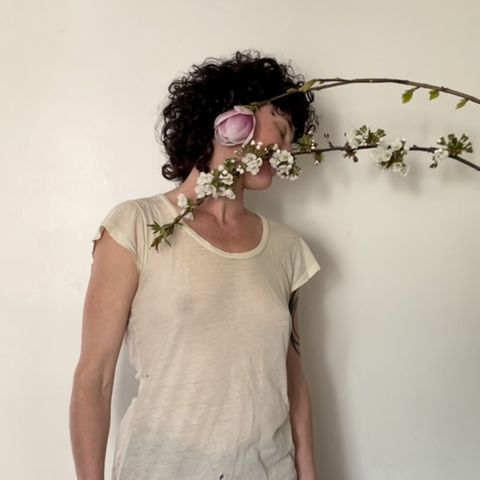
The following is a guided meditation by Renee Seals,
A somatic movement educator,
Energy worker,
And astrologer.
This meditation is intended to help support your embodied meditation practice.
If in the recording you are prompted to do something that doesn't feel good for your body,
Please adapt and modify to make it work for you.
Please also note that the content of this meditation sometimes explores deep and subtle states and memories,
And sometimes guided visualizations.
You are encouraged to work with discernment as you practice with them.
If any of the guidance Renee offers feels too activating or uncomfortable,
Please listen to your body's knowing and pause the recording until a later time if you wish to return to it.
These guided meditations range anywhere from 20 to 40 minutes and do not require any supplementary equipment to participate.
We hope you enjoy.
Hello and welcome.
Thank you so much for listening.
This is a somatic meditation,
And this is your host and guide,
Renee Seals.
I'm a sensate intuitive,
Consulting astrologer,
Somatic movement educator,
And social practice artist.
I've taught yoga and meditation for 15 years,
And I have a lifelong background in somatically based spiritual practice.
I'm interested in the ways we can attune to our bodies and felt sense in order to increase intuition,
Empathy,
And the holistic well-being of our relationships and communities.
The meditations I offer are creative and experiential explorations of sensation and perception.
They're appropriate for anyone with an open mind and desire to attune more deeply to themselves and the world around them.
Somatic meditation begins with your sensate experience.
I'll guide you to use visualization and imagination,
Spatial and environmental perception,
Movement and felt sense awareness,
Hands-on touch,
Vocalization,
And sometimes even writing or drawing in order to access your body's inherent intelligence,
Intuition,
And healing capacity.
Today's meditation is meant to help you get to know and work skillfully with your nervous system.
The work we do today will include a lot of movements and touch,
And you'll want a pillow or a yoga bolster to use as a prop towards the end.
As I go through the sequence,
I'll offer options for various positions,
Including standing,
Sitting,
And lying down,
As well as assisting another person if their body isn't able or willing to make the movements on their own.
Please always feel free to stop or pause the recording to stay longer with the section,
And of course,
Modify anything to take care of your own body and needs.
Remember that there isn't a right way to do this meditation,
And the best way to approach it is with an attitude of experimentation.
Thanks so much for joining me for this adventure.
I hope you enjoy it and find benefit through the practice.
If you'd like to know more about me or where this meditation comes from,
Or if you'd like to make a one-time or recurring monthly donation to support the production of future meditations,
Please see the links in the show notes or visit embodiedastrology.
Com and click the link for the post made on February 4th,
2019.
All right,
Well thank you so much again for listening to this guided meditation.
I wanted to say again that we're going to need a pillow or a yoga bolster towards the end of the meditation,
So please feel free to pause and get that if you need it.
I also want to say that I'm going to try and describe the ways that you can do this meditation in various positions.
So one way to do it will be to stand up for much of it and to move your entire body.
One way to do it would be to sit on a chair and move most of your body but kind of different parts at different times.
Another way to do it would be lying down pretty much on your back for a lot of it and moving different parts at different times.
And then a final way to do it would be to assist someone to do it if they are not in a place to stand or sit or to move their own body.
So I work with a lot of different kinds of bodies and the exercises,
The things that I'm going to kind of guide you through are things that I've done for folks who for various reasons can't engage with the movement from their own initiation.
So I'll talk a little bit about how you might do that if you're caring for someone who's not able to move at the moment.
All right,
So this is a meditation for getting to know your nervous system and we'll go through different phases of it.
I'm going to first start with a little bit of an introduction and a meditative awareness and then I'll guide you through some exercises for waking up and stimulating the nervous system,
For releasing it,
For calming,
For quieting,
For balancing and attuning.
I'm going to move somewhat quickly through the exercises for the sake of time in this recording but I definitely want to encourage you to pause the recording and spend longer with each of them.
Up to 10 or 20 minutes would be great if you have the time but even five minutes is good.
I'll probably spend about two minutes in each one.
All right,
So what is the nervous system?
It is your body's intelligence.
It's how you receive information from the external environment as well as from your internal environment.
It's how you know that something is happening on some level of consciousness and our conscious mind is actually a very small percentage of our consciousness.
A lot of things that we're talking about are actually a very small percentage of our consciousness.
A lot of things happen below the level of the conscious mind and so your body can know things that your conscious mind is not registering at the time and your nervous system can respond to information that it gets and make decisions about information that it gets without your conscious mind actually ever really that much.
One of the ways that this is really important is when it comes to habit.
Habit is super important for our bodies.
Everything that we learn is a function of habit.
When we get new information,
When we learn what to do with new information,
Neural pathways are created and this is basically connection between nerves.
As these connections develop,
As they continue to happen over time,
They get easier and deeper.
It's like wearing a groove in something.
If water is always running down a particular path in a piece of wood,
Then over time it's going to wear a groove into that path.
That's actually kind of how our nervous systems work.
The more a particular path is traveled,
Then the easier and quicker it is to go along that path.
A lot of times this is really good.
I mean it's what helps us stay alive for most of our lives.
It is our walking function.
It's the way that we learn to ride a bike and then don't forget,
Etc.
But it can be dysfunctional when we have habits that are like coping mechanisms,
Coping strategies,
And defense strategies.
Basically these would come up in response to discomfort or threat.
That could be anything from a temperature change or sensation that feels not good or just registers as different in the body to seeing a person who looks very different from us or the people that we're related to,
To being in a situation that's very stimulating and there's a lot of information or things like that.
Really working with your nervous system is great for all kinds of things.
It's great to regulate and balance your energy and attention.
It's great to increase your intuition.
It's great to increase your movement capacity and embodiment experience.
If you have any nervous system,
What's the word I want to use?
Anxiety,
Agitation,
Insomnia,
Depression,
Inertia,
A lot of lethargy.
If you regularly experience states of being where your nervous system is either overly activated or under activated,
The exercises that we're going to be doing can help with that as well.
All right,
So that's my intro.
Before we begin,
Let's just take a minute to close the eyes and come into the moment.
I was just talking for about six or seven minutes.
That was a lot of words and you were just listening.
Notice kind of where your general awareness is.
In this moment of just having received some information.
There's nothing to do right now.
There's nothing to shift in your state of being except to notice where your attention is.
You might notice the lower the upper bodies like kind of feel all the way down to your feet and all the way up to your head.
Just notice if you're more present at one end or the other.
You might also feel that between the front and the back of your body or the left and the right.
Nothing to change,
Just noticing.
You might notice as well where your thoughts are.
Sometimes I feel like my thoughts are 50 miles away.
They're happening quickly.
I'm with them,
But together we're somewhere far away from my body.
If you have that experience,
Just noticing.
Okay and then we'll begin with the first practice which is waking up and stimulating the nervous system.
We'll do this by stimulating the skin.
How I'm going to suggest it is slapping,
But you can also tickle or scratch or stroke your skin.
I'm not going to be doing the movement because of the sound for the recording,
But I'm just going to talk about it.
If you're willing to slap,
Use the flat part of your palm and just start slapping one arm.
If you slap up and down your arm from your shoulder all the way down to your hands,
Just light or medium or maybe even hard slaps depending on how you like it,
You're just stimulating your skin.
You want to make sure to slap all the way around the circumference of your arm.
You get stimulation in the outer arm,
The inner arm,
The part of the arm that's close to the thumb,
The part of the arm that's close to the back of the shoulder,
You know everywhere.
Then once you've slapped up and down that arm,
Then continue around your chest and your shoulder.
Just continue to slap your skin and slap around your breast tissue all the way back to the back of your neck,
Around the sides of your neck and the front of your throat and over your sternum.
Then when you're done with your chest and your back,
Then shift over to your other arm and slap all the way up and down that arm.
You can do this of course,
Lying down,
Sitting,
Standing,
And you can do this to someone else as long as you have their enthusiastic consent.
You're just slapping the skin and when you slap the skin,
You're waking up the nervous system that actually extends all the way into the skin and even beyond your skin.
You're just slapping to get blood flow and circulation and nervous system awareness.
Then when you're done with this side,
You can take both hands and slap up and down the sides of your torso and around onto your belly and around onto your back.
It can be hard to slap up between the shoulders so you can get as much as you can around your belly and your back.
Then you can continue to slap down over your pelvis and your hips and your groins.
If it's comfortable and if there's permission,
Then you can slap over your genitals and definitely over your butt and your buns and around your hips and your belly and your low back.
Then choose one side and slap all the way down a leg.
You can use both hands for this.
Slapping the inner and the outer leg and the front and the back of the leg and all the way down even onto your foot if you can and the sole of your foot if possible and your ankles and the back of your heel,
The back of your calf and slapping back up your leg and back up the inner and the outer leg and around your knee and your thigh and back over your butt and your groin to the other side and then slapping down that leg and slapping the inner and the outer leg and the front and the back of the leg.
I just usually end up getting into a rhythm with the slapping.
It starts to feel very meditative,
Just this kind of movement.
So really let your mind just be in that rhythm and the sensation as your hands meet your skin and slap all the way down to your feet and your ankle or as your hands meet your clothes or something.
You feel that through them.
Slap the soles of your feet,
Slap the tops of your feet,
Slap your heel and then come all the way back up your leg and slap all the way back up your belly or your back and your sides and then over your chest and make sure you let out some exhales and some sounds as you're slapping your chest and kind of let that sound come out and then continue to slap up your throat and then even over your face so slapping your cheeks and then over your back and then slapping your cheeks and your ears and your forehead and your nose and then around your skull top of your head and the sides and the back of your head.
Then anywhere that you didn't get on your body like if there are any other places you need to slap then find them and slap them.
Then when you're done just pause.
Okay and notice any sensations that are present.
For me when I do this exercise and pause I feel the nervous system extending out of my skin so there is a tingling on the surface of the skin and that's your nervous system.
And then again just notice where your attention is.
Notice how your attention has shifted in relationship to what we just did.
Okay and now we'll move into the next exploration which is shaking.
So with shaking this one if you do it lying down you can well if you're assisting you can shake someone else's body for them and you can pick up their limbs and kind of shake their limbs.
Make sure to hold gently around joints and don't shake them too rigorously like a gentle shaking is best.
If you're working with yourself and you're working lying down then you can do kind of just like little jiggles or shaking certain parts of your body.
If you're seated in a chair same thing and then if you're standing up you can get as wild as you want.
What we're going to do is just shake and you can start now.
You can start whenever you're ready and we're going to shake for two minutes.
So in two minutes I'll tell you to pause but again if you can go longer it's so great to go longer and if you're just going ahead just do your thing.
There's not a right way to shake.
Shaking is just like imagine that you're holding a bowl of jello and then you're jiggling it around and bring that into as many different parts of your body as you can.
Sometimes like I'm sitting here and recording and I'm just shaking my hands and so sometimes you can do this.
You can just shake like one part of the body.
You could shake your hands or you could shake a foot and if you're standing and shaking your entire body then you might try initiating shaking from different parts of your body.
So you could initiate the shaking from the soles of your feet or you could initiate shaking from your pelvis or even from your head.
With shaking I love sounding and when I shake it's like you're just shaking out all kinds of cobwebs and residue and old feelings and frustrations and stuck stuff and whatever else fatigue.
You can just shake your hands and shake your body and shake it out as much as you can.
Again if you're assisting someone just go through their body and shake like little things and let your body shake.
So you can shake your body as much as you can.
You can let your body shake as much as you can.
Again if you're assisting someone just go through their body and shake like little tiny joints.
Shake their little fingers or their little toes or you might pick up their arm from their hands.
Hold their hand with one of your hands and kind of dangle their arm upwards and gently shake their arm.
Or you could do this with a leg if it's comfortable or you can even do it on this leg if it's comfortable or you can even do it on their belly if it's comfortable for them.
Just hands flat on the belly and kind of jiggling their belly gently like that bowl full of jello.
Then if you're in the chair you're lying down you can shake any parts of your body that are available to be shakes.
If you're standing up you can get pretty big with your shaking or you can stay really small with your shaking.
Shaking can be tiny little movements around the joints throughout your limbs and you can let it move through your voice and through your breath.
I'm about to finish with this section but if you want to continue shaking just like shake yourself over to the pause button and then shake to your heart's content.
Okay so then when you're ready to stop shaking just stop.
Then once again feel into your body just notice what you notice.
Notice the inner body sensation.
I've only been shaking my hands and I feel the way that my hands are just so much more alive.
The sensation in them is so much more alive than anywhere else in my body and it feels like there's all kinds of space and lightness and movement in the inner body.
Notice how the sensation of shaking has shifted your attention.
Has moved through into your awareness like where is your attention now?
And now we'll use the hands to just calm the body a little bit.
So what I'd like you to do is place your hands somewhere.
It really doesn't matter where,
Just somewhere on your body and spread your fingertips and let your palms be really wide and then push through the entire hand and fingers,
Palms and fingers.
The quality of touches like you're pressing something.
It's like you're pressing your sleeping bag into the containment sack or something.
It's like you're pressing something in.
And then take this touch and move it to some different places of your body.
And now what I'd like you to do is combine this quality of touch which is a containing touch and so there's just a pressure there's just a push.
Combine this with your mind and your attention and when you bring your hand to a certain place of your body just greet it and you could even speak aloud like hi me or hello foot.
And when you touch your body,
If you are touching your own body go this is my body,
That's my knee,
That's my foot.
And if you touch your body,
You're going to feel the touch of your foot.
And if you're touching someone else's body then say I'm touching your foot,
I'm touching your knee.
Like use the language function with the touch function and bring them together.
And these can be brief touches but the way that you're touching your body is kind of like a containing and pressurizing touch.
And I love this kind of touch on my face.
So just taking the touch of your body and just saying hello to your mom and the hands and like pushing it into your face or the two sides of your skull.
And again when you touch a certain part of your body,
Just saying hello.
Okay.
Great.
And then from here we'll go into a little bit of a release.
And so this release is moving from more external to more internal awareness.
And if you're seated in a chair then sit so that your feet are wide and both on the floor.
And if it's possible sit a little bit forward so that you're not leaning into the back of the chair.
And for the seated movement it's going to be an inhale breath that reaches your arms out and you could even lift your feet up if it's comfortable.
And then as you exhale breath you're going to let your feet maybe and your arms come down and just take your hands to your thighs and do a little bit of a spinal curve.
So you're tucking your tail under and bringing your head towards your throat and curving your back in a c-shape.
And then as you inhale you're going to lift your head up maybe even look up at the ceiling.
You can arch your back.
You can stretch your arms out.
You might even lift your legs out.
You kind of swing your legs out.
You kind of spread your body.
You make yourself big.
And then as you exhale you come into this containment shape.
So it's a c-shape and kind of pushing down on your thighs and curling in.
If you're lying down on the ground you can do this as a starfish shape.
So you can inhale and reach your hands into your legs.
And then as you exhale either just pull your fingers in,
Arms down to your side,
Legs down to each other.
Or you can curl your whole body in.
So you could round your spine,
Bend your knees,
Bring your elbows to your knees,
Etc.
You can also just do this with the hands and the feet and the eyes.
So you can inhale and open the eyes and the soles of the feet and the palms and then you can exhale and squinch everything together.
And then if you're assisting someone you can just do this with breathing.
You can ask them to fully breathe into an expansion and then exhale into a full contraction.
And if you're standing you can do this through a spinal roll down.
So the way that we're going to do this is now what I'll talk through.
And so if you're standing then stand with your feet a little bit wider than your hips and take a soft bend in your knees.
And then please bring your hands to the very top of your spine.
And the top of your spine is just below the base of your skull and it's about the height of the bridge of your nose.
So it's pretty high.
And then from this place in your body let your head start to curl down towards your throat.
And we'll be working with longer breath cycles so you don't need to match any movement with one breath.
But as we come down really let your exhales be heavy and long.
And now let your hands and your arms and your shoulders start to come forwards.
And as you roll down towards the floor really try and release the back of your shoulders and your neck.
Really try and let your belly be soft and the back body be soft.
And then especially as you come into your forward fold the knees can bend as much as you need for comfort.
And your butt and pelvic floor can relax.
And then when you're ready to come up I actually want you to come up by lifting your eyes and looking up to stand up and then stretching your arms out.
So it's like you come into this shape where you're very alert and looking up and the fingertips are extending down or out.
And then as you go into the next roll down you start to close the awareness.
You let the head get heavy,
The shoulders and the arms round and roll forwards.
And then you're just rolling down through the spine.
And so if you're a regular mover the thing that you're looking for is sequential flexion through your vertebra from the top to the bottom of the spine.
And really bring your attention to the plexus.
So you've got the brachial plexus where your kind of shoulders start,
The base of your neck and the top of your shoulders.
The solar plexus which is below your sternum,
Your breastbone kind of above your belly button.
And then the lumbar and the sacral plexus behind your belly button and in your pelvic floor.
And these are the places where the nerves branch from the spine into the limbs and into the organs.
And so as you come all the way down can you really try and relax in these places?
And then when you come up,
Come up with your attention.
And so reach the soles of your feet into the ground,
Extend your palms open and lift your eyes towards the ceiling or sky.
And go ahead and do that one more time.
And for those of you who are working in the chair or lying down on the ground,
This is the same kind of thing.
So the contracting movements are the internal movements.
It's kind of like a going in.
And then the expanding movements are attention movements.
And so you can kind of you know reach out into the periphery of your body,
Let your eyes open,
Let your attention open,
Etc.
And if you're assisting with someone else,
It depends on the state of their awareness and capacity for engagement.
But you can bring in any of these suggestions that would be helpful to them.
And then again you can also just do this with basic breath awareness.
And if you're working with someone who doesn't have much movement capacity in their body,
You can still really try and help them feel the expansion of their breath.
Okay,
So when you're done with the next cycle,
Just go ahead and pause and notice where your attention is now.
And notice how that sequence shifted or changed your attention.
You might recall back to the end of the last movement that we did,
Which was shaking how you felt then,
And the previous,
Which was slapping how you felt then.
Or you might even think back to when you began this meditation and notice if anything has changed.
And now let's bring attention into the breath.
And if you're standing,
You can stay standing for this portion or you can feel free to lie down or sit.
But as you feel your breath,
Feel it moving all the way down into the base of your belly,
All the way up into the top of your lungs.
And really just try and be with your breath.
There's nothing more than that,
But feel the full inhale and the full exhale.
And one of the most important pieces of information that we get through yoga,
Through yoga practice,
Is that the mind and the breath are linked.
And so your only job right now is to notice your breath,
To feel your inhalation,
To feel your exhalation.
And as you're inhaling,
You might just say to yourself,
I'm inhaling.
And as you're exhaling,
You might just say to yourself,
I'm exhaling.
And if your attention wanders somewhere else,
Just bring it back into your breathing.
Okay.
Okay,
And then just notice your awareness.
What does two minutes of mindful breath do for your attention?
How do you feel?
So now we'll take a couple of minutes and stimulate the parasympathetic nervous system.
So I'll talk more about what this is while you do it.
And to do it,
I'm going to ask that you use a bolster or pillow with your belly.
And there's a couple different ways to do this.
So if you're lying down,
You can either lie on your belly over the bolster or the pillow so that it would run along the whole front surface of your body,
Basically from your sternum,
Your collarbones,
To your pelvis.
And then you can do whatever you need to support your head.
Or you can lie down and just bring the bolster or the pillow on top of you,
Or you can even lie to the side and spoon with it.
But you just have some pressure on your belly.
And if you're sitting,
And you can do this sitting as well,
You can bring the bolster or the pillow on top of your thighs and then let yourself round over it so you're in a forward fold,
With your torso draping over the bolster.
And only do that if it's comfortable.
So if you need more height or something like that,
Get more height or feel free to lie down with it.
So the exercise or the awareness meditation is pressure in the belly and sensation of the front body experiencing some kind of containment,
Some kind of touch.
And the parasympathetic system is the part of your nervous system that is most active when you are asleep or deeply relaxed.
And while we have the part of the nervous system that is responding to information,
To our thoughts,
That is taking action in the world,
Making choices,
Etc.
,
We also have the part of the nervous system that is operating automatically and our organs all function here.
So when our organs are doing their best job is when we are restful.
So this is called the rest and the digest part of the nervous system often.
And it's like when you're asleep at night,
Your body does a lot of the metabolizing process,
Digesting your food,
Absorbing,
Assimilating it,
Moving waste products into the blood,
Into the lymph,
Into the lungs,
Out your exhales.
There's a lot of important stuff that your body does when it's at rest.
And this is also the place that we are when we feel safe.
And so your body can't actually do these important jobs if you're in a space of stress or anxiety or even just needing to pay a lot of attention to something.
When you have pressure on your front,
On your belly,
The parasympathetic system is stimulated.
And you may have heard of tummy time if you're a parent or if you're around little babies or kids and how important it is for them.
Tummy time builds the parasympathetic response.
It gives people the ability to kind of move back and forth in their awareness and attention and to come into more balanced states of attention and calm.
So as you're here with touch on your belly,
With pressure on your belly,
Just breathe and breathe in any way that feels comfortable for you.
But let your exhales release out.
And just notice what it's like to be here.
Sometimes for myself,
And I've had students and clients that this is true for as well,
Pressure on the belly can be uncomfortable.
And so if you notice that what's coming up for you is a feeling of claustrophobia or discomfort or anxiety of any kind,
You might try changing your position.
So if there's a lot of weight in your front,
You could lie on your back and let the bolster kind of be on top of you.
For a lot of people,
This kind of thing,
Just pressure in the front body,
Has an almost immediate calming effect.
And so if it doesn't for you at this time,
It doesn't mean that that's always going to be the case.
You might try it at another point.
And if you'd like to stay here longer,
Please do.
And then otherwise,
When you're ready,
Just kind of find your way into the next moment.
And in the next moment,
We're going to be paying more attention to the eyes and the ears.
So you might want to move yourself or move your prop.
And if you want to shift into a different position,
You can.
This is the last segment,
And there won't be any more invitations for full body movement.
So if you were standing before and you want to keep standing,
That's great.
But otherwise,
Find a comfortable way to sit or lie down.
And then we'll bring attention into the eyes first.
And I've never been without sight,
So I don't know how to talk about this for someone who doesn't have their sense of eyesight.
But I think it's like an activation of the muscles and movement of the eyeballs,
Which may or may not be possible for someone without vision.
But if you're a person who knows,
Who has some feedback around this,
Please do feel free to get in touch with me.
So the way that I like to do this is just intentional movement of the eyes.
And this isn't movement of the head.
And your head is going to want to follow,
So you've got to kind of keep it from doing that.
Go ahead and look all the way leftwards with both eyes.
And if you look all the way leftwards,
You might feel kind of a tingling in your skull or in your forehead.
Just be with that for a second,
But don't look so hard that it creates pain.
And then look all the way rightwards with your eyes.
And again,
The same things.
Look as far as you can into the nervous,
Into the eyes,
And feel what that sensation is.
And then let your eyes return to center.
And just notice the feeling in your head.
And then look all the way down.
Again,
Don't move your head,
But look as far down towards your cheekbones as you can.
And then look as far up towards your eyebrows as you can without moving your head.
Notice the sensation in your forehead and maybe in the back of your head.
And then just rest your eyes.
If there are objects near you that you can use for this,
That's great.
Otherwise you can just use your hand.
You can bring your hand up into your line of sight and hold your hand close to your face and try and focus on it.
So focus on seeing the texture and the quality of your skin.
And then move your hand,
Extend your arm,
Move your hand far away from your face and let your focus continue to be on it.
And then do that a couple of times.
So move your hand close in and focus your eyes and far away and keep your eyes focused on your hand.
And so you're just moving your hand forwards and back towards your face and away from your face and then you're shifting the way you're using your eyes from focusing close to focusing a little further.
And then the next time your hand is far away,
Keep your eyes at that distance and then let your hand come down and rest.
And then close your eyes and relax them.
And just notice what you notice.
And then the last little thing that we'll do is with the ears,
We're going to keep the eyes closed.
And now I just want you to listen.
And if you're using headphones,
You might even be listening to the sounds in the room that I'm in when I'm recording.
And if you're not using headphones,
Then you're listening to the environment around you.
Hear all of the sounds.
Try and be present with every sound that you hear.
Then through your left ear,
Try and hear sounds to the left.
And then listen with your right ear.
And just listen and notice the space that you're in.
So for me,
When I start to work with my eyes and my ears,
And this is true to some extent also working with my skin,
My nervous system gets pretty calm and seems to kind of just come online in a particular way that it might not be if I'm putting most of my attention into my thoughts or into the external environment.
So we've just gone through a couple of different explorations and ways to access the nervous system and bring our awareness to its different functions.
These exercises that we've done are all possibilities for you to stay with,
To explore further with,
To elaborate on and to modify as you need.
That's the end of this meditation.
The purpose of the meditation was to give you tools to sense into your own nervous system.
Thank you so much for listening.
I appreciate it a lot and please share this meditation and these exercises if they've been helpful for you.
Wishing you all the best.
Bye for now.