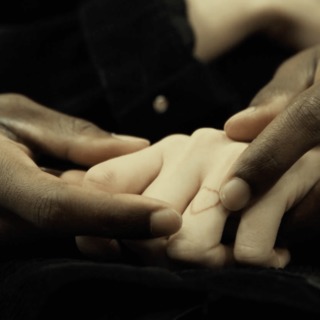
I really believe that being in the body is the way to healing and trauma disassociates us from the body.
So let's take a moment to feel our bodies,
Our feet on the floor.
Can you feel your left foot and your right foot?
Can you feel your seat on your chair?
And just notice where your hands are.
If they're on your lap,
Do you feel a warmth from your hands?
Breathing into this moment now and we're switching from meditation mind to listening ears.
Trauma survivors lose their ability to do things like this check-ins and they lose their ability to know where they end and other people begin.
That's what a boundary is.
Where do I end and where does somebody else begin?
And that's because trauma causes disassociation.
Disassociation is a word that means a disconnect between the body and our thoughts,
Our feelings,
Our emotions,
Our sense of identity.
So it's the way the system,
Our system,
Protects itself during trauma.
Trauma is often defined as too much too soon.
It's not what actually happened to us,
It's our body's capacity to have handled it.
Too much for the body too soon.
So we leave the body,
We disassociate and our body is like this is the way to keep you safe.
It's too much for you to handle.
So it's almost like being in a freeze state.
You might have seen animals in the wild like deers,
They freeze up.
That's a trauma response and that's a sort of dissociation from what's actually going on.
And then when the predator leaves,
The animal comes out of that state and they start to shake,
They become active again and they leave.
I recently learned a term called pronging,
Which is what deers do.
When they are no longer in that trauma-free state,
They jump around.
They almost jump for joy.
They become alive again.
That's so beautiful to go out of the contracted trauma to like I'm alive and that's the work I want to do with you.
It's like let's get back to it.
I'm alive.
I'm joyful.
I'm happy.
I'm here.
So I'm going to ask you some questions now and just see if any of them resonate with who you are or who you were in any level.
So do you ever struggle with saying no even when you really want to?
Like you know that this is a no for you,
But there's parts of you that are like,
Oh,
This person needs me or I really feel like I'm obligated or they're going to not like me anymore.
So do you struggle with saying no?
And do you have a hard time making decisions?
So if there's multiple options,
Do you kind of freeze?
Do you procrastinate instead of going,
This is what I'm going to do today.
This is what I need to be asking for.
And do you feel like sometimes you give more in relationships than you're receiving and that feels normal for you?
Like you're always constantly saying,
What can I do?
What does this person need?
You're outside focused.
And your sense of value comes from what you can give other people.
And only later on when you start to feel like sense of resentment,
You're like,
Oh,
Wow,
I'm not getting an equal sense of energy back.
I'm not receiving equally.
But at that point,
It's been so long that that's the pattern within the relationship.
And you sometimes feel like other people's behavior is unacceptable.
And it goes on so long,
So long that it's almost too late to bring it up.
And once you start noticing it,
It just becomes this internalized dissatisfaction within you.
And you just keep letting it grow and grow.
And sometimes people just blow up one day and other people are like,
Whoa,
Where did that come from?
It's because they've had a feeling of something they didn't like,
And they just let it build up instead of talking about it early,
Which is where we want to get to.
As trauma survivors,
We've already felt unsafe.
So bringing up somebody's unacceptable behavior feels unsafe.
Because what if they get angry?
What if they go into a rage?
What if they leave me and I feel abandoned?
So a lot of our learned behaviors is because of wanting to create safety.
And it's okay if you answered yes to these questions.
Because boundaries are hard for everybody,
Not just trauma survivors.
Boundary work is an ongoing,
Unlearning,
Relearning for every human on this planet.
Because we're all here to reclaim our power,
Our identity,
Who we are,
Who we came here to be.
And we were kind of conditioned as we came in to slowly break our boundaries through like the education system,
Sit down for this many hours a day,
Hug your uncle,
Even if you don't want to.
There's so many ways that our internal knowing or internal desires have been overridden for years and years.
So boundary work is for everybody.
So if you answered no to any of these or yes to any of these,
Just know that you're totally normal.
And everything can be worked on.
I really believe that somatic practice is one of the big keys to really defining and reclaiming our boundaries.
And I want to take a few minutes to teach you one of the ones that have been really helpful for me that's very quick as well.
So our skin is our first sense of boundary.
It's our internal boundary to our body.
You can touch your skin,
You know who you want to touch your skin,
How close you want somebody to come to you.
So if you think of our skin as our boundary,
Let's get in touch with this boundary.
So if you just want to touch yourself and say,
This is my body,
You can touch your face,
This is my body.
This is my body.
And as you do this,
You might notice that you start to soften your breath.
This is my body.
Just start saying that this is a fundamental grounding tool,
Really reconnecting to the body.
This is my body.
And if you gently squeeze,
You really start to become more aware of where you start,
And where others begin.
And then you can start building.
I know where I started,
Where I began,
And I know that I don't want you to come within two feet of me,
This doesn't feel good.
I noticed that my body starts to feel anxious,
It starts to constrict or tighten up.
Is my body telling me that I have a boundary with you,
And I'd like for you to stay this far away?
That's why it's so important to reconnect with our physical boundary first.
When we think of our boundaries as our skin internal,
Let's think of boundaries beyond that,
External.
We can think of boundaries like our home or apartment.
The walls around our home are the boundaries of our home.
It tells us and everyone outside,
Our neighbors,
The city,
The world,
What belongs to us,
And what belongs to them.
All this furniture is mine,
It belongs to me.
The sidewalk is the city's,
The fence is the neighbors,
It's very clear,
These are defined boundaries,
Right?
They're solid.
So if a neighbor came into my front door just right now,
Or if they peeked in my window,
That would be alarming,
That would be very clearly a boundary violation,
Right?
So those boundaries are very clear.
We want to also remember that the home is not a cage.
We can choose to open our door and let somebody in,
Take the garbage out.
We can choose to open a window,
Open a curtain.
These are all ways that the boundary of the home become flexible,
Right?
So when the boundary of the home is flexible,
It's because we have a sense of safety within the home.
I'm only going to open my window and open my curtain if I feel safe in my home.
And it's a time of day that I feel like I'm safe in my neighborhood.
Strange people won't be looking in or trying to come in.
I'll open my front door on a hot day if I feel like,
Again,
This is a safe time of the day,
This is a safe neighborhood.
So our boundaries within our home are flexible depending on how we feel and the conditions around us.
Boundaries are flexible all the time,
Internally,
Energetically,
In the same way.
And it depends on our capacity.
Capacity is another term for how our nervous system relates to everything around us.
So our nervous system isn't meant to always feel baseline safe.
It's supposed to kind of give us signals,
Fear and anxiety,
For example,
That our boundary might need to be looked at.
So maybe I need to close my window,
Right?
The same way,
Maybe I need to change my boundary with somebody because in that moment,
Things have changed and I don't feel like I have the capacity for the same level of interaction,
For example.
Let's use the example of a party.
So sometimes I go to a party,
And I feel like there's so many new people,
There's so much new energy around.
Everyone's very activated,
Right?
They're excited,
They're happy.
A lot of people want to hug me.
And I have started to practice checking in with myself.
In the past,
I would have just opened up and hugged everybody.
And I would have felt a little bit of contraction with some people,
I would have felt a sense of depletion.
And I would still break my own boundary and keep hugging them.
But now I am practicing checking in with myself.
And sometimes I actually tell people I'm not available for hugs right now.
And that's me honoring my own energetic and physical boundary.
So that's a level of attunement we want to get to.
Because in the past,
We might have grown up with our boundaries being trained out of us.
So the work of adulthood is to recognize where am I?
Where do I end?
Where do other people begin?
And what is acceptable for me in this time space?
As a side note,
Being a trauma informed person on this planet also means asking for consent before you touch people or hug them.
Because we don't know what kind of traumatic history they have.
A hug might feel overwhelming to some nervous systems.
A touch that's unsolicited might feel reactivating for somebody with PTSD.
So we always want to ask,
Are you open to sharing a hug and letting them respond and not being offended?
If they say no,
It's them honoring themselves.
Right?
I have a friend who offers me three options.
She says,
Do you want to hug?
Do you want a fist bump?
Or do you want to just acknowledge me?
And I so appreciate that attunement to seeing where I'm at on a specific day.
And because of her attunement to me,
And her respect for me,
I have grown my capacity for her nervous system to feel safe with mine.
And now I'm open to hugging her all the time.
This is how we build interdependent safety with each other's nervous system in a trauma informed way.
So trauma puts us in survival mode and really affects our ability to set healthy boundaries.
In the midst of a traumatic experience,
We're just focused on surviving.
And when it happens to us as a child in early childhood trauma,
It can really affect our ability to feel safe and trust.
Because we weren't protected,
We weren't safe.
And a child's inherent right is to feel safe and protected.
It's not something they need,
They should be thinking about,
It should just be given it should be the inherent environment around them.
So when that isn't there,
The child's sense of self becomes extremely disassociated.
And we start to grow up feeling unsafe in the world and unprotected.
And then we become contracted,
Become fearful,
We become in survival mode,
We're doing the bare minimum to survive.
And then we get things like social anxiety,
We get things like self isolating,
Because it feels safer to isolate,
Instead of connecting to new nervous systems,
New people and putting ourselves at risk.
That's the root cause of those kind of traumas.
So we're not meant to live in social isolation,
Our nervous systems can expand into safety with safe people.
So let's all endeavor to be safe people for everyone.
And that means respecting everybody's nervous system and respecting our own capacity.
So again,
Reconnecting with ourselves,
And asking for what we want,
And what we're ready for,
And what we desire.
So when I'm hugging somebody,
I'm exposing myself vulnerably,
I'm exposing the front part of my body,
Which is my abdomen and my heart,
Those are the most vulnerable parts of any mammal.
So if you're like me,
And you have some resistance to hugging,
Sometimes know that this can be a trauma response,
And there's nothing wrong with you.
It's just about rebuilding safety within the body,
And safety with people that you can slowly start to attune to,
And realize that touch and vulnerability is safe.
So how do you get over this?
Have compassion for yourself.
And try to do some inner child work here,
Because it's the inner child that was unprotected and didn't feel safe,
And they're informing your behavior as an adult.
And we really want to switch that and start informing the child that,
Hey,
You're safe now,
I got you,
You're protected.
So I recently started rethinking inner child healing into inner child empowerment.
I want to let them know that I'm going to say no for them and stand up for them for every single time that they didn't get that.
That is the work that we're doing now as adults,
We're standing up and we're saying no for that inner child that never got that privilege.
This is how we start to heal these patterns.
So saying no,
When trauma happens to us,
Especially as kids,
We have that right taken away.
We have the right to say no taken away.
And we also don't get to consent to the terrible things that happened to us.
We didn't get to say no to the terrible things that happened to us throughout our lives.
It happened to us,
It just happened without our consent.
So we lose our ability to say no,
It gets conditioned out of us.
We just have to accept all these things that other people do.
Their needs come first,
Their desires come first.
We have to accommodate people,
We have to make them feel comfortable.
That's where the root of people pleasing is.
People pleasing is a trauma response.
So if you go really deep,
And we really heal the pattern of people pleasing every single time I have found that it is a trauma response to feel safe,
Often started in childhood.
So we have to remember that we're not in our childhood anymore.
We're adults.
And so when somebody pushes you crosses your boundary,
You are allowed to say no,
You are defending your inner child.
Every time you say no,
You're honoring yourself,
You're becoming the best version of yourself,
The highest version,
The version that you're meant to be every time you stand up for yourself.
And trauma obscures this right.
Because if you weren't respected,
When you were traumatized,
You lose your internal sense of self respect.
And it becomes easier for people to re victimize you when you do not have an internal sense of self respect.
That's when you have stories like everywhere I go,
I see bullies,
I see narcissists,
I see people that harm me.
It's because there are people like that,
That are attuning to people who don't have self power and self respect.
And if you are one of those people,
You might find yourself in patterns of being re victimized.
That's why this work is so important to do to build up the inner power and inner strength of who you are and who you came here to be.
And the first step to do this is again,
Looking at your pattern of people pleasing.
This is a very common pattern,
It's really easy to start catching and start recognizing,
Hey,
I don't like myself when a people please I feel depleted.
So how do you solve this you go slow.
All healing that's effective go slow and with the safety of your nervous system.
So if there's somebody that you know in your life,
Like even if it's one person that you can start practicing boundaries with,
Start practicing saying no way you can ask them,
Hey,
I'm I'm working on setting boundaries.
Is it okay if I am messy sometimes when I practice this with you?
I'm going to start practicing saying no.
Sometimes when you ask me for help,
Or if I feel like I need to leave if I'm tired,
And I need you to know that it might not be perfect.
Are you willing to be my partner in my healing here?
That is a really powerful thing to ask somebody and you'll be surprised how many people might be there for you to say yes,
Give you the grace to be a supporter in your own healing.
With my clients,
We have sessions where you just practice saying no back and forth.
Because say even the word no feels uncomfortable to the nervous system sometimes if you've been conditioned your whole life to not say no.
So really practice saying no,
It's like a muscle,
The more you say no,
The stronger it gets.
I have a friend who's really empowered in her boundaries.
And she inspires me.
On Friday,
We were at a show and she told me,
I'm feeling tired,
I'm going to leave in the middle of the show.
And I celebrated that.
I'm like,
Wow,
She really is attuned to herself,
Her needs,
And she's honoring her own capacity,
Her own boundaries.
She's not breaking her boundaries and exhausting and depleting herself.
That's the level of self care and self love that's available to us when we start reconnecting to ourselves and holding our own boundaries.
People pleasing is a big pattern for trauma survivors,
You go along to get along.
If you live through a nightmare,
The last thing you want to do is live through another nightmare.
So we always try to help everybody,
Please everybody,
Be the helpful person in the room,
Have a role within the group that makes us feel important and needed.
We never cause a conflict that could disable our ability to be part of a strong,
Safe network.
But we have to realize that when we lose our sense of self,
We also lose our identity.
And we no longer are actually our true selves around these people.
And we also lose our ability to identify our own needs.
And so we become these kind of shells of ourselves,
Our potential is lost.
This can happen in even small and insidious ways.
So for example,
20 years ago,
I had no idea what my needs and desires were.
I was just going along with whatever people wanted,
I would say whatever you want to do.
And I was so unattuned to my needs,
That it got into relationships just because other people wanted to be in relationships with me.
And that never ends well.
I would go to restaurants,
And I had no idea what to order on the menu,
I'd almost be frozen with all these choices.
And I would have to ask people around me like,
What should I get?
I'd ask the waiter,
What do you recommend?
What should I get?
I had no idea what was best for me or my body or myself.
That's how disconnected I was from my wants and desires.
And I don't do this anymore.
I healed.
And so the steps are again,
Reconnecting to the body,
Starting to end your people pleasing patterns by starting to identify with what your true wants and desires are starting to say no,
And starting to ask for what you really want.
You'll be surprised how people start responding.
And you'll be surprised by the quality of people that respond positively.
These are the people that are your cheerleaders.
These are the people that are in your corner,
The people that are going to help you grow and become the person you were meant to be.
When we do this internal work,
We build our capacity for joy for pleasure for expansion,
Because we're not in this frozen,
Contracted state all the time,
Right where we're not in the survival mode,
This just trying to get by trying to hide our light to just get along with everybody,
We become safe to ourselves and to other people.
And we expand our systems to hold more to hold more in this world,
More safety,
More pleasure,
More joy,
More loving relationships,
More quality friendships,
More delightful opportunities.
So this is why we do this work to become our truest,
Wisest version of ourselves.
I wanted to run through one more practice that's a very powerful one that we can all do together.
So this is my this called my favorite self.
And I want you to think about who your favorite self version would be not your higher self,
Not your best self,
Your favorite self.
Is this favorite self somebody who's walking into rooms really confident making eye contact with people?
This person asking for what they want?
Are they saying no?
Are they setting healthy boundaries?
Are they really joyful and in their pleasure and expansion because they have so much internal energy,
Because they're not leaking it out everywhere?
What's your favorite version of you look like?
And if you're open to closing your eyes and just walking with me on a five minute journey with this,
Who is your favorite version of you?
What do they look like?
How are they standing?
What are they wearing?
Good.
And I think of this favorite version of you approaching a situation that you yourself are experiencing that might be causing you some contraction or anxiety or guilt.
Something that you wish would have been a bit different.
Wish you had set a boundary early or set a boundary now,
But it feels hard.
See this favorite version of you responding.
What would they have done?
What kind of conversation are they having?
And if you feel any of those contraction feelings come up,
Just remember that this is your favorite self handling the situation.
And just noticing what they do.
How do they stand?
What did they say?
Speaking up for what they really want,
What you really need.
And just noticing the people involved.
How do they respond to this version of you that is respected,
That is confident,
That is empowered,
That is clear,
Clearly communicating,
Making eye contact.
Good.
They're responding to this new version of you with this old situation in a different way.
This favorite self is possible.
It's a few steps away from where you are.
And our favorite self is continually evolving as we step into the version of the favorite self that we have.
The new one emerges.
That's how we grow and expand in this world.
We become our favorite self,
Our future self.
So in the future,
When you are experiencing a boundary that you need to set with somebody,
Think of what your favorite self would do.
You might go through this exercise visually.
Journaling it is a really good way to create it physically in the world and really see what's possible.
And again,
You want to see people responding to the favorite version of you.
So their response is going to be different,
Because they're not responding to the version of you now.
They're responding to the bigger,
Brighter,
Empowered,
Safer,
Happier,
Joyful,
Confident version of you.
It deserves respect,
Deserves to be heard.
So this is a really cool exercise that really shifts a lot of people in a lot of situations,
And I hope it's helpful for you.
If you'd like to get in touch with me or need any other guidance,
I do offer free consultations on my website.
You can book with me at sabrinasundari.
Com.
So thanks,
Everybody.
Beautiful.
Sabrina,
Thank you so much for that very grounded advice in boundary setting.
So core,
So important,
And all the different dimensions of it.
You're amazing.
Thanks for taking the time to bless us with this information.