This is navigating the teen years.
We answer your real life questions about the toughest issues facing teens today.
From dealing with a pandemic,
Peer pressure,
Social media,
Bullying,
Dating,
Academics,
Anxiety,
What to do after high school,
And so much more.
Let's talk about what's keeping you awake at night when it comes to your teenager and what you can do about it.
My name is Ed Garrity.
I'm your host.
And let's get started.
Hello,
And thank you for joining us in this episode.
We're going to talk about the power of meditation and how that can help parents navigate the teen years.
Joining me today is my friend,
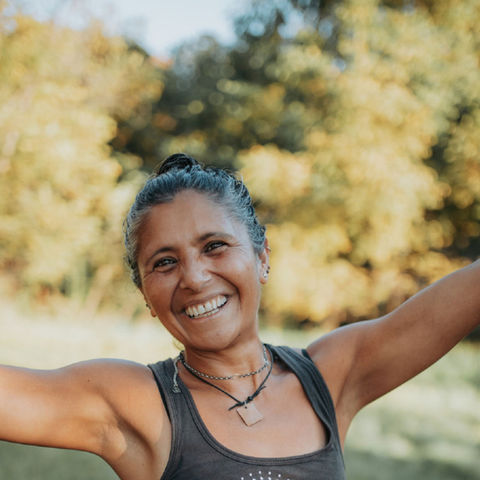
Chetna Palmer.
Chetna has been steeped in sustainability her whole life.
As an advanced yoga and meditation teacher,
She leads her classes with compassion and allows the participants to connect deep within.
The biggest takeaway from her classes is being given the tools to take the teachings of yoga into the everyday.
And it is here that sustainability and yoga come together,
Connecting to nature.
Chetna teaches a variety of yoga and meditation classes at Exeter Power Yoga and Healing Center in Exeter,
New Hampshire.
She has delivered classes to educators,
Businesses and organizations across the country.
Chetna,
I'm so glad you could join us today.
Thank you.
Thank you.
Thank you for having me.
So,
Chetna,
Why meditation and how can that help me as a parent navigate the teen years?
Meditation has been practiced in the East for hundreds of years.
It's a connection that you make in quiet to quiet down that busy mind and allow you to just notice your breath,
Bring a calmness to your being.
And it calms the mind.
It has proven to lower your heart rate for sure.
As I did,
I led a practice a couple of weeks ago and yoga classes are full of people with their Apple Watches,
Tracking their yoga class,
Seeing how many calories they've burned,
How high their heart rate's gone.
And they feel really good.
Right.
Physically,
You feel good because you've sweated,
You've moved your body and so on.
But yoga is more than just the physical aspect of it,
Because you're connecting with your breath,
With each movement,
And you're noticing your breath as it flows through your body and you're conscious of it.
When I led a meditation class the other day,
One of the people in the class had an Apple Watch on,
So they were tracking.
It was always on,
So they were tracking.
So I asked what was their heart rate at the beginning of the meditation class.
And we only meditated for 10 minutes.
That was all it was.
The heart rate was at 67 when we began.
By the time we finished,
It was down to 47.
Wow.
And when you reduce the heart rate like that,
That's when our stress level reduces as well.
We become more calm.
We become more peaceful.
What do you say to the parent who's listening to this and they're like,
Well,
This all sounds great meditation.
To your point,
We oftentimes think meditation is when you go to the top of the mountain or you get to have all this whole day to go sit on the beach or,
You know,
Sit next to a stream.
But that's not actually the daily practice of meditation.
Is there a right way to do meditation?
When I talk about meditation to people in class,
While I'm doing the yoga class or leading a meditation,
You can take meditation anywhere.
And I've recorded,
You know,
Most of my meditations I record that they're 10 to 12 minutes long.
And I am not expecting you to be lying down on the floor or sitting upright in cross-legged lotus position.
You know,
All you need to do is maybe just put everything down and just sit back on a sofa,
On a chair,
Grab yourself a coffee,
Wrap your hands around your coffee cup,
Feel the warmth of the coffee cup.
You know,
Smell the coffee and just close your eyes and just notice your breath and notice the sensations that you have of,
You know,
What do you notice when you close your eyes and just follow your breath in and follow your breath out.
And how does your hands feel,
You know,
Around the coffee cup,
For example?
How are your senses opening up in breathing in that the coffee smell that you're holding or your tea or whatever?
And just having that quiet time,
It doesn't even need to be for 10 minutes.
It can be for a minute,
Even a minute.
It's fine.
Even if you're stuck in the traffic,
You know,
If you're at the stop sign,
You know,
Just make a conscious effort.
That's what it is,
Is being conscious of your breath.
Take a deep breath in.
Hold it for a second and then watch your breath exhale and then do that till the light turns green.
Right.
You are you are being in the present,
Which is what matters.
And that is what brings the calmness into your day.
I think that's important for anyone who's exploring meditation to remember is that there's not a right way to do it.
There's not a one way to do it.
Meditation could be one minute to your point where you just take the time to be quiet.
It could be five minutes,
10.
It could be half an hour.
But the whole point is to really to quiet the mind,
To get silent.
And especially in this time now,
Chetna,
As you know,
Where there's a lot of uncertainty,
There's a lot of overwhelm,
You know,
Worry about our teens and a lot of stress being a parent today.
And the big question I get oftentimes from parents is how do I help my teen feel less anxious or not feel as overwhelmed?
One of the key ways that we can help our teen do that is teaching them and sharing with them that practice of meditation,
Because the studies do show,
Right,
Chetna?
That meditation reduces stress.
It boosts productivity because it helps with our focus.
It improves our relationships because we're more calm or relaxed and it helps regulate our mood.
Yes.
In preparation for that,
For this,
I was looking at some statistics and I came across a study that some neuroscientists had done.
And they,
You know,
They scanned the brain to see the impact that just being in silence,
Just watching your breath,
Just noticing your breath and how the brain sort of scans were so different.
And wouldn't it be amazing if,
You know,
The kids are like moving from class to class,
You know,
Rush here as soon as they finish one class,
You know,
Where they did,
Say,
For example,
History,
And then they're moving to the next one to to maths.
You know,
And you've got about five minutes in between walking there and then you're stressing and you probably chatting to your friends and all this.
And then you turn up in your maths class,
Unpack your bags and the teacher goes,
OK,
Let's do this.
And you haven't had a minute to switch off from history to chatting to your friends to then tune your brain into maths.
Right.
But wouldn't it be great if you walked into the maths class and the teachers said,
OK,
Put your bags down,
Sit down,
Close your eyes and let's just breathe for count for 10 breaths.
Right.
Wouldn't that be great before you started the maths class?
Then you'll be in the present moment and you'll be there.
You know,
You'll be more attentive,
You'll be more focused into what you would be doing in that class.
It would be awesome.
It would be awesome for that to happen.
What do you say to the parent that's like,
There's no way that my teen is going to sit and be quiet.
You have teenagers,
Too,
Chetna.
How do you how can you introduce the power of meditation to your teen?
Is there a couple of different ways you would invite them to look at the power of meditation?
Yeah,
I mean,
Again,
You know,
We're not asking them to sit still.
Right.
And I think if you can provide information in terms of,
You know,
Then there's a lot of studies happening.
A lot of schools are bringing in yoga sort of into the wellness programs and so on.
And the power of just letting stress go.
And I think there is so much society is just overwhelming,
Right,
With social media,
With influencers and people feeling,
You know,
Having this fear of missing out issues,
Of not being invited,
Not being the best,
You know,
All this kind of stuff,
Not getting into the right college or whatever.
You know,
There's just so much pressure.
And I think we as parents just have to take a step back.
Right.
And and say this is not healthy.
And how can I help my child,
My teenager who is bombarded 24 seven with all this,
All this social media,
All this everything at the fingertips of your laptop,
Your phone,
You know,
How can we together just take time out and that that time out is OK when you get up,
Do your bed.
Right.
Is the thing that,
You know,
Will set you up to begin with for a start.
It's one of the one of the things that have shown that,
You know,
It it brings a sense of achievement.
And then when you come down to breakfast or,
You know,
If you're there with your child,
With your teenager having breakfast before you rush out for the school bus,
You know,
To say,
OK,
Let's just take a couple of breaths in together.
You don't want to close your eyes,
You know,
Just just notice your breath.
How does it feel when you take a deep breath in all the way down to your belly and when you breathe out and just do that,
Say,
You know,
For a minute,
For three breaths,
For four breaths,
You know,
And just try to get into a habit of doing that.
And when you feel stressed or,
You know,
You feel just take a just pause and to say,
Let me take a deep breath in,
Breath out and then move on to the next thing.
And what are some resources that I could use to help me learn the art of meditation?
So this is this is a powerful thing,
I think there is an art,
I guess,
You know,
But then I think at the same time,
It's it's it's accessible to everyone.
There are different types of meditation that we can do.
You could attend a class where they do a guided meditation called yoga nidra,
Where where the teacher will guide you through a meditation that they would they would be saying.
And all you are doing is lying in the studio wrapped up in a blanket,
You know,
Just focusing on your breath and listening to the teacher as they guide you through to the practice.
And that that meditation is has shown that a 45 minute nidra class is equivalent to like a four hour sleep.
Wow.
Again,
Studies have shown how impactful it is in terms of reducing stress and anxiety.
And and if you're coming across any sort of issues that you you haven't got answers to,
What normally happens is in that nidra class,
You are taken into a subconscious,
Into your subconscious to three different levels through that class.
That sometimes solutions will bubble up,
Will come up if you're open to receiving and just keeping your mind open.
So that is,
You know,
That is one way of accessing sort of a meditation,
Regular meditation.
If you can't get to class,
There is obviously apps available like Insight Timer,
And it's free to download.
There's a lot of different teachers on their different types of meditations or different lengths.
I think there's meditations on for children,
You know,
Accessible for children.
And again,
It's something that,
You know,
You can tap into and you can do it daily.
You know,
You could get prompted to say,
OK,
You know,
Do you want to do your meditation?
If you don't want to do that,
Then just make a conscious effort of just throughout the day,
Focus on your breath.
Two,
Three times,
You know.
Now,
One of the things I do,
I have asked,
I've invited after my yoga classes,
I have said,
You know,
To the yogis in the class,
Every time you walk through a doorway,
Every time you,
You know,
Before you step through a doorway,
Any doorway throughout your day,
Just take a deep breath in,
Take the step across the doorway and then deep breath out.
And that will,
That will begin to,
You know,
Center you,
Balance you,
Keep you in the moment and be able to come to your next task or next activity or whatever is you're going to be doing next in a more of a fruitful,
Calming,
Peaceful manner.
I know that for me,
Chetna,
When I started meditating probably a little over 15 years ago,
And,
You know,
I like to say I meditate every day,
But I don't.
But when I started consistently practicing and realizing that I don't have to meditate for 30 minutes or 20 minutes to really get myself centered,
To be mindful and present,
It changed my whole focus and my whole,
It did have an impact.
It has an impact on my mood and the app,
The Insight Timer app,
I love because it has so many,
It helps you,
It has guided meditations like you said,
You actually are on Insight Timer.
So you actually have,
You have guided meditations that you have on there.
And we'll include that resource for the Insight Timer on our website as well,
Along with your contact information to Chetna.
That'd be great.
Chetna,
I was reading a book by Tim Ferriss and he'd interviewed all of these different entrepreneurs and philanthropists and leaders,
Like people doing extraordinary things,
And he interviewed hundreds of people all over the world.
And what he found was that over 80% of the people that he interviewed had a daily practice of mindfulness of meditation in their life.
And I think that when we share that those facts,
Those statistics about how it can,
You know,
Produce productivity,
It can help with our moods,
It can help us be less stressed,
Be more focused,
We can share that with our teen,
And then we practice it,
We lead by example.
So then they say,
Hey,
Mom or dad,
What are you doing?
Why are you taking a moment to be quiet like that?
They see you doing it,
And they'll model it.
Like I said,
You can do it anywhere.
Just bringing that attention to say,
Okay,
I'm just going to,
If you're waiting in the queue,
In the line at checkout in your supermarket,
Right?
Instead of like screening or whatever,
You know,
Just notice your breath,
You know,
Till you get to the checkout.
There are just so many ways you can just bring that present-ness and allow you to be more aware of what you're doing.
Hopefully,
You know,
By the time you get to bed,
Be in a position to say,
Okay,
So how did I,
You know,
How did I spend the hours in between I was doing,
I was at this meeting,
You know,
What did I do afterwards?
You know,
You're a lot more alert as well,
You know,
In terms of doing your activities,
You know,
And focus.
So it's,
I think it is life changing.
It quiets the mind.
And the biggest question I get sometimes from teenagers is,
You know,
I'm so worried about the future,
Or they get so caught up in the past about what didn't work out or how it should have been.
Well,
They are,
They're worried about college,
Their future,
Their jobs,
Their careers,
Relationships,
That they're either caught up in the past,
They're caught up in the future that they miss out on the present moment.
And the power of meditation helps put you into the present moment.
And when you're in the present moment,
That's,
That's where you are,
You're most effective.
That's where you can practice gratitude.
That's when you can have the right kind of attitude.
That's can help you continue to have the resiliency to keep persevering.
People,
I mean,
There are skeptics around,
You know,
And so that's when,
You know,
It helps to have sort of science do these studies to prove otherwise and say,
Well,
Yeah,
Things are happening.
You know,
Even in the yoga class,
You know,
People see the physicality of,
You know,
Of them moving there,
They feel good,
You know,
But then they are still internally,
They're things changing,
Right,
The way you perceive yourself,
The way,
You know,
It's not,
It's not about being in the perfect headstand or handstand,
You know,
Or,
You know,
Doesn't matter,
You know,
Yoga is for everybody,
Meditation is for everybody,
And it can be practiced,
You know,
Throughout the day.
I shared,
You know,
We,
We breathe over 26,
000 times a day.
26,
000 times a day,
Jana?
Do you notice every single breath?
We don't,
Right?
We just do,
You know,
We don't.
So why not take that time to just,
You know,
Couple of breaths,
You know,
Just like you do in yoga,
You know,
You're noticing your breath and that's what quietens down the mind from that noise,
You know,
These 24 seven bombardment that we have all the time with our social media with,
With Oh my God,
I've got this to do that to do whatever you,
You know,
Instead,
You're here on your mat,
Just practice,
You know,
And just just notice how your body feels,
Notice how your mind feels.
And so when you step away,
When you after you've taken a few breaths in,
You know,
Before we move on to the next thing,
One of the tips I would say,
And again,
I do this,
I did this myself is,
You know,
We have our smartphones all the time,
Right?
And if you've got your notification,
You think,
Oh my gosh,
So even.
So if I see that number,
Before I press to read the message,
Depending what that number is like the message says one.
I will take a conscious breath in and a conscious breath out,
And then I'll press the app,
The icon.
So,
Like for Twitter,
You know,
I've got two messages on there.
So,
Again,
I would take two breaths in and out,
And I'll really notice that before I press the icon to read those messages.
So,
Again,
If there is a way that you can keep coming back to your breath throughout the day,
I think it's so helpful.
And I think to have those notifications,
And to be able to incorporate that conscious breath would really help,
You know,
Just like if the phone rings,
You know,
Before you answer the phone,
Just take a deep breath in,
Take a deep breath out and then answer it,
You know,
Your voice changes.
The way you answer the phone changes.
So,
You know,
It all goes towards this compassion for others,
Compassion for yourself,
Showing kindness,
You know,
Being grateful,
You know,
It all taps into it,
You know,
And it all helps.
Chetna,
If we wanted to learn more about your meditations and I'll reach out to you for other resources,
Or have you come to a school or have you come to a business,
How would we reach out to you?
How would we connect with you?
It's chetna.
Co.
Uk,
Or you can reach me.
I have an Instagram profile,
Yoga underscore chatna,
Which is open,
Which is public and always DM me through that.
And we can also connect with you on Insight Timer.
Yeah,
You can indeed.
You can,
You can follow me and you can leave reviews if you listen to any of them or even just message me through that as well.
That's great.
I love it.
Chetna,
One last question.
If you could,
If you could put a billboard on the side of the road,
A big highway,
And you could put any message on that billboard,
What message would you put on that billboard for the whole world to see?
I would ask them to take a breath in and take a breath out and note,
You know,
Take a breath in for a count of four,
Hold for one second and then slowly exhale.
Take a breath in,
Take a breath out.
I love it.
Chetna,
I've had the privilege to participate and be one of the,
You know,
In being an attendance of your classes.
And you teach your classes with a soul and a spirit that really touches the heart and minds of those that get to participate in it.
So I really want to acknowledge you for that.
Thank you.
I much appreciate it.
And I love teaching.
I think it's one of the,
It's a gift.
It's truly humbling.
It's always lovely to lead a class of yogis.
It's really nice.
Thank you,
Chetna.
And I know the power of meditation will definitely help parents navigate the teen years and can also help our teens navigate their way through these challenging times.
Definitely.
Definitely.
Always come back to your breath.
Thank you,
Chetna,
For sharing your time and expertise.
And until next time,
Everyone,
Keep on moving forward.
Thank you for listening to this episode of Navigating the Teen Years.
Visit us online at edgarity.
Com for more great resources and to submit a question for a future episode.
Our number one goal is to help you navigate the teen years to help your teen succeed in school and in life.