Hello.
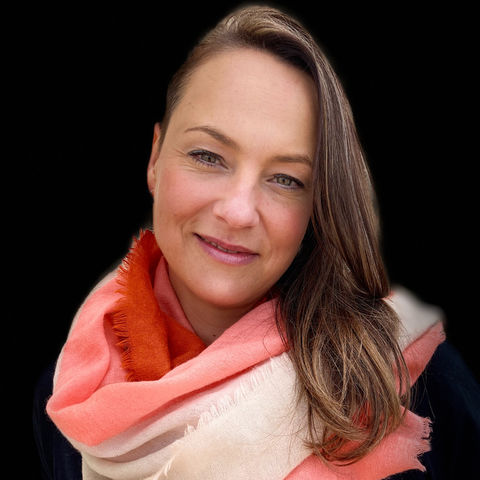
My name is Liv Downing,
And you have joined me on the You Are Loved podcast.
You Are Loved is the title of my forthcoming children's book,
Due to be released in 2021.
And in this book,
I explore the possibility that love is actually always available to us.
And that maybe,
Just maybe,
We don't actually have to rely on external sources of love or other people to feel a sense of true belonging.
As you may know,
Research tells us that a sense of belonging or a deep sense of connection is really essential for us humans to thrive.
And in this series of podcasts,
I want to learn more about why that is and how we can all get more of it,
To nourish both ourselves,
Our kids,
And our beautifully broken world.
It's my deep hope that through these conversations,
It's together we can learn more about creating a more loving and wiser world.
Welcome to the You Are Loved podcast.
Today I'm joined by the wonderful Mariah K'night from Cool Karma Collected,
And we explore a whole range of topics when it comes to supporting women to come home to themselves and really cultivate this sense of love and belonging from the inside.
We look at the body and our relationships with our body and how those relationships can really impact our wellbeing.
We explore the wonderful work of Byron Katie,
And we really unpack how it's essential for women to do this deep personal work to really start to change and break perhaps the habits that we may have inherited from previous generations and to really stop us handing these on to our kids and to broader parts of our community.
Mariah shares some wonderful tips that can support us all to come back to ourselves,
To come back to this sense of home.
Mariah K'night is one of my dearest friends and also one of my greatest mentors.
She has taught me so much about mindfulness and meditation and really been integral in my own journey,
Both personally and professionally.
She's trained with some of the best teachers around the world,
Namely Jean-Cabat-Zin and Saki Santorelli,
And she's really done the deep work herself.
She not only has all of the theory and the practical tools and concepts,
When you're with Mariah,
You can feel a deep sense of peace that she has really worked for and cultivated for herself.
So it is my real hope that you guys get as much out of this conversation that I did and that you get a taste of the joy and the beauty and the wisdom that sits within the gorgeous Mariah K'night.
Enjoy.
So I am here today with my gorgeous friend,
Colleague and mentor,
The beautiful Mariah K'night.
And this is the very first of the You Are Loved podcasts.
I'm super excited to be sharing it with the Live Mindfully community.
And really the underlying theme that will sit across all of these future podcasts will be the possibility that we can always choose love over fear.
So I know in my life that's been a constant battle and continues to be.
I have written a children's book that's due to be released next year called You Are Loved,
And it really explores this possibility both as individuals and as parents.
And I thought that I would really love to explore this concept in more detail through a podcast.
I'm very lucky.
I'm surrounded by some very smart people and Mariah is one of them.
So hopefully together we can learn more about love and connection and this true sense of belonging that as humans we're all craving.
Welcome Mariah K'night.
Thank you for joining me today and joining our listeners.
And it's such a gorgeous topic.
It's just such a already just listening.
I was like,
Oh,
Yes,
Let's talk about that.
Well,
It's taken me forever to find it.
And I am my deep wish is that other people get there sooner than I did.
So that's why I have this conversation.
But I'd like to start just to learn a little bit more about you and how you got to maybe tell us a bit about what you do and how you got to doing what you're doing.
And then we'll go into some other.
Okay.
So I think I'm going to do it through the frame as a fact that I was exactly the same.
I think all the way through high school,
I definitely was afflicted by I'm not lovable.
I'm not enough.
I think it's a common thing.
I think it's actually a human basic human thing.
But I really noticed how plagued I was by that throughout high school in particular.
And it's interesting because I was very lucky,
I guess,
To find yoga and meditation at the age of 18.
And that really started to help.
There was something about going into that yoga studio and coming out and just feeling like there was something that had just shifted in me,
Or a sense of just belonging something,
Belonging in myself.
And so that really was the catalyst for what then became and in the midst of that,
I was also training to be a lawyer and doing all that other stuff,
You know,
That we needed to do to be striving and perfectionist and I type and all of that.
It's funny because I remember a particular moment and you and I have this ashram in common such and under but I'd been at the such and under ashram back in like 2006 or seven.
And I was sitting in the staff room at the law firm I was working at an equity partner walked him and he asked me what I'd done on the weekend and I told him that I'd been at an ashram doing a meditation retreat.
And he literally looked at me like I was,
You know,
Going to sing kumbaya,
Hold his hands pull out the hippie robe do all the incense the all the woo woo shit,
Excuse my language.
And it was just that phenomenal moment for me thinking,
Oh my god,
I've been using these tools to manage,
You know,
In this law firm to deal with,
You know,
Difficult clients and to deal with stress and to feel like I was enough in in his eyes.
And yet it just was seen as such a weird kind of thing.
So that really I remember that being one of those catalyst moments of thinking,
Well,
If I can't make it relatable,
Or if to him,
Then how do I and so it really did set me on this journey.
And I did my yoga teach training after that,
And then obviously have changed with,
You know,
Some of our modern mindfulness grandfathers and neuroscientists to really,
Yeah,
Just find a way to make this relatable to even those equity partners who are like,
What is this stuff?
Isn't it amazing how those experiences that we could see as potential barriers in our journey can really be that pivot point that where we kind of wake up and go,
Oh,
What am I really here for?
Yeah.
Oh,
Totally.
And I feel like there was that like,
Straight away that values misalignment that was like,
Hang on,
Like,
This is something I really value.
And you can't even see it.
Like it's not even it's not welcome here was what I got.
It's not welcome here.
So that instantly was a pivotal moment for me going,
Maybe I am in the wrong industry.
So yeah,
It is.
Definitely.
Just based on that story.
I'm really interested to hear how as a as a woman as a modern woman,
Probably acculturated much the same way as Australian women have been.
Yeah.
How were you able to access that strength and that agency in yourself to make such an amazing decision to leave the legal fraternity?
How did that happen?
That's such a good question.
I don't know,
To be honest,
I think there was a few little moments,
Like catalysts moments,
You know.
I remember before my dad died,
Having a phone conversation with him where I was in tears where I couldn't I was paralyzed by the decision.
I knew I wanted to leave this job.
And I just was like,
And I was in the midst of my yoga teacher training.
And there was just so much kind of friction in me to like,
How do I do this?
And,
You know,
It just I remember it being paralyzing.
So there definitely was a point in there where I remember my dad just saying,
You know,
I can see how unhappy you are and you need to follow some path.
But then very shortly after about six months after I lost dad to suicide,
And I think going through that difficulty gave me the level of strength to just kind of then go,
You know what,
This is it's a parley word that I learned,
Which was called some wager,
Which is like this,
There's there's all of a sudden an urgency in you,
You no longer have a choice,
You are propelled onto the path whether you like it or not.
And so I think it was that kind of that that that that strength of like,
This needs to be where I had in my life that kind of got me there potentially.
And yet I get that strength.
And I've had it many times in my life,
But yet you listened.
And I think that's quite uncommon for women.
I think we I know I certainly have very much listened to what society has expected of me.
And it's taken me to my 40s to really learn that I don't always have to listen.
But there was there was great courage,
I can imagine.
Definitely.
I think that's true.
I think that's so true.
And I think there was the first initial idea to kind of leave everything.
But then there was every single Monday morning for years.
I used to call it the Monday morning kind of like frozen where I just sit there and go,
Oh,
My God,
Like I've left the normal workforce,
And I don't have an income and I probably still sometimes have it actually,
To be honest,
But there was like a constant like,
Reminder that I had to be courageous in this and,
And every every week,
And there would be times I get on sake and just go,
Oh,
My God,
Maybe I've made the wrong choice.
But I think there was those conscious conscious decisions at every point,
Which is mindfulness,
Like constantly tuning in going,
But what do I really want,
Even though this is really uncomfortable?
What is it that I know,
That's going to make me really satisfied and fulfilled in life?
So yeah,
I think the mindfulness definitely,
Funnily enough,
Really helped with that.
Yeah,
Really helped to perhaps unlock the courage that was within you.
But perhaps you hadn't maybe had the permission to listen.
You really were able to.
So there must have been a sense of coming home or a sense of connecting with your your voice.
Oh,
My gosh,
Yes.
But I think we,
But it's continual.
Like if I was to think that I had felt like I was coming home then and I do remember doing work 10 years ago around coming home,
And how it feels now,
It can it's so it's so different again.
So it feels like it's a constantly evolving process.
But yes,
There was elements where I could just feel somewhat like there was there was a worthiness or loveable-ness to me that maybe had been missing.
And it came from me.
It was that kind of,
Yeah,
That resolve from within me rather than externally.
But again,
Still a it's an evolving process.
Constant.
Oh,
My gosh,
Yeah.
Feeling,
But what an amazing discovery to have made that you can fill up your own car with petrol.
You become self-sustaining rather than having to rely on feedback from the external world,
Which I'm sure men do as well.
But I know certainly as women,
We look around our bodies,
Our achievement,
The number of all of that.
What an incredibly empowering experience to actually realize you could have that sense of belonging to yourself.
Do you know,
One of the I think one of the pinnacle times when I realized that was in the Byron Katie work that I did back in like maybe 2008,
Nine.
And I remember talking about the three types of business and,
You know,
My business,
Which is that ability to be home with myself and control everything in my own realm,
Everyone else's business and then universal business,
God's business or,
You know,
Stuff that's so far out of our control.
But it was such a beautiful thing when I recognized that whenever I was in anyone else's business,
Worrying about what they were thinking about me,
There was no one at home with myself.
There was no one at home and I'd feel the anxiety in my chest.
And so that became this warning sign.
Every time I felt that anxiety in my chest,
I'm like,
Oh,
Who's home?
I'm not home.
And I just put my hand on my chest and I'd be like,
Come on.
So there was just like this continual practice of like knowing that,
You know,
That was the only thing I had power over really.
Thank you for sharing that.
What an incredibly powerful practice just to ask that question.
I would love and you've spoken with Byron Katie about Byron Katie's work with me over the years and I've explored it a little bit,
But I'd love for you to perhaps share a little bit,
A bit of her work with our listeners and just,
You know,
Perhaps introduce it in a way if you feel comfortable,
Because obviously it's been a great tool for your journey and it started a great tool for mine.
If you could share a little bit more about who she is and what she's done.
Well,
She's amazing.
Like,
You know,
I was talking to a client of mine that I coached recently and she just said she went down the bar and Katie rabbit hole online.
So I dare you guys to do it if you're listening.
But she was a business woman.
She was in eighties kind of power hitting business woman and had all that same stuff about not being lovable,
Like really deeply not lovable,
Even though she was so successful in that corporate world.
And you know,
Really then it all came to an absolute you know,
It all fell apart and she ended up kind of in a halfway house,
Very,
Very depressed,
Very sick,
Very unhappy.
And she had this kind of moment where she was lying on the floor in a cockroach crawled up her leg.
Yeah,
Yes.
And exactly.
You have that kind of yucky.
And she realised that she felt exactly the same way about herself as she did about the cockroach.
Wow.
That's profound.
Yeah,
That same hatred that same.
And then she had this other epiphany that it was all the same and it was only the labels.
It was only the,
You know,
The ways we perceived it that was causing us so much suffering.
Oh,
So then she went off and did all this incredible stuff and went into the desert and did,
You know,
Worth reading her books.
But she came out with this beautiful practice called the work,
Which is an inquiry into every single one of your beliefs that we have so many beliefs that we've been,
You know,
That have been created since we're born or even beyond before that with epigenetics,
Particularly around lovable nurse and as women,
You know,
Not enough nurse and the body stuff and all those beliefs and we inquire into every single belief.
So I used to work desperately hard on,
I need to be skinny to loved as a belief.
That was a huge one for me from,
You know,
Very early on in private school in Melbourne,
I need to be skinny and pretty to be loved.
And the way she inquires into the question is,
Is it true?
Can I really know it's true?
And the next one,
Which is the most important one for me is how do I feel when I'm believing that belief that I need to be skinny and pretty to be loved.
And what I love about that is it's,
You know,
It's a little different to CBT because it's so in the body,
It's like,
How do I feel?
How do I,
You know,
What's the experience in my body?
And I just noticed that it was just this,
You know,
This heaviness,
This like churning of the stomach,
This like,
You know,
The sense of invisibility.
And so that was quite profound just to notice that that was the effect that that belief had on me.
And then who would I be if I didn't have that belief,
If I could just walk into a room and that belief was there,
But I just didn't hold it so tightly.
And so it was just a really powerful,
And then she's got to turn around to where you actually then say,
I can be loved,
You know,
Even if,
Or,
You know,
There's,
There's this cool way that she kind of,
You know,
Helps you to see or reframe any one of your beliefs in the converse because it's all true or none of it's true,
You know,
It's just,
Yeah.
So that's kind of what she's about.
And I just think it is profound,
Particularly for us,
The stuff around loveliness and enoughness,
Because it can really help us to reveal how damaging,
Stressful,
Painful the beliefs are.
And then we have the,
Once we see that we have that opportunity to choose whether to hold it or not.
Yeah.
Choose to whether to attach to it and own it,
Invite it,
Continue inviting it in over and over and over again.
I think you touched on a really important point,
Many important and amazing points there in describing her work,
But something that really stood out for me and something that you have coached me on in my own exploration is the body.
You know,
Being a psychologist,
I was very much in this part.
I didn't really even know I had a body until I started exploring meditation.
And then it was still very heady for a very long time.
And this,
You know,
I'd love for you to share a little bit about the body and how that capacity we have to come back home within ourselves and that safety because for some of us,
Our bodies aren't a safe place.
Yeah,
That's right.
Things have happened that haven't allowed us to go there.
But if you could just share with us a little bit of your insights and experience and maybe even some tips for other women who have avoided their bodies and have their bodies,
You know,
To be a utensil or a tool of love or to win attention or get the job or whatever.
I think,
Yeah,
I think,
Gosh,
It's such a big topic.
We,
Yeah,
We could talk for hours on this one,
Particularly I'm so passionate about it because I do think that with a lot of practitioners out there,
They still teach mindfulness as a head up tool.
You know,
We can fight mind with mind.
We can,
You know,
Combat thoughts with thoughts.
We can control everything up here.
And what's so remarkable and so awful and difficult,
Yeah,
We're putting up a hand.
Yeah.
And I mean,
I definitely was that too.
Took a lot of,
You know,
Convincing from all of the teachers over in the States to get me into my body.
I remember Bob Star saying,
You need to take the seven inch journey from your head down into your heart.
That's a terrible American accent.
But yet,
So,
But it's the power of coming into our body is both one truly wonderful,
But also incredibly scary.
Because for a lot of us sitting with a lot of value misalignment or a lot of suppression of emotions or trauma,
The minute we go down there,
It's really unpleasant.
And so if we can just stay up here and deal with it all up here with the stories around,
Oh,
It was my mother that bought me that or it's,
Then it can feel safer.
But the beauty that lies in actually being willing to kind of turn in towards the body and gently sort through some of the stuff down there is that we get so much more precious information about what's really going on.
And it's a felt experience.
You know,
When we are sitting in that unpleasant,
We recognise that our emotions and our thoughts have created this physical reaction in our body.
It gives us a power that's so much bigger than our thoughts to actually choose to let go and to release.
And we can't do that from our mind.
It's actually.
.
.
The change comes,
Isn't it?
Sorry to interrupt.
That's where the change comes.
And that's how we can start to practice these new or build these new neural pathways in our brain through working with the body.
It's not top down,
But it's bottom up.
It's bottom up.
It's absolutely bottom up.
And I remember having a very confusing conversation with a neuroscientist in Boston around this.
And he kind of put it to me just like,
Before we even have thought the mind has established what's going on with the body first.
So really,
Particularly with this lamina one and all of these kind of neural connectors that are literally sending messages from bottom up.
Yeah.
What do we just need to trust in it that will help that actually the prefrontal cortex will switch on if we are in our bodies?
Because if we think about our prefrontal cortex and some of the things it's responsible for is it's responsible for executive top down functioning.
It's responsible for proprioception and interception.
So that's our internal ability to regulate our bodies.
So by being in them,
We're actually strengthening our mind.
Yeah.
Such powerful work.
You know,
To be brutally honest,
And I'm sure that there'll be some listeners out there who feel the same.
When I hear originally when I first started hearing people talk about the body,
I'd be like,
Oh,
The body,
I feel like I need to feel my body or focus on my breath.
I'm just going to shoot them.
Because so cliche and it's so slightly boring.
But actually it's where the magic is.
Yeah.
But don't we have to get past all of the hatred of our bodies?
I remember days in Vipassanas where I'd be sitting and I'd just be so angry at my stomach.
You're fat,
You're ugly.
And I like I used to grab it in my Vipassana and then I'd have tears just thinking,
Oh my God,
The hatred of my body.
Where did you come from?
Like,
You know,
Where does it come from?
I think epigenetics,
I think that's our grandmothers.
Our great grandmothers.
I think it's so deep in us that,
You know,
We have to start to really wake up and be conscious of it and unfortunately do the work of our great grandmothers,
Grandmothers,
Mothers,
So that we cannot pass it down to our daughters,
Their daughters.
I just got goosebumps.
It is and I,
You know,
I think as parents,
You and I are both parents,
So little boys.
But I,
You know,
I think the greatest gift we can give our kids is that waking up,
Is that choice to live consciously and to live mindfully.
So we're not just perpetuating those habits and patterns.
We've inherited through no fault of our own.
Exactly.
Yeah.
So the body work is profound.
Where could women go to perhaps learn a bit more about learning to relate to their bodies?
Well,
I think,
You know,
Yoga is actually a really lovely start.
If we approach it in the right way,
It's no good if we go into a room and we start to body shame ourselves because every other woman in there looks prettier than us.
But if we go with that real intention of self-nurture,
So there are ways that we can,
You know,
Approach or go to particular yoga classes.
I think obviously,
You know,
Loving kindness meditations and even somatic experiencing.
There's lots of great therapy now that is just so much more body based that can help us to start to unlock some of that.
Yeah,
That's I guess that's the three things off the top of my mind off my head.
Yeah.
So loving kindness meditation,
Could you share a bit more?
And I struggle with it.
And I like it's just it's a difficult one again,
Because it's just so easy for us to be loving and kind to everyone else and then when it comes to that kind of,
I've got to sit now and just wish myself well and stuff.
But it's,
You know,
It's this beautiful opportunity to kind of just be with ourselves and really remind ourselves that we are enough.
And and,
And the way that a lot of it's done,
And I really like it is you first send your loving kindness to someone who you really love.
And you send it to say your child or your most closest friend or pet someone you really dearly love that you love just as they are.
And you get a sense of that energy of how much you love someone just as they are.
And then the invitation is to turn that energy,
Keep that energy and just turn it on yourself.
And as soon as that happens,
It can be really,
You know,
Confronting.
Because for a lot of us,
We just haven't actually dared to think that we could do that,
That we could be just as enough as we are.
So it is,
You know,
Just a beautiful meditation or practice for us to adopt.
Yeah.
And I think I think you've again touched on a really important point that this work is more than just positive thinking.
Just looking in the mirror and saying I love and accept myself just as I am,
Because I don't know about your experience,
But I've tried that.
And that didn't work.
That was just my little part of me was saying,
Well,
No,
You don't.
You're still not good enough.
Whereas actually,
It's more about it's that experience,
As you said,
That feeling,
The feeling of loving someone and then returning the feeling onto ourselves,
Not just the words because they're shallow and empty.
We're in the head.
Yeah,
And sorry,
And I think you've come to a really good point to around that positive thing,
Which is that we need to,
You know,
In order to love ourselves,
We need to rid all of the things that we don't like about ourselves,
Like the shame,
The malice,
The jealousy that,
But you know,
That's all parts of us.
That's every element of,
You know,
Us that's intrinsically human.
And so it's not about kind of just showing all the best parts and focusing just on that and manifesting the hell out of it.
It's kind of like that willingness to recognize that we can be all of it,
We can be the crazy,
You know,
Reactive partner,
We can be the awful mum at times,
You know,
That it's and it's all okay.
And that's the deep,
Deep love.
You know,
It's not just that superficial love.
Yeah,
It's,
Um,
It's really interesting.
I think you and I have talked over the years about what is it,
You know,
Is it,
Are we loving ourselves as we are?
Or are we wanting to change and grow?
It's,
Is it,
How does it work?
Where does it,
Where does it sit?
And the only thing you've come to is it's both.
We manifest things good,
Positive thinking's good,
Growing the good parts of our brain,
Practicing gratitude's good.
Precursor to all of that is being where we are.
That's it.
With all of our other bits,
With our other bits.
And that's so funny,
Isn't it?
Because it's the precursor.
And everyone just wants to get to the good stuff.
And it feels good,
Even when we haven't done the precursor stuff.
But it can be very shallow.
And there's still that yucky murky stuff underneath,
Because we don't actually ever,
It will never be enough.
That's the reality.
It'll never be enough.
There'll be no amount of work,
Unless we actually come to that space of I am okay,
Just as I am.
And then from there,
I will,
You know,
Continually make the choices to,
To improve my life,
To feel more easeful,
You know,
To be more loving of myself and others.
So like,
From there,
We can grow from such a more authentic and genuine place.
Yeah,
Absolutely.
Absolutely.
And,
You know,
I think there's the misconception that by accepting ourselves as we are,
We're giving up,
We're letting ourselves off the hook.
Yes.
Yeah.
I think that's it.
That seems to really freak people out around like,
Oh,
But if I accept it,
You know,
And also that it means it's okay,
You know,
To accept means that it's okay.
And it is in a way,
Okay.
But it's not saying that we don't want to change or that,
You know,
Change isn't possible,
But it's that we just can't get there without it,
Unfortunately.
I know.
I hear you.
It's so the conversations,
I've really enjoyed our conversation.
It's brought us back to the time we started,
Which is all about that place of coming home and that capacity to sit where we are and love ourselves anyway.
And that can help foster within us is a refuge,
A safe space within us.
And also,
I think from that capacity,
We can connect more authentically with other people,
Really what the world's craving now,
You know,
We're recording this during the time of COVID-19.
And if we've learned nothing else,
We've learned our interconnectedness.
So I would really,
I've got a couple more questions for you.
The first one is,
What could you share with us of maybe a practical tip for our listeners in,
You know,
You've talked a little bit about loving kindness,
You've talked about sensing into the body,
You've talked about the Byron Katie works,
They're all wonderful practical tips.
But could you just come up with just off the top of your head,
Something else,
But just something else to bring this that listeners can take away from this,
Invite into their lives.
I think one of the most important things for me at the moment is that just like we need to know nutrition and know how food operates in our body and how to best fuel ourselves,
We need to know our mind and our mind body connection.
There's a real responsibility or onus on us to just become more aware,
To reclaim awareness,
To get out of autopilot,
To just,
You know,
Wake up a little bit around this stuff.
And so it's not really a practical tip per se,
But it's just,
There's an invitation there to just start to know your mind better.
And that doesn't have to be scary.
And when I say mind,
I say mind body,
Because it's all part of the same thing,
But it can be as simple as doing little stop micro-practices where we stop,
We take deep breaths,
We observe how the body is.
We don't get into the mind.
We leave that.
We just observe what's going on.
We might notice that there's an emotional state there.
And then we just proceed.
We proceed knowing that.
And we can do that many times in the day.
And that just doing that can start to make significant changes in your life,
You know?
And then the other ones,
The rain practice,
You know,
Recognizing and allowing any emotion that's coming and sensing the sense of,
Can I be okay with it?
Can I let it be because it's here?
And investigating it again from the bodily perspective,
What does it feel like to feel sad,
To feel like I want to just have a good whale?
Does it come from my belly?
Does it come from my chest?
You know?
And then,
You know,
That nurturing or that nourishing or that ability.
And for me,
I really say it's that ability to just say,
This is such a human experience.
I'm not alone in this.
Everyone has felt at some point sadness or aloneness or not enoughness.
So it can be really lovely to just remind yourself of that fact that you're not alone.
So I think two little techniques that you could use all of the time could be very valuable.
Fantastic.
So that purposeful stop where you really stop reflecting on how you are and then the RAIN acronym.
I do have one final question and that is,
Is there anything that I haven't asked you about that I should have and that perhaps you'd like to share about this age old dichotomy of love versus fear and the choice we have and cultivating this for ourselves?
I,
You know,
When I was reading your,
The blurb that you had,
I just kept thinking about the fact that it reminded me of one of the ancient like Buddhist texts around that constant craving and aversion.
That craving is the desire to belong or the belonging thing that we have where we always are just seeking that.
And yeah,
I just think it's,
There was a beautiful way that that desire,
The word desiring,
Desiring to be loved,
Desiring to belong came about from the Latin word desirata,
Which meant belonging to the stars.
And so I think there's just something beautiful about recognizing that this is just so much bigger than us,
You know,
And that,
And recognizing that we're also at the same time,
All part of the same container,
That it's,
We're all in this,
Like we're all in this in the time of COVID,
But it's just this bigger experience.
And I found when I recognize that,
That the constant wanting,
The constant desire,
The constant aversion is not just my experience alone.
It makes it easier and it makes me more capable of managing and starting to shift some of the,
You know,
The ingrained beliefs I have around it.
So I guess,
You know,
That's the only other thing I'd add.
Thank you.
Thank you.
That's,
That's so helpful.
That shared human experience.
We do that.
And and it's wonderful to,
You know,
To have some practical tools to remind us because I remember reading a wonderful quote that mindfulness itself is not difficult.
It's remembering to be mindful.
That is right.
And this is what these tools are,
Isn't it?
It's just reminding us of our birthright,
Of our natural capacity.
That's it.
That's it.
Yeah.
Well,
Thank you so much for today.
I have loved chatting with you as always.
And could you just share with our listeners a little bit more about how they could find out about you and your work and maybe your website and anything else you'd like to share?
Sure.
So my Insta handle,
Which I love,
Is coolkarmacollected.
And that's my business name.
And,
You know,
If you head to,
I think maybe we can post a link to my website,
Which is coolkarmacollected.
But there's all of the information on what I do,
The courses that we run.
And you know,
Upcoming community events and all sorts of stuff.
So,
You know,
That's what I say is the best place to go is to Instagram or to my website.
Beautiful.
Thank you so much,
Marika Knight.
Absolute joy to spend some time with you.
Such a joy.
Thank you so much for inviting me on.