Breathe: Right Now, It's Like This
During difficult times, allowing ourselves to pause, breathe, and come back home to the present moment is exactly how we can regain our footing, become more grounded, and shore up our ability to more wisely respond instead of automatically react to whatever’s happening. This talk offers us a variety of ways that our meditation practice can help us learn to rest our attention in awareness itself, and discover more calm, compassion, and wisdom in the face of our challenges. It includes a brief meditation at the end.
Transcript
So for the past several weeks now many of my students have been reaching out to ask me how they might use their practice to help navigate what right now feels like a lot of change and uncertainty in our world and so as always I thought I would offer some of what I've been doing in my own personal practice which in large part has involved really just going back to the basics and keeping it simple in a way because the truth is whenever there's a lot of change in our lives or out in the world very often the practice itself can feel really challenging and so what we need isn't something that's necessarily complex or complicated but something much simpler.
This is especially true when there seems to be almost way too many different changes competing for our attention or when our thoughts and emotions seem to be just continually derailing us or making us feel off balance and so in times like these what we tend to need most are practices that are kind of easily accessible right here in our pockets if you will and again for the most part these also need to be fairly simple.
It's something that can help us more easily come back home to presence to just this moment just as it is you know with great compassion for ourselves and for whatever's happening because this can really help us to shore up our ability to continue to face all the things that are happening in our own personal lives out in the world with a greater sense of calm and balance and wisdom.
This is actually super important because if we allow ourselves to become too caught up in whatever's happening we tend to ignite the fight-flight-freeze response in our bodies which can then really weaken our response to whatever's happening for many many reasons.
For starters whenever we're feeling overwhelmed our bodies tend to become flooded with adrenaline and cortisone which then triggers the alarm system in our brain to be on red alert high alert and as a result we're just not able to think as clearly or to make the best decisions and we also tend to overreact out of a sense of fear and panic and so just for a moment we might recall that the Pali word for mindfulness itself sati,
S-A-T-I,
Actually means to recall,
Recollect,
Remember and what we're trying to remember really is the present moment to come back home to it over and over again instead of worrying so much about the future or reminiscing or regretting so much about the past and the reason we want to keep remembering to come home to presence is because this is exactly where we can find our footing again and become more grounded instead of feeling like we're just sort of falling through space with nothing very solid to hold on to.
To offer a favorite quote of mine from one of my very favorite teachers the great Sharon Salzberg.
Sharon tells us in times of great struggle when there is nothing else to rely on and nowhere else to go it is the return to the moment that is the act of faith.
From that point openness to possibility,
Strength,
Patience and courage can arise.
Moment by moment we can find our way through.
In the course when conditions are good this can sometimes be relatively easy right to remember to be in the moment and to be clear and grounded in present but during those times when our world feels like it's been turned completely upside down and we're right inside the swirl of it we might actually need something to remind us to be mindful.
You know something that can help us remember the practice itself and for me one of the best tools I know for this involves using some very short concise phrases that many of you know I affectionately like to call Buddha's sticky notes and all of these phrases are really shorthand if you will for the Buddha's more profound teachings because they're all short enough to fit on a sticky note usually just one to five words so they're super easy for us to remember and I just I love them so much mostly because as my own students tell me all the time they actually work.
In fact once we start to train ourselves to use them maybe even by putting them on an actual sticky note and pasting them or we'll see them a lot they have this sneaky way of printing themselves into our consciousness and then spontaneously arising at the exact moment that we need them.
It's like once we've trained ourselves to remember them we don't really need to go searching for them.
They just sort of naturally arise but again I want to say especially when life becomes challenging it can also be wise to kind of give ourselves a little help by maybe pasting them up somewhere to just help remind us a little bit and so for this talk I thought I would share a few of these starting with the one that I think is the actual origin of all the different sticky note phrases that I've collected over the past 30 plus years and honestly given its meaning in the practice it just makes so much sense to me that this was the very first one and so when I first saw it I was in my late 20s and I just started attending classes in writing in Buddhism at Naropa University in Boulder Colorado and I'd also recently moved into a house with three other roommates who are also attending the University and on the wall of our shared hallway one of my roommates had tacked up this big pink fluorescent poster that just had one word stamped onto it in these giant black letters and that word was breathe breathe and I completely realized how simple that sounds but what I need to confess here is that poster caught my attention literally every single time that I walked into that hallway which as you might imagine was quite a lot in fact over the next several years it almost accidentally became a really fantastic practice for me mostly because almost every time I saw it I would immediately notice how unaware I was or maybe just how completely caught up I had been in my thinking in my thoughts which of course meant that I also wasn't living in the present moment at all let alone being mindful of my breathing in any way and because that poster was just so big and bright and was constantly reminding me to stop and breathe and come back home to my heart and the moment dozens and dozens of times a day it really did train me I think over the years to remember to be more present and kind and to become much more conscious of my breathing which in the teachings is truly where everything starts and again I know that sounds simple like okay breathe that's kind of a no-brainer that's easy but what I often like to recall is that even 20 years after the Buddha himself had become enlightened his personal attendant Ananda apparently asked him venerable sir if people ask me whether you're still practicing meditation or should I tell them and the Buddha nodded and said yeah I'm still meditating what kind of meditation do you practice venerable sir and the Buddha said mindfulness of breathing mindfulness of breathing so on the one hand that word it's incredibly simple and on the other it's also really everything or maybe the start of everything and the good news is that for as long as we live our breath is something that's just always available to us in any moment and again it's also exactly where we want to land our attention which is directly in the body which is also always just right here in every moment well our minds of course rarely are I think this might be exactly why I love that original sticky note or poster if you will so much because while it's just one word we can truly discover almost the entirety of the Buddhist teachings right inside of it as a case in point many of you who listen to my talks are likely familiar with another one of my favorite sticky note phrases which comes from another one of my teachers the Buddhist monk and scholar Bhikkhu Analyo who famously summed up our entire practice in four words which I know many of you can recite just keep calmly knowing change keep calmly knowing change so in short summary we're being asked to keep or remember recollect calmly without resistance with patience and equanimity knowing being mindful of aware of change mindful of change the point I want to make here is that we can actually begin that whole practice just by becoming aware of the breath which we can notice almost immediately is itself constantly changing it's really a constant flow just like life itself can remind us of that might also be helpful to remember that just by becoming more conscious of our breath in any moment we can almost instantly turn on our parasympathetic nervous system which helps to bring more calm and ease to the body and also kind of ease that toxic fight-flight-freeze response so this is especially true if we allow ourselves to become more aware of our exhale in particular as well as the breath right in the belly and so just for a minute or so I thought I might invite you to try this right now so if it's available we just go ahead and just take one very long conscious inhale filling up the lungs maybe letting the breath go all the way down into the belly and then really slow down your exhale slow it down you might try that again a couple times and as you're doing it you might even place one hand or both on your heart or one hand in the heart one hand on the belly breathing into the fingers really sensing the rise and fall of your breath you might even see if you can direct the breath more into the belly because again this is going to have more of a calming effect at the same time as you're doing this you might imagine that you're sending a sense of calm and compassion to yourself right through the hands just imagine that so at the same time you might also now see if you can place a very slight smile at the corners of the eyes and the lips not as a way of covering over any type of emotion that you may be experiencing but just as a way to bring a sense of friendliness into the practice or metta in the Pali language just like we might invite a friend to sit with us while we're experiencing whatever we're experiencing just invite that friendliness in the Buddha actually suggested this practice thousands of years ago and today we know from modern science that bringing a slight smile to the face really does calm the mind and the body it helps to bring on the flow of those feel-good neurotransmitters which can not only relax the body but it also can do things like lower our heart rate and our blood pressure maybe for the next minute or so you might just notice what happens in your body and your mind as you try this practice on so years ago when I was teaching mindfulness based stress reduction workshops at the regional hospital here I was part of a large integrative care program which offered Reiki to the patients and one of the things I learned from these trained practitioners was that science has proven that we can send a sense of calm and kindness to our bodies right through our own hands and that it can carry the same effect as when someone else offers us their care through touch and knowing this you know for myself what I've noticed is that especially when things are difficult I seem to find myself just kind of automatically placing my hand or both hands over my heart throughout the day as a way to tap into that sense of calm and care not only for myself but for what everyone else who may be experiencing suffering right now right kind of holding it and what I find interesting is that just like the breath that sense of touch also helps keep me anchored right here in the body because as the Buddha taught us our whole training really is asking us to become more aware of the present moment by coming back home to the body and to notice how it too is constantly and forever changing as is everything else in this world.
In the famous Sariputana Sutra which is basically the Buddha's main instructions manual for us for how we're being asked to practice he tells us right off the bat quote there is a one thing there is one thing that when cultivated and regularly practiced leads to deep spiritual intention to peace to mindfulness and clear comprehension to vision and knowledge to a happy life here now into the accumulation of wisdom and awakening and what is that one thing it is mindfulness centered on the body mindfulness centered on the body and so within these instructions the Buddha goes on to explain that the very first way that we're asked to become mindful of the body is by very consciously remembering and then becoming aware of each inhale and each exhale and then allowing the breath to not only help us to calm the body but also the mind right because the two are not disconnected.
My tradition the insight meditation tradition or the Theravadin is also known as Samatha Vipassana.
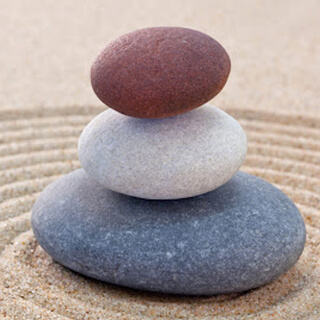
Samatha slash Vipassana with the Vipassana part meaning the insider wisdom aspect of our practice and the Samatha part meaning the more calming aspect of our practice and so it's important to remember that we always want to start with the more soothing effect of the breath first because we actually need that common clarity in order to discover our wisdom or maybe our wise response to whatever's happening so I thought it would be helpful to read directly from the instructions in the Sattavatana where the Buddha explains how we practice this way.
He tells us one breathes in aware that one is breathing in one breathes out aware that one is breathing out when one breathes in a long breath one knows I'm breathing in a long breath when one breathes out a long breath one knows I'm breathing out a long breath when one breathes in a short breath one knows I am breathing in a short breath when one breathes out a short breath one knows I'm breathing out a short breath breathing in I'm aware of my whole body breathing out I am aware of my whole body breathing in I calm my body breathing out I calm my body and so the idea here is that as we begin to focus more and more on the breath and then on the body as a whole it gradually helps us to come back home to this moment right now however it is rather than continuing to allow our tricky minds to continue to take over and drag us away into our worries about the future or maybe our regrets about the past as a late great Zen master Thich Nhat Hanh once told us quote we cannot enjoy life if we spend all our time and energy worrying about what happened yesterday and what will happen tomorrow if we're afraid all the time we miss out on the wonderful fact that we're alive and that we can be happy right now and so to offer another one of those sticky note phrases after we remind ourselves to breathe and to calm the mind in the body and wake up to what's right here in the present we are then asked to allow ourselves to rest in awareness rest in awareness in other words we're asked to allow ourselves just a brief pause in the swirl of all our stories and to actually rest the mind and the body in the present however it is even if this is only for a moment and what we want to rest in is all of our body senses by simply noticing for instance whatever we're hearing touching seeing smelling tasting as well as being aware what we're thinking since the mind is often considered the sixth sense and so just as an example you know we can allow ourselves to breathe and then rest for a moment in the felt sense maybe of the Sun warming our skin or the smell of the dish soap or the taste of coffee or the sound of a bird chirping or the sound of a car a truck passing whatever it is even if it's unpleasant it's what's happening in the moment and we can just see it touch it taste it here etc without judging it or making a whole bunch of stories up around it so right now you might even take a moment to ask yourself right now what am I seeing what am I seeing what am I touching maybe what am I hearing you might even take a moment see if you can breathe and allow yourself to rest in the simple awareness maybe with one hand or both on your heart if that feels hopeful remembering that as we're doing this whenever we're allowing ourselves to rest in awareness what we're doing is allowing ourselves to be fully present without judgment with what is just this moment and then this next moment and the next so even if the moment is unpleasant with mindfulness we're simply experiencing it even if what we're experiencing maybe is fear anger grief pain whatever it is we just want to name it and experience it as it's happening again without adding all of our layers of thought and conditioned beliefs and biases and stories or making the pain of what is happening worse by adding all of our negative commentary to it to bring up another one of those sticky note phrases we might say to ourselves right now it's like this right now it's like this and then notice without any judgment what this moment is like however it is remembering that this too will eventually change but right now it's like this so you might just take a moment to continue asking yourself what am I seeing touching hearing etc and see if you can allow yourself to rest in that just for a moment maybe asking or noticing right now it's like this so this is say some of us might assume of course that we're always aware of the present moment we're always just totally right here living our lives right where else would we be but if we really start to examine this and are honest it isn't true at all is it the Thai meditation master Ajahn Buddha Dassa once summarized our habitual way of living in three words when she said was lost in thought lost in thought and so just like that old breathe poster one of the great gifts of our mindfulness practice itself is that it can help us to really notice how often we really aren't here to see how often we are in fact lost in thought in fact the more we practice the more we might start to notice that what we're really experiencing so much of the time is the mind having a variety of different conversations with itself maybe even about the present moment it's like when we're watching a movie and then we turn on the director's commentary and now there are other people talking over the movie so there is the movie in that unreal drama and then there's a second conversation of commentary on top of it and in our lives so much of the time we are experiencing our lives from the viewpoint of the director and constantly being distracted by and caught up in all of the directors opinions and views and explanations about what is happening and when we're doing this again what we're really doing is dreaming we're asleep because we're not experiencing our lives as they are directly right now and so our more formal meditation practice can really start to help us to observe how we do this so that we can catch ourselves when we're doing it in our daily lives just as an example maybe we're sitting in formal meditation and listening to the sounds outside and might be aware of the temperature on our skin or aware of our breath aware of the state of our body and suddenly we hear a plane flying overhead and without warning our mind starts thinking about how much we're afraid of flying right now and then almost instantly how much we want to also go on a vacation and that's how we might go about doing this and then maybe we start visualizing ourselves planning how we could do it and then worrying about how we can best protect ourselves and pretty soon we're just completely full of fear and anxiety and frustration and we need to get up and stop meditating and go get a beer all from the simple sound of an airplane passing overhead so the Buddha calls this whole process of mental construction Papancha which is sometimes translated as elaboration embellishment or conceptual proliferation the word Papancha actually makes me think of popcorn because it makes that sound of pop pop pop Papancha so we might think about when we're making popcorn right it starts out slow a few pops here and there then suddenly there's just an explosion of pops over all over the place at the same time and if we're completely distracted and we let this keep going what happens everything gets burnt and the smoke alarm goes off right so it's a very same thing with our minds whenever we're letting our minds kind of drift further and further into the storyline or maybe the news feed if you will this can lead to the fire alarm going off and we start to feel the burn of that frustration fear the anger the envy shame greed etc and so our mindfulness practice is so much about training ourselves to see our thoughts and our natural tendency towards Papancha and then training ourselves to wake up and come back home again and again to the present moment just right here and allowing ourselves again to rest in that so that we can begin to see things more clearly for example maybe we're washing the dishes and we start to become lost in thought our mindfulness can remind us to come back to the immediate bear experience just washing the dishes feeling the warm water smelling the soap hearing the squeaking feeling our feet on the ground noticing our breath or the sunshine through the window and when we're suddenly present not lost in thought we might then recognize that there's an emotion here maybe there's sadness or grief or fear maybe there's a sense of gratitude or contentment whatever's happening with mindfulness we're now fully awake to it letting it flow through us and as we practice this more and more what happens is that we start to trust that we can just be with our thoughts we can observe them rather than identifying with them or becoming our thoughts or our emotions we can recognize that we are simply experiencing a feeling or even a belief observing it as it's passing through rather again rather than becoming that feeling or believing that thought or wrapping our identity up into it for instance we might start to recognize that we are simply experiencing the sadness or fear anger that is passing through us rather than thinking of ourselves as a sad or fearful or angry person right it's also really important to remember that with our mindfulness practice we're not practicing to float away somewhere to some blissful other state where we're maybe free from all thought or emotion like Kelgon take me away for those of us who remember that old commercial we want to use our mindfulness practice to really keep us grounded right here in the present more and more so that we're not constantly floating away into the past or the future or daydreaming or getting really caught up in that Papancha this means that if during our formal meditation practice we find ourselves kind of drifting off to someplace that feels more like we aren't here maybe somewhere that feels otherworldly or maybe like nothing like we've completely gone away we're actually not practicing mindfulness we're practicing going away again into kind of a dream world this is really not helpful so what we want to do instead is to make our mindfulness powerful grounding force something that helps us to anchor ourselves more firmly in the present we can discover our footing this grounding force of mindfulness is often compared to a stone or rock and in the teachings of mind without mindfulness is often compared to a pumpkin which I find interesting the great Bhikkhu Bodhi explains it this way he wrote a pumpkin placed on the surface of a pond soon floats away and always remains on the water surface but a stone does not float away it stays where it is put and it once sinks into the water until it reaches bottom similarly when mindfulness is strong the mind stays with its object and penetrates its characteristics deeply it does not wander and merely skim the surface as the mind destitute of mindfulness does hey so this object that the mind stays with it's usually the breath it's the breath but can also be a sound or a physical sensation or our thoughts themselves doesn't really matter what matters is that we are using our practice to very intimately observe all the characteristics of the object that we're present with and when we can use our bare awareness to keep the mind focused on a particular object it can calm the mind even more so that we can see things even more clearly for example maybe we discover that our mind is racing for whatever reason so when we recognize this we might literally choose to stop and close our eyes and become aware of what are called our touch points which is our feet our hands and our seat you might even notice these right now these are our instant touch points then we breathe we place our focus on the breath and make a conscious effort to just stay with the body and our breath moment by moment or again maybe we stop and we just look at something it could be as simple as a cup of water shimmering in the Sun reflecting whatever it's reflecting when we can remember to do this it can very temporarily take us out of the dream world and directly back home to the present moment then we might see the mind like that water a little more clearly and be able finally to see what it's reflecting what it's been saying to us what it's been believing and then question that without automatically believing or acting out on it and the great news is that after we have finally allowed ourselves to rest in the present moment and have given the mind and the body a chance to discover some calm and clarity that's when we can tap into our wisdom and decide how best to respond to any difficult or challenging emotion or situation and to bring up just two more sticky note phrases it's like when we can finally recognize that okay this is it this is it we can then ask ourselves okay now what now what this is it now what which means asking ourselves right now what is the wisest most compassionate response to whatever is happening knowing that we're now acting from a place of wisdom rather than a place of reaction and so given the time I think I'm gonna end there and if it's available for you I'd like to offer us a brief meditation on this so you might just find a comfortable seat close the eyes find a nice posture if you're out walking you might bring your attention into the body by noticing your breath and also the bottom of your feet on the ground the earth really sensing your connection to the earth feel your body walking if you're driving again noticing the breath noticing your touch points your feet your seat your hands on the wheel and all of us taking a nice deep inhale and then a slow exhale letting go couple of rounds of those on your own again just to get in touch with the breath you might bring in a sense of friendliness metta by adding a very slight smile to the corner of the eyes and the lips again never ever as a way to cover over just bringing a sense of kindness and friendliness into the body for whatever's here breathing in breathing out on the exhale letting whatever is tight soften letting go you might notice the whole area of the face the jaw kind of loosen a little teeth slightly parted might smooth the forehead eyes cheeks might let the shoulders drop allow the belly to be soft notice where you've placed your hands see if you can allow the very center of the palms to soften in a gesture of both receiving and letting go and if it feels okay or right you can also place one hand or both on the heart or one hand on the heart and one on the belly just to bring a sense of kindness and calm to the body to sense the body your choice maybe gradually allowing the breath to just be natural in the body without trying to control it just noticing the rise and fall of the ribcage body breathing and as you're ready you might just bring that phrase right now it's like this to the mind just noticing everything that's happening right now right now it's like this might take a moment and go directly to your senses maybe noticing what sounds you're hearing all around you again that very light thought right now it's like this you might notice the flow of the breath each inhale and exhale noticing how the breath is right now aware that you're alive right now in this moment right now it's like this you might now become more aware of the body as a whole noticing how it's feeling on this day in this moment this particular time in history without any judgment a lot of care and compassion right now it's like this now you might go ahead and tap into the heart the emotional heart notice what's here non-judgmentally with great kindness and care and tenderness again noticing right now it's like this you might even take a look at what's happening in the mind any narrative without trying to change it get rid of it etc again using that same phrase right now it's like this right now the mind is like this with a willingness to suspend any judgment just observing with care and finally you might see if you can open your awareness now even wider becoming more and more aware of each moment as it arises and passes again very gently holding that phrase in mind right now it's like this maybe noticing how it changes and finally with the eyes still closed you might listen to this poem from Emily Ligren who wrote each morning we listen for what is breaking the sound of a thousand tragedies fill the air shattering the never stops headlines a fleet of anchors tangled at our feet we watch worried if we turn away even for an instant it will all crumble the rest of the way forget with me for a moment take an unguarded breath do it now the world needs your attention here too on the rise and fall of your shoulders the rustle of leaves outside the window the warm space between your gaze and mine namaste and blessings