Hi guys,
My name is Tess.
I would like to tell you small 10 Ayurvedic habits that you can practice on a daily basis that can really increase the quality of your life.
So let's get right into it.
I was first introduced to Ayurveda back in 2021 when I was doing my yoga teacher training course and since then the Ayurveda and Ayurvedic daily practices just so resonate with me and I'm doing them on a daily basis.
And I also did a course about being an Ayurvedic lifestyle consultant,
So I'm really trying to live my life according to Ayurveda and yoga and all of those teachings.
I can maybe tell you like small habits that can be really beneficial for your life that are widely practiced in Ayurveda.
The first habit I would like to tell you is Dhinacharya or daily practice.
This small habit may be very simple but it's also very complex that Ayurveda is teaching you,
You need to establish your daily routine according to your natural rhythm,
That means that you should wake up early,
Do your self-care rituals or self-care routines and also to have a daily practice according to the nature.
And what you can for example incorporate into your daily routines or the self-care rituals can be something like tongue scraping,
Oil pulling,
Self-massage,
Engaging in some physical exercising,
Writing down your gratitude journal or eating the meals at the same time so you will have the regular intake of the food.
And when you will have a consistent daily routine by this you can really improve your quality of life,
Your biological processes such as sleep can just get better.
You can also reduce stress by having an established daily routine and you can just promote your overall well-being by this.
And also when you are for example into like yoga teachings or yoga traditions or Ayurveda,
You know that for example the monks who are living in some kind of ashrams in India,
They also have an established daily routine.
For example they wake up early just before the sunrise,
They also practice the cleaning techniques,
Then they do their yoga practice,
Their meditation practice,
Then they have the breakfast,
They then do their chores or the things that they do on regular basis,
They work and after when they finish the day they also have an established evening routine.
So for example it can also include like a gratitude journaling or just meditation or also the techniques that are promoting a nice sleep.
And while I'm also right now talking about your daily routine,
I will now move into the second small habit and it's tongue scrapping.
I started with tongue scrapping I think three years ago and I never stopped.
And tongue scrapping basically means that you will wake up in the morning and the first thing what you will do is that you will use a tongue scraper,
I will also try to put a picture somewhere,
To remove all the toxins,
They are called ama in Ayurveda,
What have been accumulated during the night.
And this small practice it also just removes the harmful bacteria from your tongue and also it improves your oral health but also the digestive health.
It can also increase the taste of the food you will eat during the day and it will just support the overall detoxification since the morning.
When you are sleeping all of those harmful bacteria you know you have them just in your mouth and it's really nice before you drink your water or even if you are a coffee drinker before you drink your coffee it's just really great to just really take this tongue scrapper and just clean your tongue clean your teeth and everything because when you will drink the water all of those toxins will go directly into your body.
It is like very small practice it will take you maybe 30 seconds but it can really improve the quality of your life.
And a third daily habit which is really connected to morning routine it's nose cleaning.
I don't do this on daily basis but I do it maybe like once a week.
Basically that you will put some of herbal oils or just like peppermint drops or just water with salt if you don't want to use any herbs to the nasal pot.
I will also include picture somewhere there.
And you will just pour the water into your nostrils to just clean the passages of your nose as also during the night or during the week you accumulate a lot of harmful bacteria there.
And by doing this small habit you will just clean the nasal passages and like I said you can add herbal oil in it if your nose is generally dry or if you are living in a dry environment and by this you will just lubricate and clean the passages in your nose.
You know we are also living in environment most of us that it's not really clean or also we are just living in the environment when we have some seasonal changes.
If you are prone to for example allergies this nasia or the nasal cleanse can be really beneficial for you.
Also when I am for example sick or I just have a stuffed nose I just perform nasia maybe two or three times even a day and I just put the salt and clean my nasal passages by that and it's really great.
Also I think many years ago it was maybe like six or seven years ago I was kind of like addicted to nasal sprays and I know that many people have the same issues that you are using nasal sprays on daily basis and it's not really great for your health.
So if you want to get rid of this addiction you can also try nasia and just clean your nasal passages.
And by doing this you will also promote your senses that your smell will just get better and also your overall respiratory health gets better.
And what I do it's like like I said I do it maybe one times a week right now but when I'm sick I do it like every day.
I just take the nasal pot and I just pour it into my nose and the water will come out from the other nostril.
It's really simple it will also again take you maybe like three minutes to perform this small habit but it can really be beneficial for your health.
And then when you are like finished with one nostril then you will just tilt your head to the opposite side and you will just pour it into your other nostril.
So you will just clean it and you should also maybe tilt above the sink when you are doing it like this.
And now I will also continue with this morning routine and the fourth small habit you can do it's called abhyanga and it means self-massage.
Typically in Ayurveda you perform the self-massage with hot oil before you take the shower.
So you will use mostly like sesame or coconut oil and this small practice just nurture really your skin which is our biggest organ and not many people are thinking about our skin.
And you will just moisture and improve the elasticity of the skin when you will slowly apply the oil into it.
And additionally when you will perform and you will just massage yourself in some kind of rhythm it will also promote relaxation and it will also calm your nervous system.
And by doing a circular movement you will also improve your circulation and you will just basically release all the tensions from the muscles and from the joints you may have.
And I perform abhyanga mostly in the evening.
And why you are doing this before shower?
Because you are covered all in the oil and you will just also clean all of the toxins or the dry skin you may have.
Which leads me to another daily habit which is dry brushing.
I do dry brushing every morning after I wake up and before the shower.
And it's really great to use like a gentle brush with some natural bristles and you will just gently again massage your whole body with this brush.
And by this you will again support your skin health and you will also perform detoxification that you will remove all dead skin from your body.
And also you will support your lymphatic system.
So basically you can combine dry brushing with self-massage.
And what I really recommend for you is to start at the very bottom and slowly move to the very top.
So you will start with your feet and then you will just massage your legs,
Then your belly area and also the arms.
And it's because you just want to move all the energy up and to be also a little bit energized.
And it's a really great way how to start your morning.
And also when you are doing dry brushing you should always move towards your heart to just support a lymphatic drainage.
And what you should do is to avoid like brushing in some sensitive areas or if you have some kind of skin rash or like a broken skin just don't brush yourself.
And then after you are done just go and get a shower and then you are ready to start your day.
And right now I think I'm moving into like the sixth daily small habit and it's called gandusha or oil pulling.
And this includes that you will take a tablespoon of warm sesame oil or warm coconut oil.
You will put it into your mouth and you will just try to swish it around your teeth for around maybe like five to ten minutes before you will spit it.
But if you are just starting with this small habit you can just include one to two minutes and then you will slowly increase the time.
And you can do it right after you do your tongue scraping.
And by this you will again remove all of the bacteria in your mouth and you will also support the toxification of your body.
And you will increase the health of your oral cavity.
An oil pulling can soothes your oral tissue,
Support your gum health and strengthen your teeth or the gums as well.
And just support the overall detoxification of your body in the morning which is really important.
And now I think I will move to like the seventh small habit and it's yoga practice.
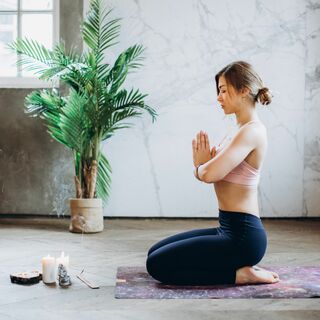
Like I said before when you are performing ayurveda in the morning just before the sunrise you should perform your physical yogic practice which will be followed with pranayama and then with meditation.
So I will just combine all three into one small habit or one big habit maybe.
By doing yoga in the morning you will just basically support the flexibility,
Strength and also the balance.
And yoga also helps to release any tension you have after the night in your body.
And like I said you will just improve your posture and just overall vitality.
And pranayama techniques can be also done before your sleep as they can really relax your body and help with improving the quality of your sleep.
But pranayama can be also very beneficial in the morning that it will calm your mind,
Reduce the stress and reduce the anxiety as well.
And there are so many different breathwork techniques that you can incorporate into your daily routine.
There are some techniques that can be useful for evening but there are also some very energizing techniques to use in the mornings.
And also by doing pranayama you can just really improve your respiratory health and you can also optimize your oxygen intake as well as elimination of carbon dioxide.
Another thing what I mentioned from these three small practices is meditation.
And I think that I don't need to talk a lot about meditation because it's so clear that in the morning it's really important to calm your mind and physically and mentally prepare for the day and for all of the tasks that are waiting for you during the day.
That's why I think that doing meditation in the morning can really help you to be prepared for everything and to be just relaxed and feeling really great from the morning.
I think I'm now moving into the eighth small habit and it's sattvic diet.
And by following a sattvic diet you will basically include in your diet a lot of fresh fruit,
Fresh vegetables,
Legumes,
Whole grains,
Different seeds and nuts.
And all of those sattvic foods they are basically considered to be pure and they can really promote the clarity of the mind and also your emotional balance and as well as spiritual growth.
I mentioned before all of those monks in different ashrams for example they're also eating mainly like whole food plant-based diet as well as I noted.
Most of the spiritual people they're also avoiding meat as well and they are just eating really the pure diet which should be like fresh also organic and yeah.
And I think it's just the dream of everyone that we will have like this small garden where we will grow our own food and just you know be really in connection with the nature and the natural rhythm.
And what is my opinion is that diet basically influences your whole life,
It not only influences your physical body,
It also influences your mental health as well as your spiritual health or the spiritual growth.
But I just think that if you are eating a lot of processed food,
A lot of meat like five times a day or even more,
You're not really nourishing your body and really the food is just connected to everything in your life,
What is happening,
Most of the diseases as well as it is proven that the food influences also your mental health.
So really if you can and if you have the options please choose whole food and the fresh fruit instead of the processed food as it has not really any benefits for your life and for your health.
And now I will move into the ninth small habit and it's mindful eating.
And this mindful eating means that you will be fully connected with your food and you will not have any distraction while you are eating and you will just try to really enjoy the food,
Be connected with the food you are consuming and you will also pay attention to what kind of food you are eating.
As this will also give you like this whole sensory experience as for example if you are eating your dinner while you are watching the tv you even don't know what you are eating and you even don't know like how the food ended and why it already it's all eaten.
And also when you are just chewing the food properly it will really aid in digestion of the food by breaking the food into small particles which are then easily digested and also it is promoting the release of digestive enzymes.
And also I think that mindful eating will just foster healthy relationship with the food as well as you can also by this technique have a little bit of the portion control and it will just support mindful food choices as well.
And the tenth and the last habit what I wanted to mention in this video is practicing gratitude.
You can every day in the morning to do a small five minutes of daily gratitude journaling where you will just think about all of the things in your life you are grateful for and just simply reflecting on everything you have in your life and by this you can just really promote your mental and emotional well-being and you will just shift your focus from what you are lacking of in your life into more of the things that you already have in your life.
And I think that by practicing gratitude you will just overall become more happier and you will also feel more joy in your life and also you can reduce stress by this.
I think when you have like five minutes of a piece in the morning you just sit with yourself and you're just really reflecting on all the things that you are doing well in your life and that are really great and I think that it's really beneficial for you to have this daily gratitude practice.
So I think that's it.
I think it was very short introduction to some of the Ayurvedic concepts or for the Ayurvedic daily practices you can do to just improve your well-being or to just improve the quality of your life.
And if you are interested in more Ayurvedic concepts or if you just want me to discuss and explain some of the concepts just let me know.
And let me also know what types of daily habits you are performing every day or if you also do some of the Ayurvedic practices.
I hope that you will all have an amazing day and talk to you later!