I might just start with introducing you,
Zach.
So welcome back after our break.
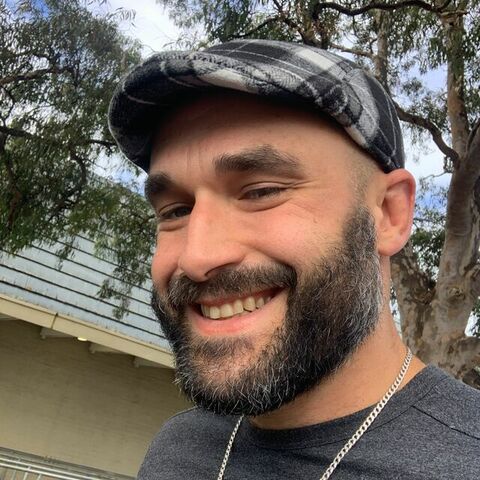
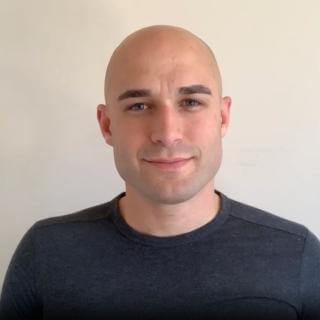
We have Zachary Phillips,
Who is an author,
Mental health advocate,
And mindset coach.
And he'll be talking today about the connection from within the darkness.
So a really interesting topic about how to heal during trauma.
Thank you.
So like Amaretta said,
My name is Zachary Phillips.
I'll go into a little bit about my story,
And then we can talk about trauma and about reconnection,
Both to the self and back to the world.
What we'll do is I'll share a bit about myself and my experiences,
And then we'll sort of go on a bit of a guided pathway into our feelings,
Into ourselves,
And look at reconnecting with ourselves,
And then through that space,
Reconnecting with the world.
So my story starts quite young.
And to put a sort of a caveat around the concept of trauma,
Everyone,
No matter how blessed your life is,
Will face an aspect of trauma.
Just the nature of existence,
The nature of the world will dictate that things go wrong.
We age,
We suffer health problems,
We face letdowns.
Now,
Depending on your circumstances,
Depending on your upbringing,
Depending on where you've been,
Your relative level of experience and your relative level of trauma will be different.
But I just want to sort of put that into context that when we talk about trauma,
We're not necessarily talking about the first sort of big thing that pops into your mind.
There is big ones and little ones,
But no matter what you've experienced,
It is unique to you and it can be impacting you in a variety of different ways.
So just to acknowledge that space that it is you and it's your experience and something to be able to,
That you can push through and work through to be able to reconnect with yourself and reconnect with the world.
So my experiences started off quite young.
I had a troubled childhood.
My father was a drug dealer and a drug addict and it just wasn't that safe in his home.
And he was nice enough to me,
But the people that he brought into the house certainly weren't safe.
It was quite kind of like a,
It was volatile.
And moving forward,
I ended up moving out of home to live with my then partner at 16.
So,
You know,
Getting through school,
Getting through university,
Off the back of charity,
Government handouts,
Part-time work,
Running.
You know,
We're running first from the reality,
Then from the mental space,
And then from the memories.
So if we're talking about trauma here,
We're talking about these sort of things.
The reason I say running is because there's this feel,
This inner feeling of pulling away,
Pushing away,
And just not wanting to be with yourself.
And these feelings that we'll talk about and get into,
Come and go,
They come and go.
But the experience of reconnecting and healing from trauma is,
And what I hope to give you with this session,
Is the ability to acknowledge the suffering,
The pain,
The issues of withdrawal,
The running,
All of the stuff that has happened uniquely to you,
And to be able to give you the ability to turn the lens of attention to that space and heal from it.
And you know,
By healing,
We're not talking about miraculously being better.
There is no,
You are better.
But you can move towards positivity,
You can move towards growth,
You can move towards a life of contentment,
Of happiness,
One in which you can embody your truth,
In spite of the stuff that you've gone through.
Obviously,
The context in which we find ourselves in,
In the world at this stage,
You know,
War,
Repression,
Financial issues,
All of these things,
You know,
We're all struggling.
So it sort of tends to exacerbate the feelings that we've got.
So yeah,
That's sort of the brief background of where I sort of got started.
And then from this space,
I ended up,
Like I said,
Finishing university,
Becoming a qualified teacher and teaching for quite some time.
But then moving away from that space and into writing,
Authoring,
I've published a bunch of books,
And I primarily focus on poetry.
And the reason I focus on poetry is that it is a way to,
Once again,
Reconnect and turn the lens of attention on what you're feeling inside and get it out of you.
And by getting it out of you onto the page,
You can see it,
You're detached from it,
You're not in it,
You're not living it here,
You're sort of pulling it back,
Pulling it back,
Pulling it back,
Pulling it back.
And then you can play with it.
Once it's out on the page,
And you've sort of got that raw expression,
You can tweak it,
You can play with it.
You can make it refined,
You can focus on it,
You can alter it a little bit.
And with every repetition,
With every time that you relook at that poetry,
You start to heal a little bit because you start to reconnect to it.
So later in the session,
We'll talk a little bit about poetry and maybe get you guys writing some.
But what I hope to sort of project to you is that continuing to run from that pain is not the way.
We need to turn the lens of our attention,
Turn towards ourselves,
Turn towards our past and start to reconnect with it.
Since going down this path of teaching,
I moved into disability support work,
Working with troubled youth as well,
And then moving into now a Master's of Counselling.
And that sort of has sort of tied the loop between where I was and where I am.
It's like learning,
Expressing the things that I wish I was able to have when I needed it.
Maybe I can give that back to the world.
So that's sort of roughly where we're at.
Anyway,
What I'd like to do is read you one of the first poems I wrote as a way to sort of contextualize the feelings of trauma and neglect and expression and sort of put that into this space that maybe we can start playing with on your end.
The poem's called Can't Quite Express.
There are things I want to say,
But just can't quite express.
Ruminations and meditations I'm too afraid to address.
Like the veil over my eyes that keeps me hidden from the stress.
To the dark wishes I'm fighting to suppress.
Like the fear and anxiety that I'll constantly transgress.
To the past expressions I'm never going to confess.
Like how everything I do gives me nothing but duress.
To the unwavering ache and torment that's causing me to regress.
I must profess a desire to express my stress.
To obsess on happiness.
To aim for excess and to stop living like such a mess.
Yes,
I want to make progress,
But there are just some things I can't quite express.
This idea of not being able to express something,
Not being able to tap into it,
Is the core of shadow work.
It's the core of inner child work and I think it's the core,
Or not the core,
It's one of the aspects needed towards healing.
This ability to access,
This can't quite express.
Trauma has been shown to impact the frontal lobe,
To shut down the parts of the brain that are responsible for communication,
For thinking,
For expressing,
For talking.
And I'm sure that you've found a time in which you've been in a space of darkness and you just can't reach out,
You can't express,
You can't sort of grasp what you needed to grasp because those words weren't there.
This inability to express is real and it's not a flaw or a fault,
It's a feature of trauma.
It's a feature of pain,
It's a feature of overwhelm.
You lose the ability to speak,
You lose the ability to hear,
To understand,
To be.
So whether you're listening live or in person,
What I want you to do now is just take a breath.
We're going to start the process of connecting to ourselves.
And just taking a moment to scan our bodies.
There's a saying in the book that the body keeps the score,
Because it does.
There are parts of your body that will hold on to things and if we can draw our attention to it and discover it,
And then look into that space,
We can begin to heal from it.
So I encourage you,
Close your eyes if you like,
We'll keep them open.
Take a breath.
Just gently scan your body,
Starting at the top of your head,
Just moving down,
Looking for places of tension,
Of constraction,
Darkness,
Just keep breathing into that space,
Keep looking.
If you notice something,
Just flag it,
Keep looking.
Maybe it's a visual of sludge or ice or fire,
Something that's off,
Maybe it's purely physical.
Searching down from your head to your jaw,
Just keep breathing into those spaces,
Just noticing.
Your neck,
Down into your shoulders,
Your arms,
Your hands,
Chest,
Just still breathing in through the nose,
Out through the mouth,
And just looking.
Stuff might arise,
Things might arise,
Thoughts,
Feelings,
Memories,
Moods.
Just observing,
Just accepting,
Just looking,
To our bellies,
Abdomen,
Groin,
Now upper back,
Mid-back,
Now lower back,
Just breathing,
Just observing,
Just noting down points of tension inside you,
Places that your body might be holding on to things.
Mind and the body are deeply connected,
An anxious mind produces a tense body and a tense body can result in an anxious mind.
So as we look through,
As we just observe,
We're giving our body a chance to speak,
Just drawing our attention down to our seat,
Our legs,
Ours,
And our feet.
Just take another few slow,
Deep breaths,
Just observing yourself as a whole,
I just want you to draw your attention to the part of you that needs it the most,
That's speaking out the loudest,
That's desperate to be heard,
Or that you intuitively think needs to have a voice in this moment.
For me,
That part of me is my belly,
Specifically slightly off to the left and down from the belly button,
It's commonplace,
For me at least,
It might be your shoulders,
It might be your neck,
It might be anywhere,
Just focus on one of these places because you can go through this process,
Watching this on repeat perhaps,
Or taking yourself through,
But there will be parts of you that you've identified as feeling stuck,
I just want you to turn your attention to that part of your body and just breathe into it,
I like to use a variety of different techniques and strategies to access the deeper parts of ourselves and heal them,
But the truest one is to go with your intuition,
To go with yourself,
You know you in this moment better than anyone,
Better than me,
Better than whoever's talking to you externally,
So if something is arising,
Something is coming up that you want to move towards,
If you feel strong enough,
I encourage you to do so,
The rewards are great,
But you have to be ready to take them,
If you find yourself pushing up against something that's a little bit too strong,
That's okay,
Just observe,
Hug yourself,
It's not easy work we're doing here,
So into that space,
That part of your body,
For me it's my belly,
For you it's wherever it is,
I would like you to breathe,
Every breath in is offering that space,
Love,
Energy,
Kindness,
Compassion,
Positivity,
You can use words,
I lean into words because of the poetry background,
But if you're more visual you could offer that space and energy,
A color,
Radiance,
Perhaps imagery of love,
Expressed,
Could be a sound,
Could be you physically holding your hand across your body,
Just offering it love,
I offer all of these suggestions to you,
I once again encourage you to explore and offer that part of you,
Love in whatever way that is expressed,
To you,
By you,
And if you're looking into this part of you and it feels so dark,
So empty,
So much of a void,
That anything you put into there disappears,
That's okay,
You accept that too,
And you just keep offering it love,
It would be good to have a sort of an understanding of the entirety of that space,
If you're feeling like you're falling into it,
If you're feeling like it's too much,
That you know thoughts of anxiety or depression,
Ruminations,
Fear,
Rage,
Jealousy,
Whatever is arising,
That's okay,
You just breathe and accept those spaces,
Just returning back to your body,
Try and sort of track the circumference of this part of you,
Sort of where does it start,
Where does it end,
Can you sort of see the boundaries of this contraction within your body,
If you can see those boundaries,
If you can feel those boundaries,
I encourage you to just acknowledge that those boundaries exist and acknowledge that there's parts of you that feel this and parts of you that don't feel it,
And if it feels like you're offering this space,
Energy,
Love,
Connection,
And it's just being lost,
Offer the edges of it,
Around it,
Not right in there,
Just placing it at the doorstep,
Placing it at the doorstep,
If you want to take a step through that door,
If you want to move into that space,
We can go deeper,
And once again what we're doing here is connecting to ourselves,
Trauma can pull us away from the world and then from ourselves,
And we sort of live up here in our nose space,
In our head space,
And it can be a lot,
And it can be dissociating,
And it can be scary to return,
Because the world is,
Well,
For some it's dangerous,
But for a lot of us that are healing or looking to heal from trauma,
It is more scary than actually dangerous,
But that said,
There is a potential danger of turning inwards,
Because we might be addressing things or looking into things that we may not feel comfortable,
Or may not feel like we are able to handle,
Which is why we go slow,
Which is why we approach with love,
Which is why we have support networks in place,
Which is why we reach out and connect to friends,
To families,
To supports,
To doctors and therapists and leaders,
Why we put systems in place that can catch us if we are to fall,
But I would like to suggest that if you want to,
If you'd like to,
To take a step into that space,
Or even look at it through a window and the lens of attention towards it,
That part of the body,
Put your hand on that part of the body and just witness it,
What does that part have to say,
Listen to that part,
Acknowledge it,
And thank it,
Because that part of you,
By holding on to this,
Was helping you,
Your body literally carried you through,
And now it's your turn to give back to your body,
To allow it to put down some of the load,
To thank it,
To allow it to express itself,
If it wants to,
We're not trying to change it,
We're not trying to force it,
We're not trying to manipulate it,
We're not even trying to really heal it,
Because healing implies that if something is wrong with it,
And I understand there's a bit of a threading of the needle there,
But we're trying to just reconnect to that part of ourselves,
To that part of ourselves,
Maybe there's a visualization that is arising when you're observing that part of your body,
If there is,
Observe it,
See it,
Feel it,
Breathe into it,
And offer it love,
Connection,
And if you feel willing to take another step forward,
Step forward,
Ask that part of yourself to speak,
To share,
To emote,
To give you a feeling,
A memory,
Is there a word,
A space,
A place that it wants you to see,
Turn the lens of attention towards it,
Just remember you are safe within your body,
Within your room,
Listening to these words,
And if at any point you don't want to keep stepping forward,
That's okay,
There is no rushing healing,
There is no,
There is no forcing it,
It's a slow,
Delicate process of acknowledging and reintegration,
And it can take time,
And if you are to push too hard,
You risk,
There's a better word than re-traumatizing,
But it's,
You know,
If someone is raw,
Someone is coming out scared,
There's a risk that they will,
Well,
They're a raw nervous system,
They're scared,
They're sort of tense and anxious,
And what would be a normal noise,
For example,
May freak them out because it's too loud,
It's scary,
So you're playing with a part of yourself here that is a little bit vulnerable,
And if someone or something is vulnerable,
It's good to just hold that truth,
Because the part of us that wants to heal,
The part of us that wants to grow,
The part of us that wants to keep moving forward and keep advancing,
May rush that part of us,
And that rushing is potentially detrimental,
Because it might cause that part of us to hide and withdraw,
And we're going to coax it out again,
And you can do so via this process,
Via body scan,
Identifying,
Offering love,
Stepping forward,
Observing,
Visualizing,
Asking it to speak,
And just inviting it to take the time it needs.
In this world,
It's very tempting to commoditize everything,
To rush everything,
To push everything,
Including healing,
But you've built up these blocks over a lifetime,
And it might take quite some time to be able to turn and help heal,
But if we turn and heal,
We start to see,
We start to grow,
We start to recover,
And that little part of ourselves,
The earlier part of ourselves,
The real vulnerable part of ourselves,
Is able to step outside,
And they start to get a bit stronger,
A bit more resilient,
But if you go down this path,
There is a bit of a dip where things can become overwhelming.
So just holding that space,
Holding that part of your body,
I invite you to look into it,
And I guess I'm going into sort of some inner child work here,
Some shadow work,
But ask that part of you,
Or rather look at that part and find the earliest expression.
What is the earliest expression of that part of you?
Can you go earlier?
What's the earliest moment that you recognize this part of your body holding on to this thing?
Be aware you're asking your body,
Sort of like an external entity,
Saying,
Hey,
Like,
Open up and show me.
Just want to take that time to acknowledge the bravery of yourself and of your body,
To open and expose and be vulnerable in this space.
If you're brave enough to turn your attention towards that,
To look,
To go deep,
To reconnect with that part of yourself,
What would you,
Or what does that part of you rather need to hear?
What does it need from you?
Can you look at that part of you and offer it something?
What does it need?
That young child,
Young adult,
Earlier version of yourself,
What can you give it that that you never received at the time?
What does it need from you?
Keep breathing,
Keep looking,
Just accepting.
It's almost as if we are trying to be as our own parents,
Or as a parent to ourselves,
We're trying to identify the part of ourselves,
The earliest part of ourselves,
That this part of our body has been holding on to this trauma.
Just offering that part of ourselves what it didn't get at the time.
For me,
It's to be seen.
Part of me needs to be seen,
Needs to be held,
Needs to be convinced that it's safe.
Needs to be told that with confidence,
With assurance,
With directness,
They are safe.
So for me,
That's what I want to offer that part of myself,
Be the parent that I never had.
And I ask you to turn your attention to that space and just see,
Hear,
Listen,
Offer that part of you what it needs.
And if you know what that part of you needs,
Can you give it to you?
Can you give it to them?
Can you integrate that energy as a as a daily ritual,
As part of your meditation,
As part of your sort of self-care routine?
If you've uncovered that you need something,
That this part of you that you're holding on to needs something that you can offer it,
Can you offer that to yourself on a daily basis?
You don't have to go through this whole process.
But for me,
Using my example here of feeling unsafe,
It's like how can I offer myself this feeling of safety,
This feeling of confidence?
Because ultimately it has to come from within.
One of the hardest truths of trauma is to accept that we must we must heal ourselves.
We must heal ourselves because oftentimes the cause of the trauma,
The cause of the contraction,
The issues in the body that we're holding,
That person,
That thing won't.
And accepting that fact and moving past it and then discovering what we need and giving it to that part of us that needs it is the way to reconnect with ourselves.
And if we can reconnect with ourselves,
We start to ground ourselves.
We start to be less responsive,
Less reactive,
Less responsive,
Less emotionally overwhelmed,
More grounded.
And from that place of deeper grounding,
We are able to reconnect with the world because we know ourselves.
Oftentimes we build up a personality in response to trauma that is a defense mechanism.
It's like this is who I am to keep myself safe.
This might be the origin of dissociation and dissociative identity disorders and this sort of stuff we develop.
We build ourselves as a way to or in response to the stuff that is happening in our life.
And we all do this.
This is the process of becoming a person.
You know,
It's a process of being conditioned to live in society.
We have to change ourselves from,
You know,
The base animal that we're born as into a functioning member of society that can exist in a collective.
So it's a natural process.
But if we've faced trauma,
It is sort of hyperinflated and often twisted in a way that is not within the realms of normality,
So to speak.
Obviously,
Normalness is an interesting concept to go into,
But we're trying to turn and accept and understand our ourselves in response to and then heal from,
Move forward towards.
So holding that part of your body that you identified.
Take another few slow,
Deep breaths in through the nose.
Deep breaths in through the nose.
Now through the mouth.
And give it thanks.
Thank that part of you for opening up,
For allowing you to look,
For sharing,
For expressing.
Both now and then,
For what it helped you survive.
And just leave it with an offering,
If you feel comfortable to offer this to yourself,
That should that part of you need to release,
To let go,
To express,
To talk.
It's there.
You're there.
You're there for it.
And you will listen without rushing,
Without judgment,
Without filter,
Without moving forward or away from.
You're just there for it.
You are the therapist of your own soul,
And you're open to it.
You're open to opening up.
You accept that raw,
Vulnerable part of yourself.
So with that,
I encourage you to take a couple more slow,
Deep breaths.
Just move your body a little bit to feel,
Shake a little bit.
And just return yourself back to,
To the present moment,
To where we are now.
The sound of my voice,
To the sounds in the background,
To what you can see,
To what you can physically feel,
Your feet on the chair,
Your butt on the chair,
On the chair,
Your butt on the chair,
The clothing on your skin,
Whatever is physically going on right now.
Something that I suggest people do when I work with them in this space is,
You know,
Have some chocolate,
Reconnect.
But it's more of a grounding thing.
You go deep,
You open up this space,
You offer it healing,
You connect to it.
And then you reconnect to the present moment.
You ground yourself.
It's an act of present state of awareness,
Of mindfulness.
It can be used in response to panic attacks,
But just as a general way to re-ground is just focusing on your senses.
What can you see,
Hear,
Touch,
Taste and smell right now?
Coming back to the room.
Invite you to hear,
Invite you to feel,
Invite you to see,
Invite you to taste and smell yourself,
The world,
Reality in this moment.
Without judgment,
Without filter,
Without expectation,
It is what it is right now.
And I encourage you,
If this process,
This idea of turning inwards helps you,
You can do it at any stage.
Like I said,
You can re-watch this video,
Just listen to this talk.
But you can do it yourself.
Now,
If people want to share,
Ask questions,
They're more entitled to.
But I'd like to give you a few steps that you can take beyond this.
The reason I write poetry,
The reason why I express myself,
The reason why I do this is because the reason why I share it externally,
There's a couple of reasons.
The first one is I'm compelled to do so.
But that compulsion comes from a desire to connect.
I find that the more I share my truth,
The more I talk,
The more I discover that people of all ages and genders and ethnicities and demographics feel these feelings.
And I'm lucky enough to have a bit of a gift with words that I can sort of share with people.
Capture them and share them and express them.
So I want to share with you a little story,
A little poem that relates to this.
And it happened just recently.
I'll share with you the poem and then we can talk about it.
And I will give you an offering to write yourself at any stage.
So this poem is called I'm Worth Keeping.
Upon waking,
I'm dismayed to discover myself already breaking.
Faults preaching,
Lights beaming,
Whispered voices that feel like screaming.
I find myself fleeing,
Huddling in a corner,
Counting heartbeats,
Shallow breathing.
I can actually feel my rationality leaving.
Whatever I was is now just associated dreaming.
I long to find meaning behind these tears now streaming.
But all I can muster is passive disbelieving.
I thought such pain was leaving.
I thought I was a book worth reading.
I thought by sharing and speaking,
My days would be filled with more than just ink bleeding.
Time passes and I hear my kids pleading.
They want their dad,
Not some broken mess stuck self-defeating.
Time to put on the mask and pretend that the world has stopped screeching.
That my thoughts are no longer scheming.
That my pain is receding.
But they hug me and tell me I'm worth keeping.
They jump and laugh with smiles gleaming.
Inviting me to play,
Requesting,
Repeating,
A loving greeting worth receiving.
The world softens,
Stuck,
Turns fleeting.
Color returns,
That unmovable block retreating.
Tension releasing,
Light increasing,
Clear seeing.
I hold them and commit to continue proceeding.
Today was hard,
But sometimes just surviving counts as succeeding.
I write because that process,
That invitation,
The body.
We're playing in an internal space.
If you can get it out,
If you can express,
You're able to see it a bit more clearer.
It's another aspect of healing.
And by sharing these words with you,
With the world,
It's a way to connect.
This idea,
Waking up to discover the issues,
Discover yourself already breaking.
That's a common feeling.
Common feeling for people that are dealing with trauma,
Past issues.
This feeling of irrationality leaving.
Dissociation,
Ears crying,
This need to put on a mask,
This fear like you have to.
All of those feelings are normal.
But it's also,
I end the poem with the discussion of my children.
Because daily,
They want to play with me.
Some days I'm able to,
And other days,
I'm not.
But I'm reminded that when I'm able to step through and try and push,
I remember that I'm worth keeping.
And I remember that surviving,
Just continuing,
Sometimes that does count as succeeding.
That does count as succeeding.
So I want to tie all of this back in.
It's my belief that if you can connect to yourself,
Reconnect to yourself post-trauma,
From that place of grounding,
From that place of a solid,
Safe,
Secure,
Stronger,
Healing part of you,
That person can then be more open to the world.
Trauma causes us to withdraw,
To fear,
To be afraid.
But what if we opened up?
What if we're able to look,
Open our eyes,
Pull back from the dissociation and see?
Wouldn't that be something?
Connect to the self.
And then you can connect to the world.
So with that,
If there's any questions,
Anything that people want to ask or share,
I'll open it up to you guys.