Hello,
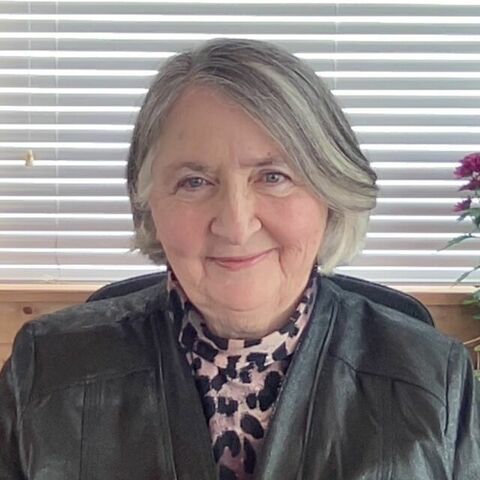
This is Lynn Fraser.
Welcome to the Healing Trauma Series,
Short Talks and Practices.
I wanted to cover the basics of trauma and also how does that work in our daily life?
Trauma expert,
Gabor Mate,
M.
D.
,
Talks about the effect of trauma is that we disconnect from ourselves,
Our sense of value,
And from the present moment.
As we heal trauma,
We come back into connection with ourselves.
We begin to see through our court efficiency beliefs and we begin to be more available to ourselves in the present moment.
We start with a brief introduction to trauma and a short practice of connecting in our body.
There are reasons why we disconnect and there are many practices we can do to safely come back into connection.
We then move to experiencing safety in the present moment and we learn a little bit about how our nervous system assesses whether we are safe,
Whether we're in danger,
And how we can make that assessment more accurate.
One of the things that makes it uncomfortable for us to be in our body is the sensations and energy.
Trauma is stored in our body as sensation and energy along with associated thoughts and often along with traumatic memory.
The tools that we learn to stabilize and be grounded in this present moment are what helps us to be available to ourselves to come back into connection.
And to realize in part that what was overwhelming when we were a child or earlier in our adult life is something that we can build enough strength and resilience to manage now.
We have more agency,
We have more options,
We have reliable practices to build resilience and strength.
If we have a lot of catastrophic thinking or if we have a big inner critic,
We don't want to be in our own mind.
We disconnect because it's miserable in there.
We can work with that.
A big part of healing is to connect with our younger self and we have a practice for that as well.
We go through the survival responses of fight,
Flight,
Freeze,
And fawn.
We have one session looking into intergenerational trauma.
Right now especially,
It can be hard to look around the world to see all of the difficulty,
The systemic oppression,
Financial issues,
Grief,
Anger,
Division.
How can we be in a world that is this hard?
We have climate change,
We have the disappointment that we feel around the way people are acting with each other or with us.
Some people have PTSD,
Post-traumatic stress disorder,
And we look into that as well as traumatic memory.
When we've had trauma,
Especially as children,
And we look back at our life,
We can really see the effect that that had on us.
Adverse childhood experiences are well-studied now,
So that might help with letting go of some of the blame or the shame.
However,
We look back and we might have such regrets,
Anger at the way things turned out,
The unfairness of it.
What would my life have been like if I hadn't had that abuse or if I had support?
We look at our social relationships now.
Loneliness and isolation are so widespread now that they're a public health concern.
Many people have social anxiety,
Which makes it really difficult to reach out to other people.
We have been hurt in relationships,
That's true,
And we have a need to be connected with other people.
As we come to the last of the 15 sessions,
We're looking into emotional regulation and compassion.
When we are in a fight,
Flight,
Freeze,
Or phone response,
We actually have no access to self-compassion,
To kindness for ourselves or for others.
A regulated nervous system is necessary to live well,
To heal trauma,
And to enjoy our life,
And that is something that's really possible for all of us.
There are 15 segments.
You can listen to them in order.
You can see what catches your attention.
If you're having a lot of issues right now with inner critic attacks,
You might go right to that one.
If you feel really frustrated with the way the world is and afraid,
You might go into session eight on disappointment and reality.
Many children develop core deficiency beliefs in order to maintain the best possible relationship with their parents.
This is a survival response as well.
Going through our adult life,
Feeling like there's something wrong with us,
That we're broken,
Can be healed.
Take a look at the 15.
A lot of these are meant to be returned to again and again.
Sharpening our neuroception,
Our assessment of safety,
Is something that happens over time through direct experience.
Social risk in relationships is something we can work with again and again as we gradually feel safe enough to move into connection with people.
Use these practices in whatever way works best for you.
There's no right or wrong here.
Whatever you do will be fine.