Welcome everyone,
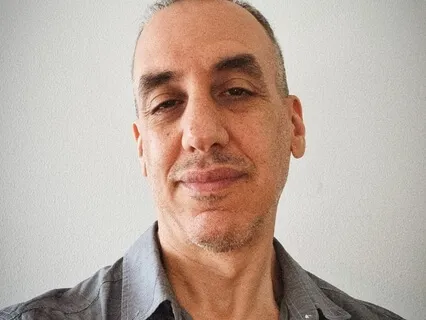
I'm Michael Morphis and so glad to be here with you today for our mindfulness meditation,
Loving kindness and gratitude practice.
As we settle into our practice today,
I wanted to highlight,
Could be maybe one of the most important facets of what mindfulness practice helps us access and what we're really doing here.
And I've mentioned this before and I think it bears repeating that in the Pali Canon,
In the texts,
In the Dharma lists,
That the Buddha and other very enlightened and profound teachers talk about the state,
Nirvana,
The unconditioned,
The deathless,
Emptiness.
And in other traditions outside of Buddhism and Dharma practice,
There's the references to the divine and theistic systems,
You know,
Simply communing with God or the quietness within or the Tao or,
You know,
Whatever tradition.
It seems like the wise ones are always pointing towards something that is within us and is accessible.
So since this is a Dharma oriented practice,
We're going to think about,
You know,
What is it that we're actually doing here when we sit and pay attention to our present moment's experience and we have to really kind of go from an intellectual understanding to a deeply lived experience for it to really have the impact that I think a lot of us want it to have,
But we start with ideas and then we explore.
So the idea basically is that inside of us right now,
There's a part of the mind that is calm,
Relaxed,
Centered,
Balanced,
Wise,
And that's there for us all the time.
And it's kind of the platform on which all of our conscious experience,
I think I would say,
I dare to say conscious and unconscious,
Semi-conscious experiences are built.
There's this part of the mind that is sometimes labeled the knower and it simply pays attention.
It simply knows what's going on.
And this is a little bit of an interpretation,
But it's been explained in many different ways,
So I think it's safe to kind of layer another interpretation is that there's a personality to this part of the mind and the personality of this part of the mind,
Again,
Is calm,
Relaxed,
And wise.
It can hold everything without getting freaked out,
Without getting overly agitated.
And this is what we do when we do mindfulness meditation.
We first get familiar with what the mind is knowing.
So these are the very important and basic directions of mindfulness practice.
Pay attention to what the mind is knowing and one of the six ways that it can know.
What you see through your eyes,
Hear through your ears,
Smell through your nose,
Taste with your tongue,
Feel with your skin,
And then what you are knowing about cognition,
What the mind is doing,
Remembering,
Planning,
Fantasizing,
Worrying,
Stressing,
All the things that the mind does.
There's only six ways that we can know anything.
Those are the six ways.
And these are kind of like programs that are running on top of this basic awareness.
They superimpose themselves on awareness and they become our whole reality to a large degree.
You know,
Until we realize that this is going on,
We are completely caught up in the narrative of what's being presented to us.
And that's what makes these practices so radical and so wild in a way.
It's like the first time in human history and in terms of human history,
2,
500 or 3,
000 years is just a micro blip of time.
So we as a species,
We haven't had much time to work with this concept.
So no wonder it's pretty far and not really something that we have down pat right away.
But what we're doing is we're tapping into this part of ourselves that is below the waves.
It's the deep,
Deep part of ourselves that is relaxed.
No matter what's going on,
It's centered,
Balanced,
And poised.
And we get swept up into this illusion that what we're seeing is real.
And there is a certain relative reality to what we're experiencing,
But there's more to it than that.
Just like a movie,
Especially,
I'm not sure exactly what happens with digital imagery,
But when they used to film movies or TV shows with actual film,
They would basically be taking 30 pictures a second.
And then they would run it at 30 pictures a second.
And to us,
That looks like motion.
That looks like real time motion.
And we'd watch a movie and we'd get completely caught up into the story.
We'd laugh,
We'd cry,
We'd be worried.
We'd be freaked out.
But what we're really seeing is 30 frames,
30 pictures a second,
Still pictures,
But they're moving really fast.
And the mind does the exact same thing with this reality.
We're flooded with sensory information.
The mind categorizes and contextualizes what we're seeing and it writes a story.
So in our Dharma practice,
We go below the text of the story and we get to the real foundation of our awareness.
The nirvanic part,
The calm,
Quiet,
Relaxed part.
And the reason this is relevant is because whenever we're feeling overwhelmed,
We have an oasis.
We have an escape route to say,
Okay,
Well,
I'm feeling completely swamped here.
I'm suffering.
The Buddha said he taught the two things.
He said he taught what causes suffering and what to do about it.
So he said,
What causes suffering is this over attachment to greed,
Hatred,
And delusion,
And it's toxic reactivity.
And he said,
What to do about it is to practice mindfulness and to notice that there's another layer to our reality.
And that reality is that sub layer is nirvanic.
It's empty.
It's empty of reactivity.
It's empty of suffering.
So we have some place to go when things are getting tough and this is meant to be navigated skillfully,
Right?
We don't want to abuse the skill set of being able to go to a safe place in order to avoid what needs to be done in life because life is for doing.
What we want to be able to do is not get completely swept up and entangled in the destructive and less helpful ways to notice if and when that's happening and then to get ourselves out of that entanglement so we can be more functional and competent in achieving what we do want to get done.
So let's sit,
Right?
Or kind of be in whatever position the sit is the kind of catch all phrase for turning your attention to this part of the mind.
Imagine yourself so you will be both very awake and yet very relaxed.
Take a couple of deeper breaths to feel the connection between your body,
Your mind,
And this acknowledgement of being here in the moment.
Taking deep breaths creates a physiological change,
Right?
We switch from the sympathetic to the parasympathetic nervous system.
We go from fight or flight to a more centered and balanced state.
It may not happen in one second but a couple of deeper breaths can really facilitate that switch.
Move out of automatic mode,
Move out of panic mode and into more settled down and quiet mode but not quiet in the dull way,
Quiet in the not frantic way.
And let's get curious,
Truly curious about feeling and paying attention to what the mind is noticing.
If the mind is knowing a sound,
You can even say those words to yourself,
The mind is knowing sound or you can just acknowledge it wordlessly and then try to feel it physically,
Emotionally.
Notice if any thoughts pop up around that sound and then let go and move on.
What does the mind notice next?
An emotion or memory,
Another sensation in the body,
A smell,
A taste,
We're strengthening the muscle,
The mindfulness muscle which can pick up and put down,
Can notice and let go,
Can acknowledge and not get entangled.
This is a skill set,
It takes practice and the practice enables us to be free,
Not slaves to whatever the mind is noticing.
We want to evolve the monkey mind which just kind of jumps around onto whatever's moving to being truly human,
Being very conscious about what's going on and making intelligent,
Wise decisions based on what we're perceiving.
So in this very relaxed and smart,
Sharp way,
Observe what is the mind knowing?
Can you notice and let go?
If you find yourself trying to figure out,
Fix,
You're fixating,
You're fidgeting,
Notice that,
Acknowledge it,
Say yes to it.
We're not trying to pretend that things aren't happening or shut those things down.
We are practicing not getting caught up and swept away by those things.
There's a huge difference between noticing something and letting it go versus noticing something and getting caught into it.
Can you be a noticer and a letter goer?
Get good at letting go of what's being known.
We let go by fully accepting that it's here and saying yes to it and then saying,
Okay,
What's next?
When you find that you've lost the mindful state,
You're back in the practice noticing that you've no longer maintain this balance between perception and not getting entangled.
That's your practice,
Remembering to pay attention to your present moment's experience in this very special and specific way.
Acknowledge that success of remembering and let it inspire and energize your continued exploration of this radically different way of being with what is.
We don't do our meditation practice to feel differently than what we're feeling,
Which may be kind of hard to swallow or it may seem disingenuous.
I think that there are a couple of levels of this.
We think all come to our practice to suffer less,
But when we're actually doing the practice,
We need to let go of that particular desire and intention for the sake of saying,
Well,
What is actually going on?
Our practice is to put us in touch with reality.
This is an over-simplification and we want to be careful about saying this is reality,
But I think a very functional model is that if we're feeling pretty good,
If the heart feels relaxed,
The body feels relaxed,
We feel flexible and adaptable and in tune with what's going on,
That we're in a pretty good state and we want to perpetuate that as long and as far as we can.
If we are suffering,
There's a good chance that we are caught up into the reactivity of greed,
Hatred,
Or delusion,
And we need to accept that,
Feel it deeply,
And use the suffering that's generated by being caught up into greed,
Hatred,
And delusion to motivate us to do something about it.
So we don't want to pretend,
We don't want to make believe that if we're suffering that we're not suffering.
Letting go,
Experiencing nirvana,
Experiencing emptiness is not about make-believe,
It's about a profound shift in our relationship to what is actually happening.
And the first part of that is accepting deeply what is happening.
If we're suffering,
Then we're suffering.
If we're joyful,
Then we're joyful.
We have to be honest with ourselves and say what is actually going on here?
What is my process?
Do my thoughts generally lead me to a wholesome,
Happy place,
Or do they generally lead me to a place where I feel distressed?
And this is a process.
And we want to be wise,
We want to cultivate the wise part of the mind that is most interested in the truth,
Right,
Whatever that may mean for us.
And nobody can dictate or tell us what that means as intelligent,
Mature adults.
It's our responsibility to keep on clarifying for ourselves what this means in the moment.
And it changes all the time.
So what worked yesterday may not work today.
What working today may not work tomorrow.
We have to be adaptable,
Flexible,
And attentive.
And this present moment awareness,
Noticing what's happening in the moment,
Is the skill set that we need in order to be that flexible,
To be that adaptable,
To be that honest with ourselves.
It's not easy to walk the path.
That's why most people don't do it.
It's too much.
Too much work,
Too much care,
Too much attention.
But if you're up for the task of becoming a warrior on the cutting edge of reality,
This is the skill set that you'll need.
So mindfulness,
This present moment mindful awareness is critical.
It's arguably maybe the first most important aspect of our practice.
But there are other ingredients that need to go into the mix.
It's kind of like a stone soup type of situation.
But really I think that there are pillars upon which if we want to have a well-rounded and balanced existence and practice,
That there are other threads that need to be woven into this remarkable fabric that we're weaving.
So the first again is this skill set of being mindfully aware of what's going on and getting more and more familiar with the personality of this part of ourselves that is calm,
That is capable of handling in a very balanced way whatever it is that's being known and experienced.
The next is the ability to care,
Which is generated by the metta practice,
The loving kindness practice,
To care deeply for ourselves and for others.
So as you recite and repeat the loving kindness phrases and recitations,
See how deeply they resonate.
How do you feel?
What's true for you as you play with these phrases?
Directing them to yourself first.
May I be safe,
Free from inner and outer harm and danger.
May I be happy,
Free from mental and emotional suffering.
May I be healthy and cultivate the wisdom to take care of this body,
This vehicle,
To keep it running as smoothly as I can manage,
As smoothly as I can figure out how to.
May I know contentment and through luck and through skill find a way to survive in this world in a way that's not too difficult.
May I know compassion,
Empathetic joy,
Meaning the ability to be genuinely happy for other people that are happy without jealousy,
Resentment,
Or envy.
And may I know balance and equanimity,
Meaning regardless of whether things are really good or really bad,
I feel pretty balanced.
Don't get too cocky when things are good.
Don't get too crushed when things are bad.
And then just in a really simple,
Honest way with yourself,
Just ask,
Well,
Do these recitations resonate with me?
Some do,
Some don't.
They all do.
None of them do.
Right?
Whatever's going on,
Give yourself a few moments to pay attention,
To process what you just heard or recited to yourself,
Repeated to yourself.
And the Buddha and other great teachers suggested that we spend quite a bit of time considering these things,
Right?
These sentiments,
These actions,
These ways of being,
And to consider making them our home,
That we live in compassion,
Empathetic joy,
And equanimity,
That we continually cultivate safety and health and happiness and contentment.
And less and until these become conscious processes,
They may not be well tended.
It's like,
You know,
We have a garden and we're just not taking care of it.
Well tended,
It could bear,
You know,
Beautiful and nutritious food and beautiful flowers and all kinds of things.
But untended may just become overrun with weeds and maybe we get some stuff out of it by luck and other times not.
But if we learn the skill set of cultivating these things,
It's a garden that can bear exceptionally healthy bounty.
And that's good for us and good for everybody that we interact with.
We can share what we pick from this garden,
What we reap from this garden.
In the metta practice,
In the Brahma-Vihara's loving kindness practice,
We start with ourselves and then we expand the sphere of caring to all others.
A very formal progression is to go to someone that you adore,
To someone that you like,
But it's more complicated,
To a neutral person,
To a slightly challenging person,
To a very difficult person,
And to all beings.
But for the sake of brevity,
We'll kind of corral all those folks into other,
Right?
So from the very dearest to us to the person that we find most difficult,
We'll see if we can expand the sphere of caring to them.
And so we kind of ask ourselves,
What would I do?
What can I do?
As well as just kind of feeling,
Does this feel right?
Does this feel nice?
Does this feel useful,
As we say to ourselves and to them,
May you be safe.
May you be happy and healthy and content.
May you know compassion,
Empathetic joy,
And equanimity.
And being very patient with yourself,
Very honest with yourself,
Very forgiving with yourself,
Become curious,
How does this sit with you,
To be thinking in terms of expanding your sphere of caring to others.
Does it feel nourishing?
Does it feel inaccessible?
Does it feel confusing?
What's your relationship to this process?
And again,
If we're unfamiliar with these practices,
It's like going to a new type of exercise class for the first time,
Or like a dance class where you don't know the moves,
You don't know the steps,
It's new,
It's different.
We're trying it out.
And this is normal.
We're kind of almost designed not to be particularly good at things when we first try them.
So there's a learning process,
A familiarization process.
So can you be patient with yourself?
Acknowledge where the challenges are,
Acknowledge where the fun,
Accessible parts are.
And those are data points.
You're creating new nodes and connections in the brain and in the nervous system.
And if this is useful for you,
Those will become more bolstered.
The Dharma practices help us to dismantle parts of our programming that are destructive and more toxic.
It helps us reconstruct and build habit patterns and nervous system pathways and brain pathways that are more wholesome.
And this again,
Doesn't necessarily happen in the snap of a finger,
Although there can be moments immediately in our practice where we feel less burdened.
And it's really important to note that and to really celebrate that in a way that inspires you to continue to explore.
And a few moments of gratitude practice.
So again,
As realistically and as deeply as you can feel it.
What are you grateful for?
And again,
It could be something really teeny,
Like maybe you have your favorite cup to drink out of today or got to wear your favorite color shirt,
Or maybe something really huge or a combination of things,
Whatever it is,
What can you feel grateful for?
What can you feel appreciation about?
The mind is so inclined for many of us to complain,
To find fault,
To think of things that we're not happy about,
That we're not grateful for.
This is a habit pattern.
And it's not like it came out of nowhere,
But it can also be worked with.
It can become,
Instead of an impediment and a roadblock to well-being and flourishing,
It can become a stepping stone,
A paving stone on a path to a different relationship to our reality and the things in it.
So if you're feeling gratitude,
Really drink it in,
Let it nourish and heal and energize you.
If you're not feeling it,
Can you give yourself permission to be okay with that?
Not to try to force yourself to feel something that's not real for you.
And deep acceptance,
Deep compassion,
Deep patience as you explore this new realm of possibilities.
Okay,
So that's all for today,
Friends.
So just a reminder that formal practice is really,
Really great.
It helps us to create these new habit patterns.
And then remembering also that these practices,
We can take them with us everywhere all the time.
The great teachers say,
Practice from the moment you wake up in the morning to the time you go to sleep.
What does that mean?
Checking in.
What is the mind knowing?
Can I keep getting more familiar with this part of the mind that simply observes?
And keep on hanging out with it.
It's like a really super cool person that you can hang out with because they inspire you.
They inspire you to be kind and smart and productive and doing that all without getting freaked out and agitated.
They're a role model that's in you.
You already have that.
You just have to get in touch with it and keep visiting and hanging out with it.
Compassion,
The method practice,
Caring more for yourself in the wholesome way.
Not in this kind of,
We tend to find very self-indulgent ways to pamper ourselves.
And maybe there's some wholesome ways to do that.
But this is really deep taking care of ourselves.
Getting to our soul.
What's our passion?
What are we trying to do with our lives?
What matters to us?
How do we move in the direction?
Remove the obstacles that get in the way of us getting closer to those things and manifesting those things because they're important to us.
And gratitude.
It's known through really solid studies that if we want to raise the base level of happiness in our lives,
The gratitude practice is one of the most powerful things that we can do.
It may be a hard habit to break the habit of criticizing,
Finding fault,
Being negative,
But this is one of the most potent tools that we have to reverse that trend.
And apparently again,
It does just leaves us feeling happier.
The reservoir of well-being gets refilled,
Replenished,
And renourished and healed with this type of thinking.
What am I grateful for?
So just on a last note,
The part of you that is a Buddha,
The part of you that is able to access nirvana,
The deathless emptiness,
The inner quietness,
It's there all the time.
Just like in the,
If you ever heard of or saw the movie,
The wizard of Oz,
The protagonist Dorothy,
She had these Ruby slippers and she was going on this pretty horrible adventure while she wore the slippers and in the end she found out that at any point she could have just tapped those slippers together and gone home.
So we have that,
Right?
We have our homes here.
We just have to realize that it's here,
Get more familiar with it and go there more often.
And this isn't about delusionally escaping from what needs to be done.
It's the opposite.
It's shaking off the shackles of bullshit imprisonment and giving ourselves the freedom and the permission to flourish and thrive and to be the best people that we can be.
There are so many shackles that are holding us back from that and it's up to us to figure out where they are,
What they're doing to us,
And whether or not we are interested in shaking them off and breaking them.
I hope the rest of your day is filled with peace and wellbeing and look forward to seeing you next time.
Take care.