The calling of meeting everyone is And just taking time to settle once more into our bodies.
Maybe beginning with two or three really nice deep breaths.
Breathing in wide and full.
And on the exhale releasing our shoulders,
Releasing our belly.
Maybe sighing out through our mouth as well,
Releasing the tension in the jaw.
We often hold tension here.
And just taking a moment to see if we can make ourselves a little bit more comfortable.
Do we need to sit a little bit further forward in the chair?
Would we like a pillow behind our back supporting us to be upright but comfortable?
Can we shuffle our feet a little bit further forward so they're not directly under the knees giving us more support?
If we're lying down can we just have maybe one pillow underneath our head so that our spine is more aligned?
And we might want to take that pillow and put it under our knees or under our feet to just really feel comfortable.
Just taking time to settle.
And then when we're ready gently bringing our awareness onto any sounds that we can hear in this present moment.
Noticing sounds that are close by.
Listening into the depth of sound.
Maybe then listening for further away sounds that might be fainter.
Really listening and if we can only hear silence,
Enjoying the silence and listening to the frequency of the silence.
And allowing the breath to calm.
And focus on sound,
Listening deeply.
And at some point we'll change our focus to how we are breathing in this present moment.
And it may be that we're breathing smoothly and deeply or there could be a sense of jaggedness or sharpness to the breath.
And remembering there's no right or wrong.
We don't try and change the breath.
We just notice and see if it's possible to become the observer of the breath.
And just stay with the sensation of breathing from the moment we breathe in to when we breathe out.
So,
Just widen your Leon,
Lengthen with the breathing out.
For some of us it's helpful to find the breath in the belly,
Dropping our attention down to this area and noticing the rise and the fall of the belly in line with the breath.
Maybe even placing a hand there to facilitate this.
And for others of us we prefer to breathe in and out of the nose or the heart space,
The upper chest area.
And just finding the place that feels most comfortable to focus your mind and your thoughts on the breath.
And we'll just stay there,
Breathing in,
Breathing out,
Breathing in,
Breathing out.
And noticing the sensations of the body as we breathe in and out.
As we start to relax what's calling for our attention.
And it might be there's a tug or a tightness in the leg or the shoulders.
There might be a heat or a prickling sensation or tingling.
Or it might just be that our mind is naturally drawn to a certain part of the body or more than one.
So let's just spend a breath or two there.
Just leaning in to that sensation.
And perhaps seeing if it's possible to play with the intensity of the felt sense by leaning in to it and then pulling away from it.
Knowing that at any time if it becomes too intense we just come away and find that safe space in the body.
Or take our attention back to the breath.
And just breathe with how we are in this present moment,
Opening up to bodily sensations.
And now any thoughts that might be accompanying and looping around our mind.
And it might be as we've been talking about thought patterns that you can bring to mind one of your facilitative thought patterns.
Something that you really believe,
Something that you repeat as a means to perhaps be drawn towards addictive behavior.
Or maybe a feeling thought that just brings you down when you believe it,
But you really do believe it.
And if you feel comfortable to do so,
The invitation is to just think of one such thought pattern that you would consider unhelpful.
And allow the mind and invite the mind to repeat that.
And then drop the attention into the body and see if it's possible to find the felt sense of this thought in the body.
What does this thought feel like?
Where's the pain?
Where's the discomfort?
And then when you can locate it,
If you're able to,
See if it's possible to stay with the felt sense,
Not let your mind take you off into a story of the patterning of this thought,
But stay with that thought and the felt sense in the body.
And seeing if it's possible to breathe with the sensations,
Allowing that sensation to open and to soften.
And perhaps invite a sense of letting go of the discomfort in the body.
And at some point we might just remind ourselves that we are exploring this with an attitude of gentle curiosity,
With friendliness.
And we might say to ourselves,
It's okay.
Whatever it is I'm feeling,
It's okay because it's already here.
And we might notice the feeling or emotion that's attached to this thought and to this felt sense.
And then taking that sense of being in the cave,
Behind the waterfall,
That sense of self being slightly detached from the thought.
Can you be with the experience of it from a place of safety and knowing that you can increase or decrease the intensity as you explore the edges.
And always holding the breath as the calm balm to centre us in our experience.
Thanks.
We can stay with this feeling,
This thought,
And the intensity of the breath.
And we can continue increasing and decreasing until we feel satisfied,
Or until that thought is no longer pulling our attention.
And then we simply return to the breath.
And allow the body to rest as we breathe in and out.
Jai Guru.
Namaste.
Sweet States.
Okay.
And then gently letting go of the practice if you haven't already.
And perhaps bringing the attention to feeling and noticing the support of the body on the chair,
The feeling of the ground beneath the feet.
Perhaps in our mind's eye we might just notice the furniture that's in the room around us.
We might bring our attention onto the temperature and the air,
The feeling of the clothes against our skin.
And we might start to increase the inhalation,
Bringing some awareness and maybe gentle movement to our fingers and toes,
Perhaps having a gentle sway or maybe a stretch.
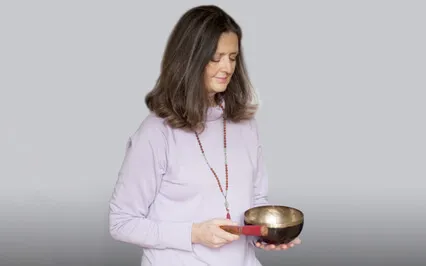
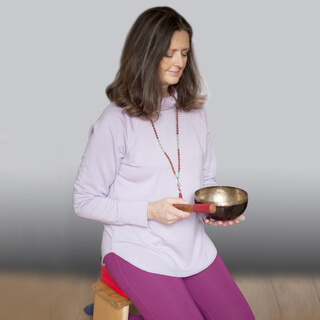
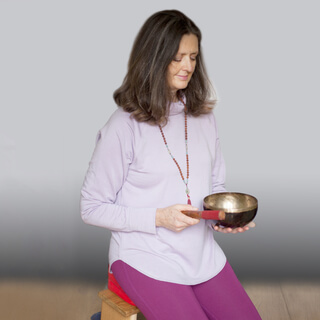
And listening for the sound of the bell to bring this meditation to a close.
Thank you.